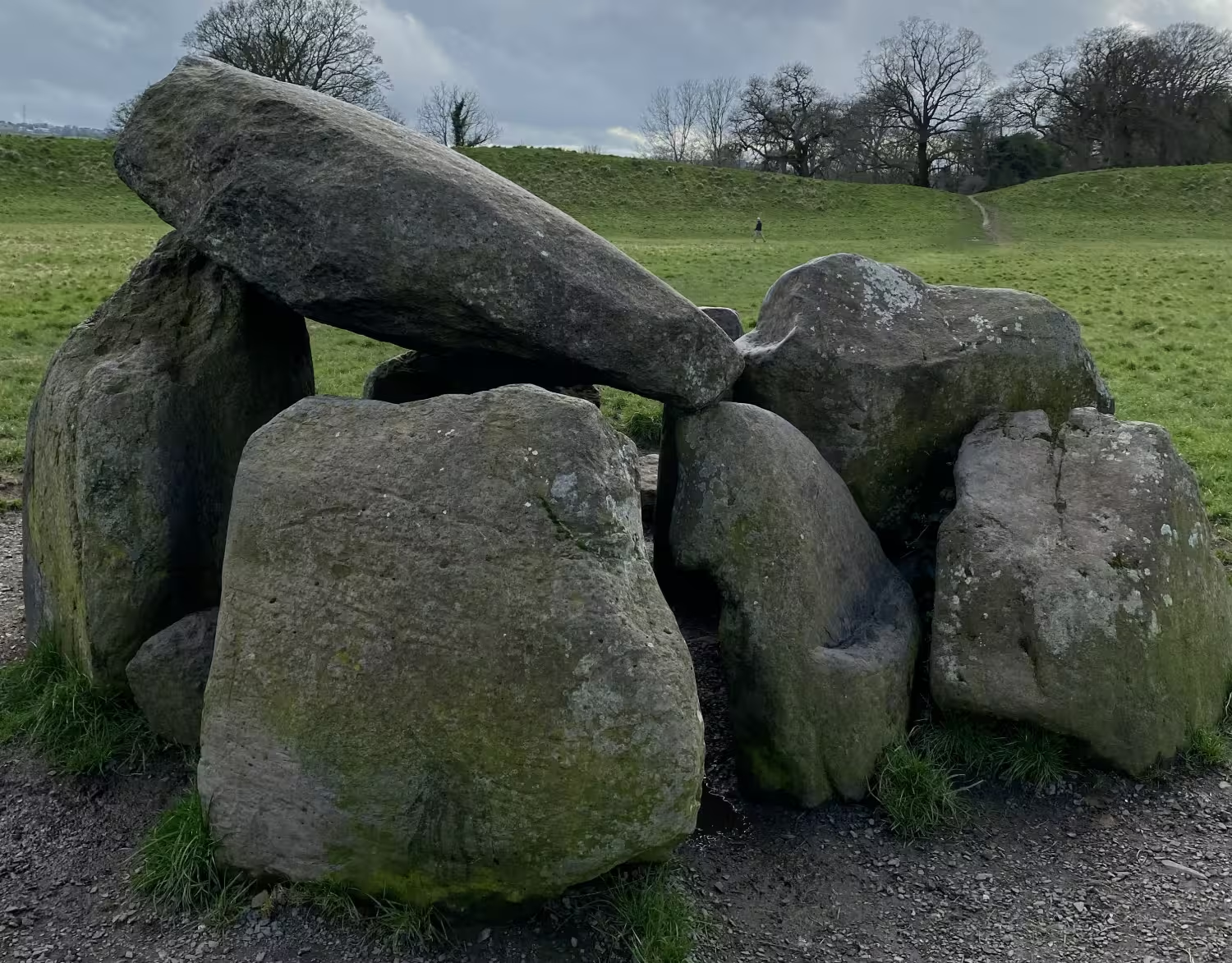
When we look at the ancient stone monuments, thousands of years old, which dot our landscape, it is difficult to truly comprehend what we are seeing, never mind comprehend their significance. There’s no questioning that they have inspired generations of writers, artists, and thinkers: with fantasy genres full of scenes centred around these mysterious sites, or the ponderous waving artforms which have been adapted from their stern faces. And just outside Belfast lies one of these mysterious monuments, the Giant’s Ring.
In this post we explore the archaeological evidence of the Giant’s Ring, a site which is one of the greatest examples of a neolithic henge in Ireland. We will see how it was only one part of a much greater ritual complex, long predating the city we now call Belfast. So let’s turn to the beginning and consider just how old is this site.
How old is the Giant’s Ring?
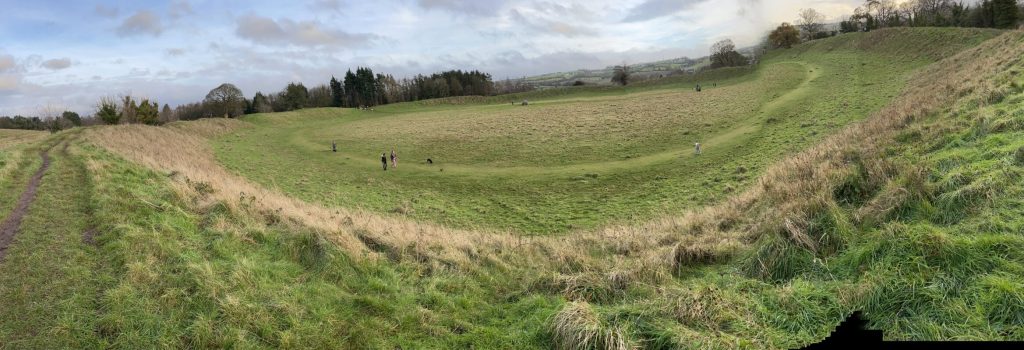
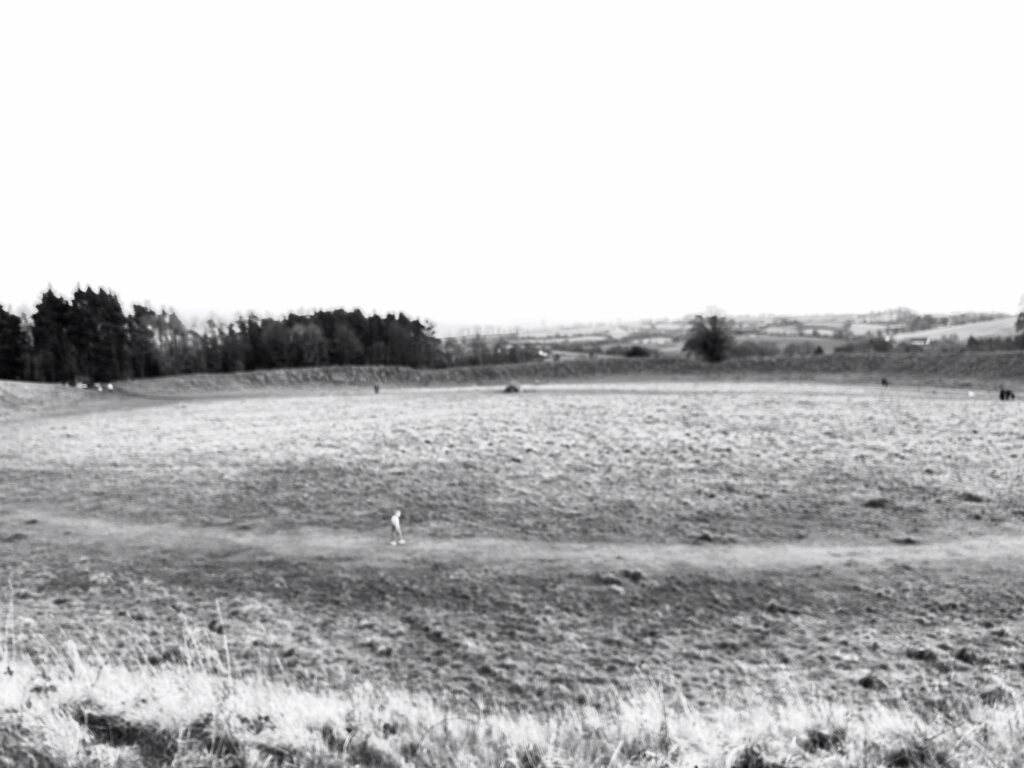
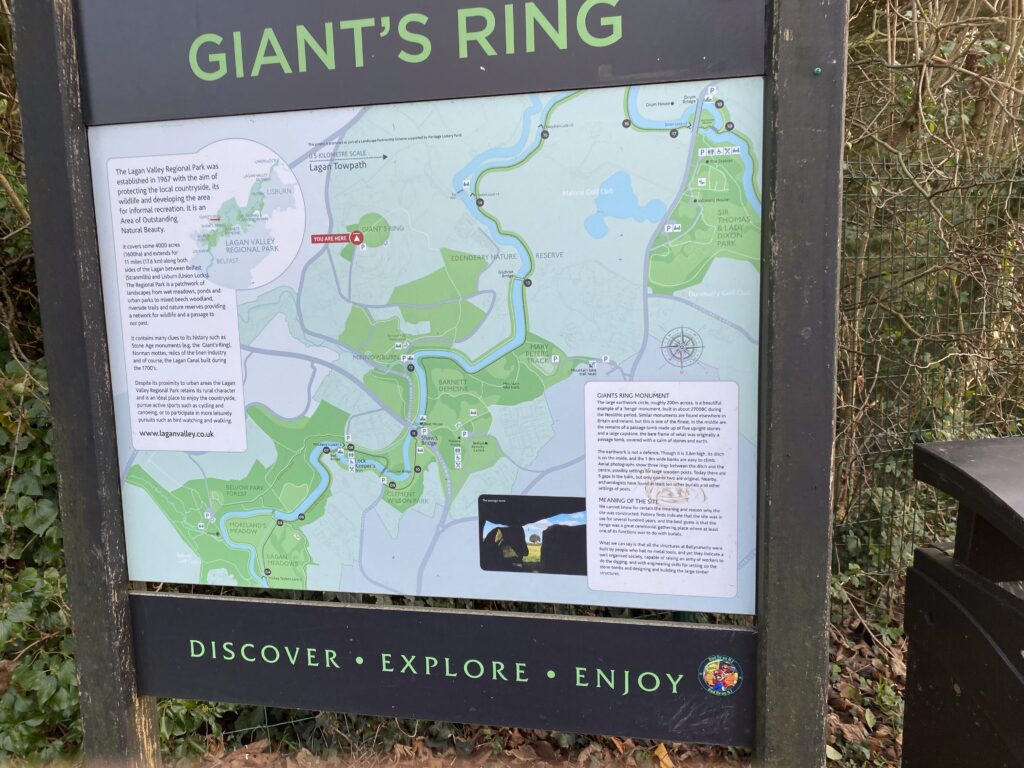
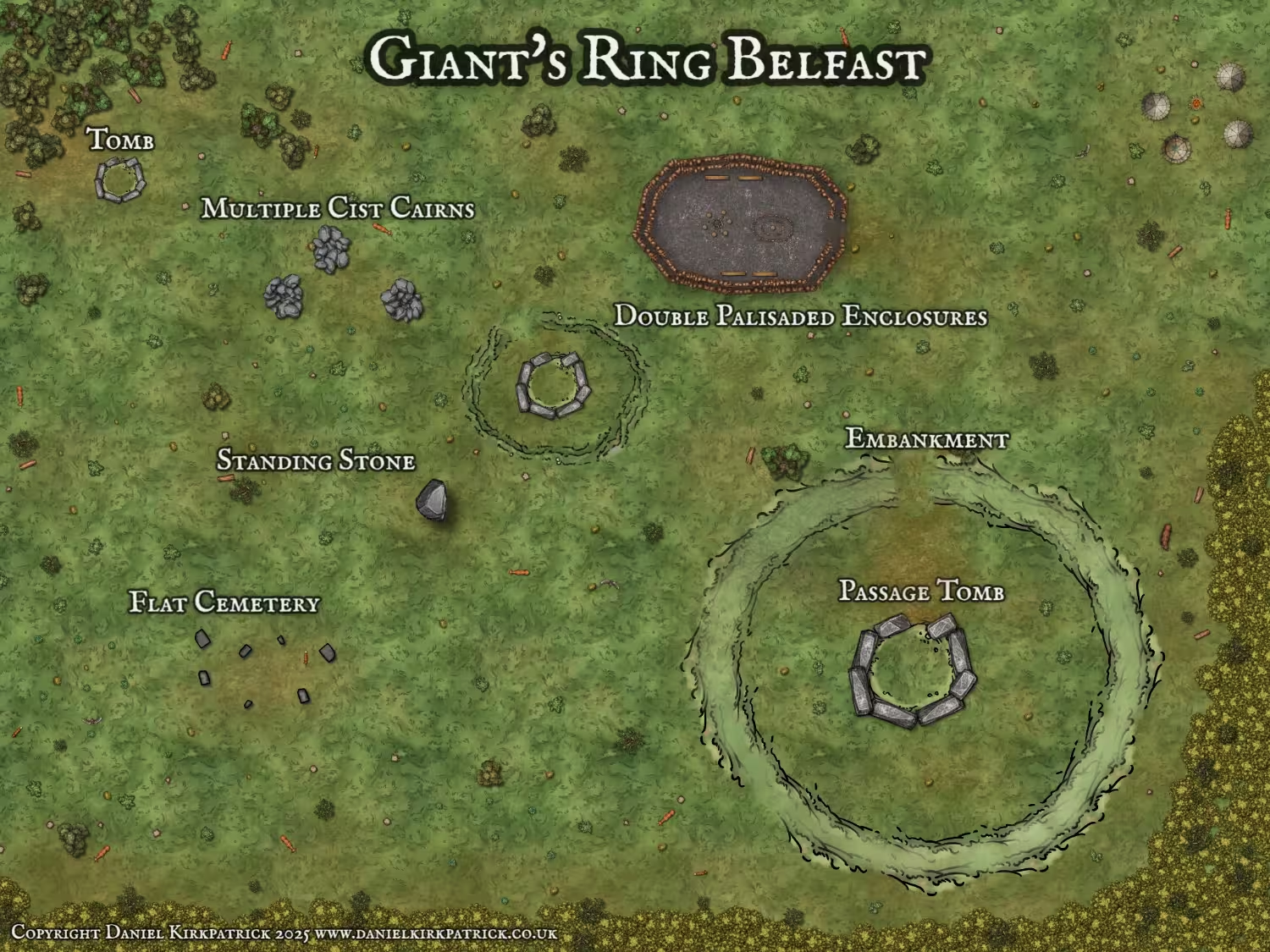
The Giant’s Ring is a neolithic site (around 2700BC) located on the edge of Belfast, Northern Ireland. The main site which you can visit comprises a henge monument encircled by a 200m (diameter) earthen enclosure which stands an incredible 4m high. The solitary henge is what remains of a once much larger passage tomb.1
We should pause here for a moment. You read correctly – some 4700 years ago a group of people, living in what we now call Belfast, somehow managed to organise together and build this colossal wonder. They did so with tools more rudimentary than those we let our toddlers play with. Their understanding of engineering, materials, and architecture, puts many contemporary building projects to shame.
The great stones used to construct the henge would each weigh several tons. The earthen enclosure would have taken years, possibly decades, to construct. The physical and practical realities which would have been involved are quite simply staggering. But why should we care?
Belfast’s Neolithic roots
Well for starters, it means that Belfast’s cultural (and religious) roots date back over 20 times further than the American War of Independence. It predates the building of the pyramids. Whoever built these monuments were therefore one of the ancient civilisations, a people laying the foundations of history which contemporary Belfast is built upon. Indeed, the monument itself implies some form of cultural centre, a place where people would have visited from much further afield, perhaps a form of ancient neolithic pilgrimage.
Moreover, to have actually created this earthen embankment in a time when survival was a daily struggle, shows considerable sophistication. This was a people who lived for more than their day-to-day. It was costly, time-consuming, and would have been a symbol of incredible power and pride.
But don’t take my word for it.
Giant’s Ring archaeological sites
If the Giant’s Ring itself wasn’t incredible enough, evidence of 2 megalithic tombs, 2 neolithic cists, and a standing stone, have all been discovered in the surrounding area. In fact, the earliest archaeological evidence of human activity dates as far back as 4,000-3,600BC, though it wasn’t until much later that the monuments we see today were built.2
In neighbouring fields, archaeologists have also discovered evidence of an enormous timber structure which has been the subject of significant archaeological interest and debate. With over 471 posts used to build the monument, some as big as 9m, it certainly sparks the imagination.3
Indeed, the discovery of the remains of a neolithic woman in nearby a passage tomb, the eponymous Ballynahatty woman, has provided rare DNA evidence of ancient Irish origins.4 Needless to say, this is a site of enormous historical importance and interest. 5
Archaeological Finds at the Giant’s Ring
| Feature / Artifact | Type | Date / Period |
|---|---|---|
| Henge Enclosure | Ceremonial Earthwork | c. 2700 BC (Late Neolithic) |
| Central Passage Tomb | Megalithic Tomb | c. 3000 BC (Neolithic) |
| Timber Structures (Ballynahatty 5 & 6) | Neolithic Timber Enclosures | c. 4000–3600 BC (Early Neolithic) |
| Neolithic Cists | Stone Burial Chambers | c. 4000–3600 BC (Early Neolithic) |
| Standing Stone | Megalithic Monument | Neolithic |
| Burnt Bone Fragments | Cremated Human Remains | Neolithic |
| Quarry Ditch | Construction Feature | Neolithic |
| Outer Marker Bank | Earthwork Feature | Neolithic |
| Stone Facade on Inner Bank | Structural Feature | Neolithic |
| Modern Artifacts (Porter & Lemonade Bottles) | Modern Intrusions | 19th–20th Century |
Early Excavations of the Giant’s Ring
Early excavations in 1917 (by H.C. Lawlor) and again in 1954 (by A.E.P. Collins) cut into the bank and the “dolmen” at the centre. These digs found no intact burials or occupation layers, but they did confirm how the monument was built. Collins uncovered an inner quarry ditch (where soil for the bank was dug) and evidence of an original stone facade lining the bank’s inner face. In other words, the bank had an inner ditch and may once have had a low retaining wall on the inside. These surveys also showed that the central tomb chamber now lacks its cairn of covering stones, but the five uprights and capstone remain as the bare frame of the burial chamber.
Radiocarbon dates and pottery styles tell us the tomb and henge were built in different generations. The passage tomb itself is mid-Neolithic (the same era as Newgrange and Knowth). The earthwork henge was added later – probably in the Late Neolithic or even Early Bronze Age (perhaps 3000–2500 BC). In context, this matches other Irish henges (e.g. the Magheraghanrush court tomb enclosure in Sligo) which date to around 3000–2500 BC. Thus the people of Ballynahatty first built the burial tomb, and then centuries later re-used the site for communal rituals by digging the bank around it.
Recent Archaeological Discoveries at the Giant’s Ring
Further investigations in the 1990s revealed even more: two enormous wooden palisade enclosures (termed Ballynahatty 5 and 6) just north of the Giant’s Ring These oval and circular timber-built structures (each defined by 2 m deep postholes) were likely part of mortuary rituals. One inner wooden circle (BNH6, about 16 m across) contained four large upright posts around a central “platform” – interpreted as a place for excarnation (sitting the body out to be cleaned by birds or decay) before burial.
Associated pits showed cremation burials and even a foundation deposit of burnt bone, confirming a funerary function. Radiocarbon tests indicate these timber enclosures were used and intentionally burned around 3080–2490 BC. In sum, the Giant’s Ring sits at the centre of a complex ritual landscape: early tombs, later timber mortuary enclosures, and finally the great earthen ring itself. Each phase reflects different ideas of death and ancestor veneration over centuries.
Comparison with other Henges
To appreciate the Giant’s Ring, it helps to compare it with other great Neolithic monuments in Ireland and Britain. In the Boyne Valley, for example, the passage tomb at Newgrange (Brú na Bóinne) shares a Neolithic origin. Unlike Newgrange, the Giant’s Ring lacks any known solar alignment and has no carved art. But it is similar in that they both required immense labor for ritual purposes, and both were communal monuments related to burial. Moreover, in setting both Boyne and Lagan valley sites sit on river terraces it suggests Neolithic peoples chose prominent, riverine locations for their great rituals.
When other henges and monuments are considered, the Giant’s Ring shares a great deal of their feature: it’s a henge enclosure around a central monument, built by a farming society that venerated its ancestors. Unlike the single-purpose dolmens or ritual pits found elsewhere, these great complexes mix burial with large communal enclosures. We see this pattern in the Irish passage tomb cemeteries of the Boyne (Newgrange/Knowth/Dowth) and Loughcrew, and in the British henges of Stonehenge, Avebury, and others. Each site has local twists – coastal versus inland location, stone versus timber versus earth construction, solar alignments or not – but all reflect a cultural tradition of monumental ritual architecture.
Giant’s Ring Significance Today
I like to imagine when I visit sites like this, what the people themselves would have been like: what would they have thought as they entered through the earthen enclosure and witnessed the great stones erected in front of them? What would have drawn them to such a place?
I am not qualified to give you an accurate answer, and perhaps no one truly can;6 but I don’t think that matters. What does matter is what we can learn from them. For to achieve something so great, requires collective action; collaboration across communities, possibly even across generations, as they built and rebuilt the various structures.
Belfast’s modern history is broken and painful, but I love to think that there exists a ‘before’. A time when those who lived here did so in greater harmony. Perhaps I’m naive? Perhaps not. Either way, it’s fun to imagine.
Frequently Asked Questions: Giant’s Ring, Belfast
The Giant’s Ring is a Neolithic henge monument with a central passage tomb, located on the edge of Belfast in Northern Ireland. It’s an earthen enclosure about 200 m across (4 m high) surrounding five upright stones and a capstone (the remains of a burial chamber). In short, it’s a prehistoric enclosure built around 2700 BC.
Archaeologists date the Giant’s Ring to about 2700 BC (Late Neolithic). It was built by prehistoric farming communities as a communal ritual center. The earthwork encircled a burial tomb, suggesting it was used for funerary ceremonies. Like other Neolithic sites (for example Newgrange), it required massive labor and likely served as a place of ancestor veneration or pilgrimage.
Two large megalithic tombs and two stone cist graves have been found, along with a standing stone and evidence of timber mortuary structures. The buried remains of cremated individuals and artifacts (like pottery and flint tools) have also been uncovered.
Unlike Newgrange (which has a winter-solstice alignment and carved art), the Giant’s Ring shows no known solar alignment or artwork. Similarly, it is an earthen enclosure rather than stone circles like Stonehenge.
- For more on the academic debate around this see: https://pureadmin.qub.ac.uk/ws/portalfiles/portal/200579222/Gormley_The_dating_67977510.pdf ↩︎
- https://www.qub.ac.uk/sites/uas/UASfilestore/Filetoupload,783202,en.pdf ↩︎
- https://the-past.com/feature/ballynahatty-reconstructing-a-rare-neolithic-timber-monument/ ↩︎
- https://www.bbc.co.uk/news/science-environment-35179269 ↩︎
- This isn’t an archaeological post. For that see the many other blogs on the subject some of which are listed here: https://roaringwaterjournal.com/2022/07/17/the-giants-ring/
https://www.themodernantiquarian.com/site/2243/giants_ring.html ↩︎ - The debate over the origin and purpose of the monument is still alive and well within academia. For a good summary see Footnote 1. ↩︎
YOU MAY ALSO LIKE
 Manannán Mac Lir: Irish God of the Sea — Myth, Power & Legacy
 Battle of the Boyne Visitor Centre Review: History, Exhibits & Tips
 Nendrum Monastic Site: History, Tidal Mill & Irish Monastic Life
 Dunluce Castle: Gaelic Fortress that Shaped Ulster’s Medieval History
 Newgrange Passage Tomb: Age, Builders & Winter Solstice
 Book Review: A smaller social history of ancient Ireland, P.W. Joyce
 Irish Hillforts: Ancient Fortifications of Ireland
 Irish war chariots: Celtic war machines and symbols of power