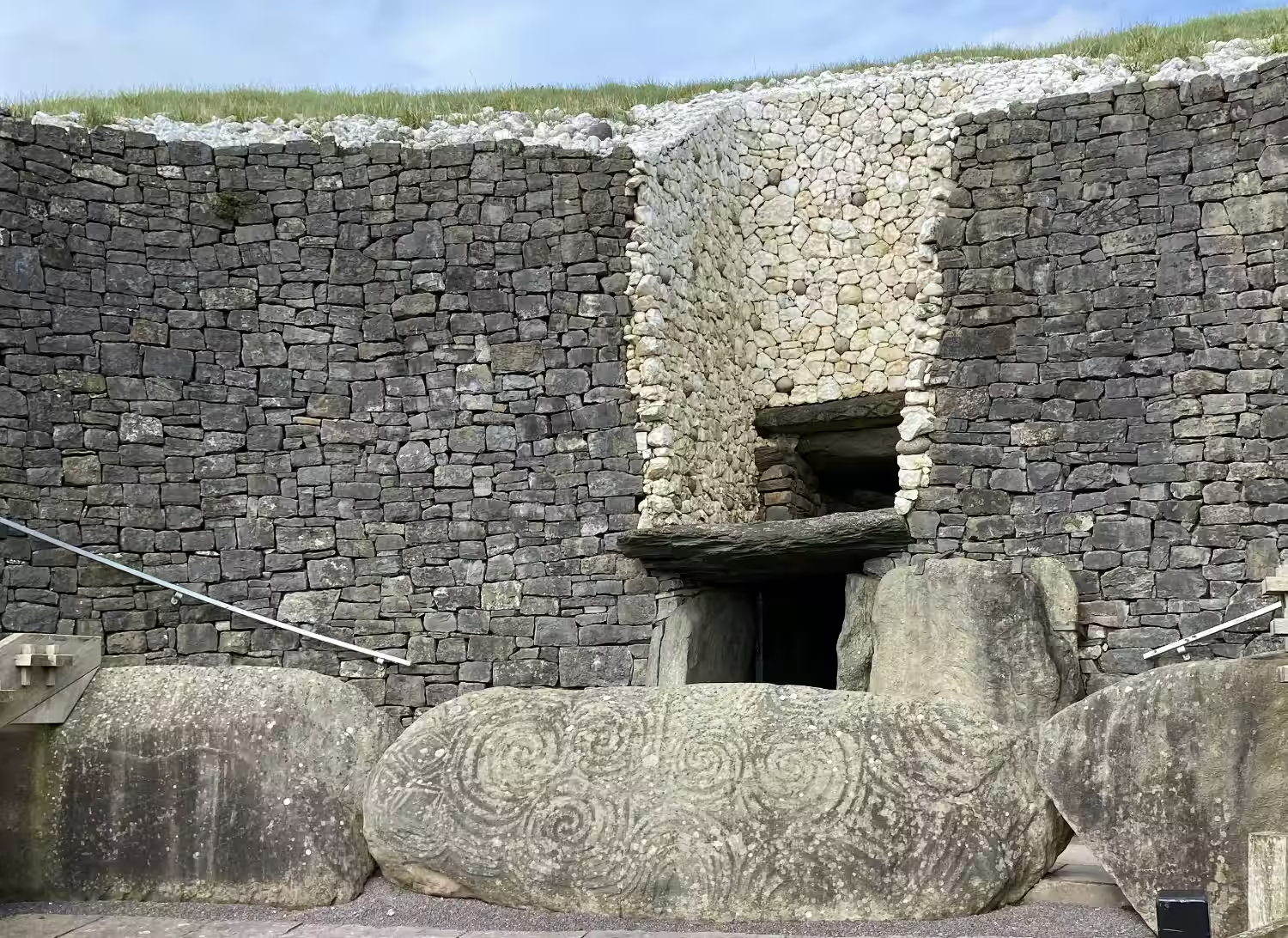
Newgrange is one of the most impressive megalithic passage tombs in Ireland. Built in 3,200BC by neolithic builders with little more than stone, bone and timber tools, it continues to attract visitors particularly due to its solar alignment at the winter solstice. In this post we consider the mythology of the site and the significance of the solar alignment, before then considering who, why, and how this was built in the first place.
But before we do, consider for a moment that the world record for the heaviest weight ever lifted by a human is a staggering 2.4 tonnes. With years of training, specialised dieting, and intensive preparations, this is the greatest weight a single human has ever lifted. And yet, the Newgrange passage tomb consists of a colossal 97 stone slabs, all weighing more than a tonne, some weighing considerably more.1 These slabs were not merely lifted, but placed together to form a carefully arranged structure which has survived over 5,000 years completely intact. The total cairn is estimated to weigh 200,000 tonnes. And all this would have been done with little more than stone tools.
Let’s not forget Newgrange predates Stonehenge and the Egyptian pyramids. And while little is known about the people who originally built it or why, archaeological work is starting to reveal new insights. But first, let’s start with the mythology.
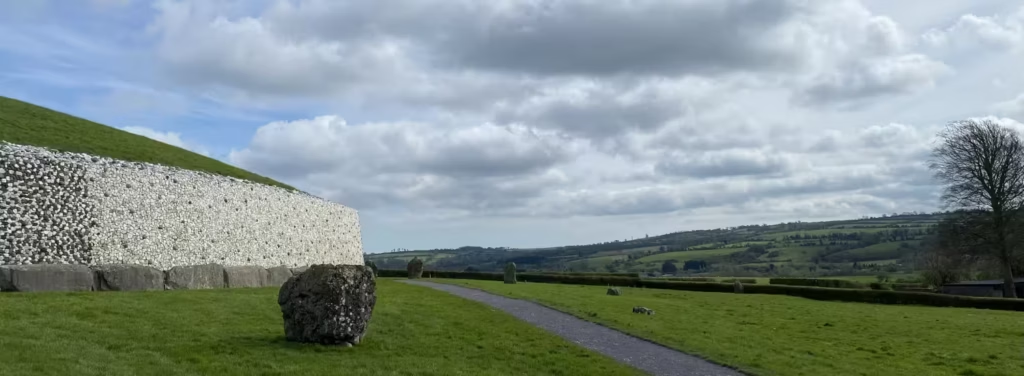
The mythology of Newgrange
Newgrange’s original Irish name is Brú na Bóinne, the house or mansion of the Boyne. And while today the Boyne refers to the River Boyne and the surrounding lands, throughout Irish history it referred to the River goddess Boann or Bóinne. Boann was the wife of Elcmar (or Nechtan) and had an affair with the chief god Dagda (the “Good God”). To hide their union, the Dagda used his powers to make the sun stand still for nine months, so that Boann’s pregnancy lasted only a single day.2
From this union came Aengus Óg (also Oengus or Angus, meaning “the Young”), who would later cunningly claim Brú na Bóinne as his own. One tale recounts how Aengus tricked the Dagda into giving up Newgrange by asking to occupy it for “a day and a night,” then pointing out that this phrase covered all time – thus winning permanent ownership of the mound and mother to Oengus. All of these characters were the family of gods, the Tuatha Dé. The Irish myths speak of these gods as the predecessors to the Gaels or Celts and “who thereafter retreated into the fairy mounds and forts of Ireland”.3 Newgrange, with its great earthen dome, was thus seen as one of their sídhe (Otherworld mounds) – essentially a portal to the Otherworld and an abode of divine beings.
Was Newgrange a burial place for kings?
Later, kings used this mythological narrative to trace their own lineage back to these same gods, claiming a form of ancestral divinity. For instance, it was widely thought to have been the burial place of pagan Irish kings in pre-Christian Ireland.
The veracity of these claims is certainly suspect, but its proximity to the nearby Hill of Tara is likely no accident. It follows that Newgrange would probably have been revered as a key religious site throughout much of this early Irish period. A good example of this is found in their worship of the sun and naming of the site.
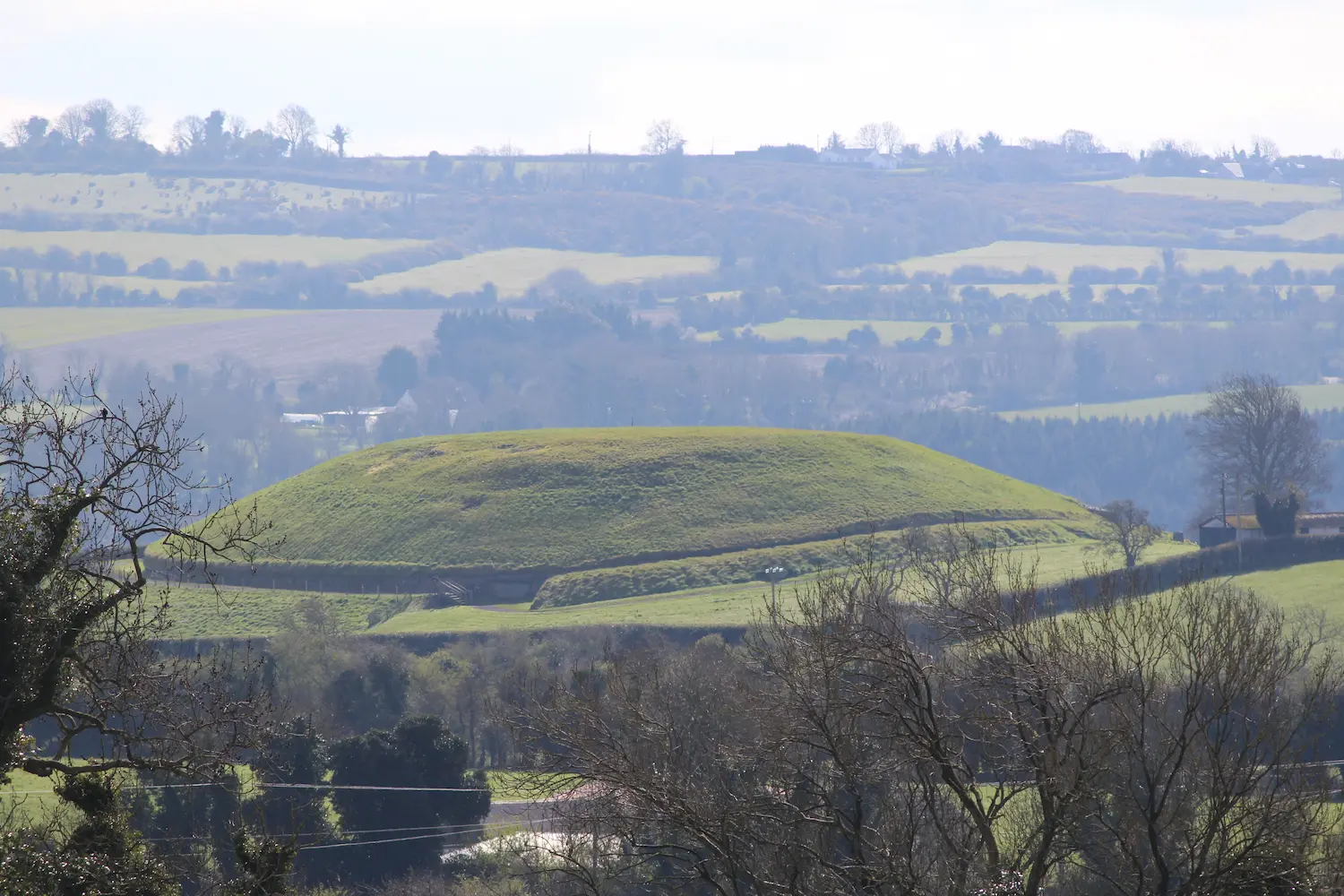
Solar alignment of Newgrange
One of the most incredible discoveries surrounding Newgrange was its relationship with the sun – a Stone Age observatory built into a tomb. During the sunrise on the winter solstice, the entire 18m deep cavern is slowly filled with basking sunlight. Through a feat of ingenious engineering, the sun’s rays are caught by a slit in a roof-box and reflected throughout the tomb. In that moment, a place of death is dramatically filled with the golden light of the reborn sun. The significance that this happens at the solstice and centres around the sun is important to note. Indeed, Dagda being the sun-god is certainly no coincidence given how the Irish worshiped such astral bodies.
Why was the winter solstice so important? For an early farming society in Ireland, the solstice signified the turning of the tide from darkness to light. After weeks of shortening days and long nights, the winter solstice sunrise heralded the promise that the sun would return and the days grow longer – crucial knowledge for planning the agricultural year.
Neolithic ritual significance of the sun
By capturing this event in their monument, the builders of Newgrange likely created a ritual when the community gathered to celebrate the rebirth of the sun. It’s even possible the tomb’s elite users claimed some special power over the sun – for instance, by “bringing the sun into” the tomb, they might reinforce their spiritual authority. The dramatic spectacle could unite people in awe and hope at the darkest time of year.
But this only compounds our initial puzzle. For all of these practices, mythology and folklore are believed to have come later, rather than preceding the building of the monument. It shows us the enduring legacy, not the original purpose or design. To try to understand the significance of the tomb through these myths is, therefore, always going to be at best incomplete, and at worst misleading. This is why we must turn to the archaeological evidence.
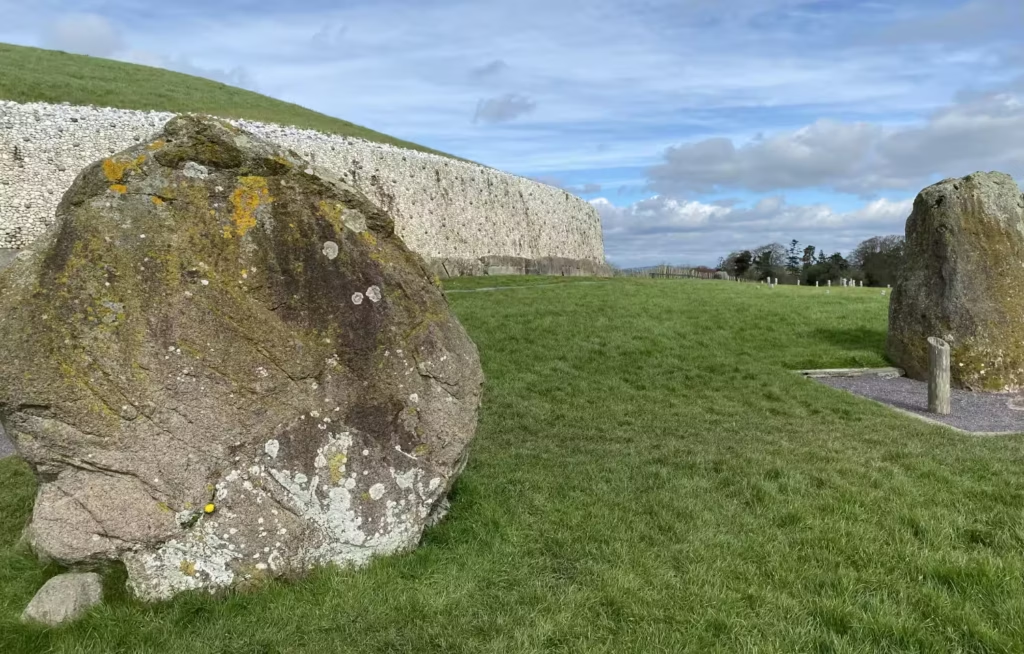
Why was Newgrange built?
The prevailing academic theory today is that Newgrange was a place of the dead and house of the spirits. Several archaeological discoveries support this view. First, the tomb has remarkably remained dry ever since its creation. Through a mix of waterproof mortar, the placement of the structural slabs, and water grooves cut into the stones, the internal tomb is completely watertight. When you enter inside, it is hard not to notice this (particularly in a place as wet as Ireland). And why go to such lengths to keep it dry, unless there was something precious worth protecting?
This brings us to the second point; what was unearthed inside the tomb. Bones, and lots of them. The earliest objects found all relate to rituals of death, whether human bones or associated artifacts. There were over 2,200 pieces of human bone alone (burnt and unburnt). These remains were not intact skeletons, but rather disarticulated fragments – indicating that bodies had been excarnated (exposed or processed elsewhere) and their bones later interred in the tomb. Analysis of the unburnt bones showed at least two people, but clearly there were several more (from the cremated remains). The bones had been deliberately broken and scattered within the passage, perhaps as part of ritual activity or successive burials over time.
Newgrange as a place of the dead
This pattern is common in Irish passage tombs which you can see in my maps here – they seem to have been collective burial places where remains of select persons were placed and periodically stirred or reorganized in ceremonies. Alongside the human bones, archaeologists found grave goods and votive offerings typical of Neolithic burials. These included items such as bone and antler pins, stone balls or “marbles,” pendants, beads, a polished bone chisel, and a flint flake tool.
Many of the small treasures were likely personal ornaments or ritual objects deposited with the dead. For instance, mushroom-headed bone pins (perhaps used to fasten garments or shrouds) and shiny stone balls have been found not only at Newgrange but at other Iberian and Irish passage tombs, hinting at a widespread funerary toolkit in the Neolithic. The variety of artifacts suggests that those interred at Newgrange may have been accompanied by ceremonial offerings – maybe gifts for the afterlife or symbols of status.4
Table of Archaeological Finds at Newgrange
| Feature / Artifact | Type | Date / Period |
|---|---|---|
| Megalithic Art (Spirals, Lozenge, etc.) | Rock Art | Neolithic (c. 3200 BC) |
| Quartz and Granite Façade | Architectural Feature | Neolithic (c. 3200 BC) |
| Cruciform Chamber with Corbelled Roof | Burial Chamber | Neolithic (c. 3200 BC) |
| Stone Basins | Ritual Object | Neolithic (c. 3200 BC) |
| Human Remains (Cremated and Unburnt) | Burial Remains | Neolithic (c. 3200 BC) |
| Bone and Antler Pins | Personal Ornament | Neolithic (c. 3200 BC) |
| Stone Balls/Marbles | Ritual Object | Neolithic (c. 3200 BC) |
| Beads and Pendants | Personal Ornament | Neolithic (c. 3200 BC) |
| Flint Tools | Tool | Neolithic (c. 3200 BC) |
| Roman Coins and Jewelry | Votive Offerings | Roman Period (c. 320–337 AD) |
Interpreting Newgrange’s archaeological evidence
So what are we to make of all this. Well, based on these finds, one of the site’s leading archaeologists concluded:
“Surely this must mean that the structure was thought of, not merely as a tomb, but as a House of the Dead, in which the spirits would live in dry comfort….The House of the Dead had to be built of great stones so that it should last forever.”5
The Neolithic builders clearly went to tremendous lengths to honor and protect whatever was placed inside. This included their honored dead and perhaps offerings to gods or spirits. Importantly, not everyone in that society would have received such treatment. The scale of Newgrange and the quality of grave goods indicate that it was used by a select group (perhaps an extended clan or dynastic lineage). This is why archaeologists today often describe Newgrange and its sister sites as ceremonial centers or temples. In fact, the monument is now frequently referred to as an “Ancient Temple” – a place of religious and spiritual importance, akin to how medieval cathedrals were not just churches but also repositories for holy relics and tombs of saints.
Neolithic communities of Newgrange
Recent scientific discoveries have added a stunning new chapter to the story of who was buried at Newgrange. In 2020, geneticists analyzed ancient DNA from one of the best-preserved skeletons found in the Newgrange chamber – and made a spectacular finding. The DNA revealed that this male individual’s parents were first-degree relatives (either full siblings, or parent and child). In other words, he was the product of incest, a practice almost never seen in small-scale societies due to the universal taboo. The implication is that this man belonged to an extremely privileged elite – potentially a ruling family so powerful that it broke the usual social rules. This would be akin to the god-kings of ancient Egypt or the Inca Empire who often married within the royal lineage.
The location of his bones in the most elaborate part of the tomb further underscores his importance. Scholars speculate that Newgrange may have been a dynastic mausoleum for an elite family line, a prehistoric “royal tomb.” This is an extraordinary insight into the social hierarchy of Neolithic Ireland: it suggests that by 3200 BC, a class of chieftains or sacred kings might have existed who commanded the resources to build Newgrange and who kept power within a close kin group. Even more intriguing, the same DNA study found that this Newgrange man had distant relatives buried in passage tombs over 150 km away, at the great cemeteries of Carrowmore and Carrowkeel in County Sligo.
Where did the stones come from?
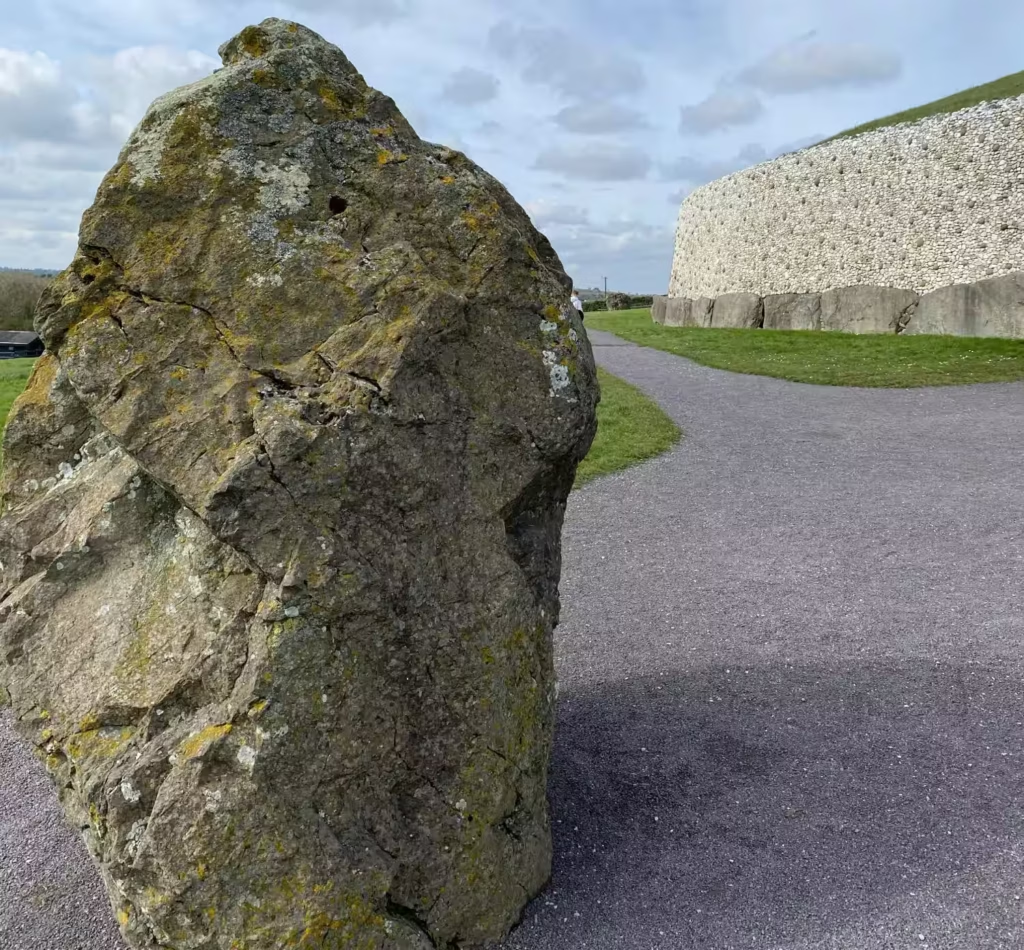
This becomes even more clear when we consider how the people who built Newgrange were Neolithic farmers, living in a world without metal, machines, or the wheel. Yet they organized the quarrying, transport, and placement of massive stones with a skill and ambition that still impresses engineers today.
Many of the building stones were brought from far-off locations. The beautiful white quartz stones that form Newgrange’s gleaming front façade were sourced from the Wicklow Mountains about 70–80 km to the south. The dark rounded cobbles of granite were brought from the Mourne Mountains nearly 50 km to the north. This long-distance import of materials shows both an aesthetic vision and an extensive social reach.
Who were the builders?
It appears there was a widespread kin-network of elite families across Ireland, all participating in passage tomb building and subsequent rituals during the Neolithic. As one researcher put it, we seem to have evidence of a “powerful extended kin-group, who had access to elite burial sites in many regions of the island for at least half a millennium”.6
Within Ireland, Newgrange’s era (the Late Neolithic) saw the zenith of passage tomb construction. After about 3000 BC, the fashion for building giant tombs gave way to new monument styles (like timber circles and earthen henges) in the Bronze Age. Interestingly, Brú na Bóinne shows evidence of this transition: around 2500–2000 BC, people built enormous circular earthworks and timber enclosures near Newgrange, indicating the site remained an important ceremonial center even after the big tombs were sealed.
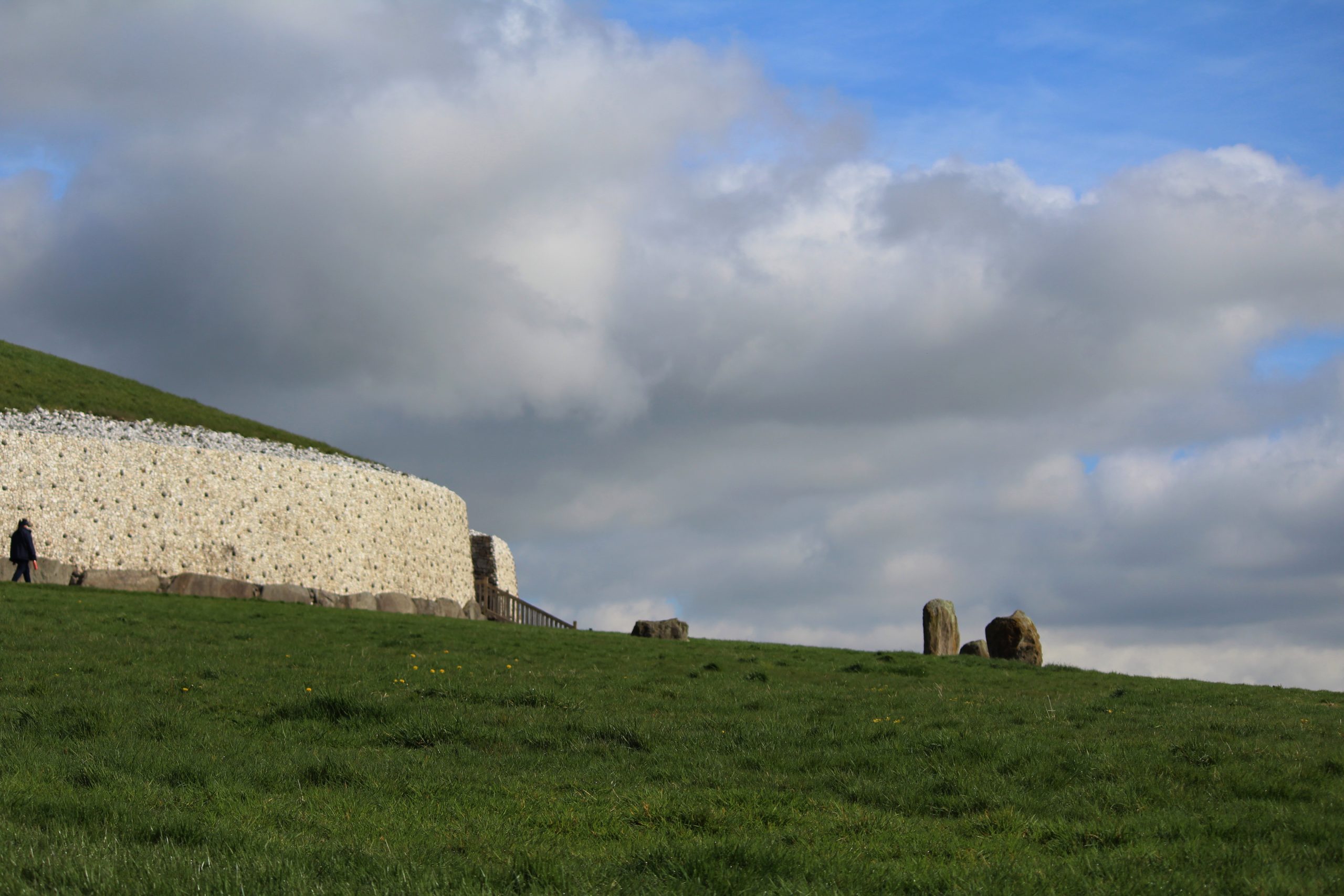
Generations long after Newgrange’s original use still revered the spot. By the Iron Age and medieval period, the old mound had fallen into ruin and was overgrown, yet its silhouette and the whispered stories about it kept it legendary. To the early medieval mind, these great earthen mounds were the work of either giants or the Tuatha Dé Danann, as we discussed, and thus sacred or accursed. This ensured a degree of preservation – Newgrange was not destroyed for fort-building or agriculture, likely because it was respected and feared as a fairy dwelling.
Newgrange as Ireland’s first National Monument
When we step back and look at Newgrange in context, we see a symbol of an advanced and interconnected Neolithic society. The people who built it were among the first farming communities in Ireland. They were likely descendants of migrants who brought agriculture from mainland Europe.
These early farmers prospered in the fertile Boyne Valley, clearing forests and cultivating land. This gave them both the need and the means to undertake collective projects. Ample food production could support specialist builders and allow time for communal labor on temples like Newgrange. The construction of Newgrange itself might have been a huge community endeavor. It perhaps involved people from across the region gathered during certain seasons (when farming was less demanding) to work on the mound, in a kind of ritual labor party. Such events would not only build the monument but also social cohesion – much like an old-fashioned barn-raising, but on a monumental scale.
The finished product then stood as a statement of shared identity and faith. It’s conceivable that Newgrange was a neutral gathering place for dispersed communities – a site for periodic feasts, ceremonies, and alliance-building. Indeed, huge quantities of animal bone found in nearby deposits suggest that feasting took place around the tomb.
In that sense, Newgrange could be called Ireland’s first national monument. Long before there was a nation, it likely brought together people from different areas under a common ritual umbrella.
Newgrange | IRELAND by Arqueomodel3D on Sketchfab
Frequently Asked Questions: Newgrange
Newgrange is a 5,000-year-old Neolithic passage tomb in the Boyne Valley, Ireland. It’s famous for its enormous stone construction (97 big slabs in a 200,000-ton mound) and its winter solstice sunrise event. It is a UNESCO World Heritage site and is older than Stonehenge and the Egyptian pyramids
Brú na Bóinne is the original Gaelic name for Newgrange, meaning “Palace of the Boyne”. This refers to the Boyne River goddess Boann. Mythology says the site was tied to gods like Dagda and Aengus Óg, indicating its spiritual significance.
Newgrange was built around 3200 BC, making it about 5,200 years old. This predates the main pyramids of Egypt and even Stonehenge in England . The construction of the mound and chamber during the Late Neolithic shows advanced Neolithic engineering in Ireland.
It was built by Neolithic farming communities (pre-Celtic inhabitants of Ireland). Archaeologists infer it was a ceremonial temple or “House of the Dead” where select members (perhaps chiefs or priests) were buried. The elaborate construction and rich grave goods (beads, pins, carved stones) suggest it was for an elite burial or religious purpose. For example, the interior roof and orthostats are remarkably watertight, indicating care to protect sacred contents.
- Michael J. O’Kelly, Newgrange: Archaeology, art and legend. Thames & Hudson: London, 1982. Page 116. ↩︎
- For a summary of these see O’Kelly, Pages 45-46. ↩︎
- O’Kelly, Page 45. ↩︎
- Unfortunately, many early visitors and antiquarians in past centuries took artifacts as souvenirs, so the surviving collection is incomplete ↩︎
- O’Kelly, Page 126. ↩︎
- https://www.sciencedaily.com/releases/2020/06/200617121507.htm#:~:text=The%20team%20also%20unearthed%20a,Sligo ↩︎
YOU MAY ALSO LIKE
 The Brehon Laws: How Ireland’s Ancient Legal System Really Worked
 Manannán Mac Lir: Irish God of the Sea — Myth, Power & Legacy
 Navan Fort: Ancient Ulster Capital — History & Archaeology
 Iron Age Clothing in Ireland: What People Really Wore
 Buildings in Iron Age Ireland: Roundhouses, Ringforts & Crannógs
 Book Review: A smaller social history of ancient Ireland, P.W. Joyce
 Irish Festival Names Explained: The Etymology of Samhain, Imbolc, Bealtaine and Lughnasadh
 Irish Placenames: Ancient History and Mythology