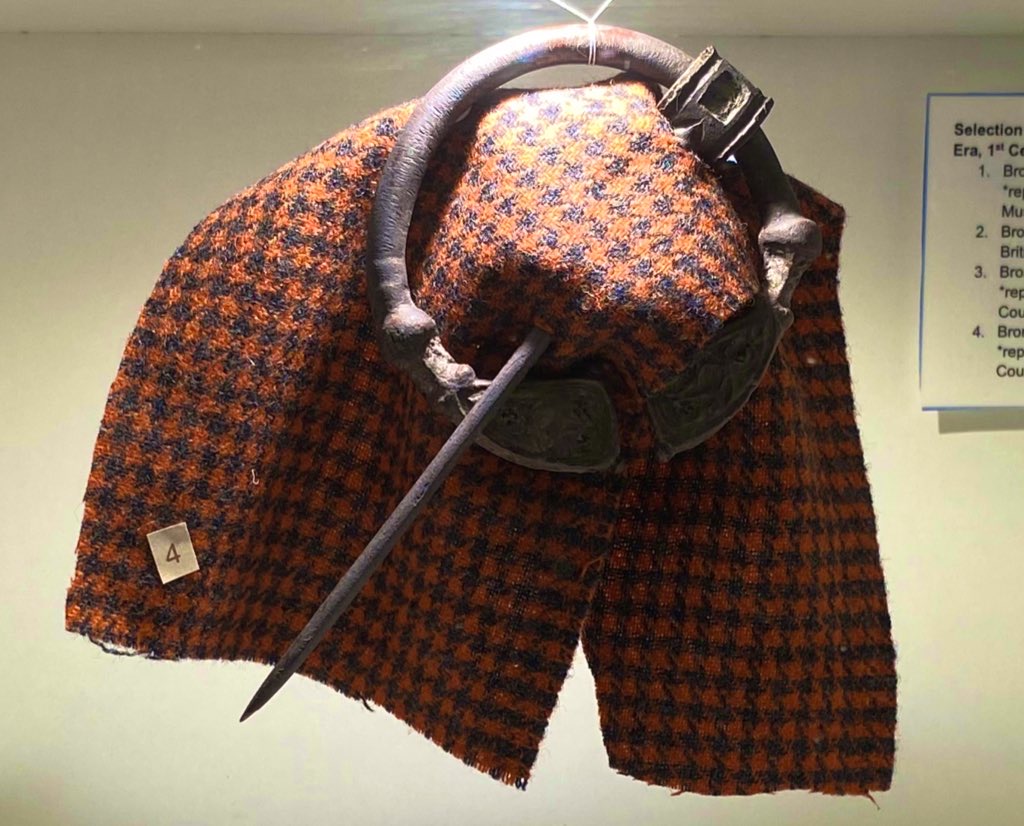
Every morning all of us share in a ritual that dates back as far history itself. For, without exception, each of us will decide what we will wear for the day ahead. The questions we will ask to form our choices are the same questions our ancestors would have asked some 2,000 years ago: ‘What is the weather like?’ ‘What activities will I need to dress for?’ ‘Who am I meeting today?’ ‘What outfits are clean?’ And our final decision will balance all of these answers into a single decision, one which connects us to a practice as ancient as history itself. One which is bound up with Iron Age clothing in Ireland – the what, why, and how of ancient fashion.
Fashion represents a profound continuity. It is humbling to think that such ritual has remained largely consistent for the last 2,000 years. As you grab that shirt or dress before work, you’re joining in a practice that connects you to the warriors and druids, farmers and shepherds, smiths and carpenters, from our ancient past. And that’s worth pausing, even for a few moments, to consider just how similar we are.
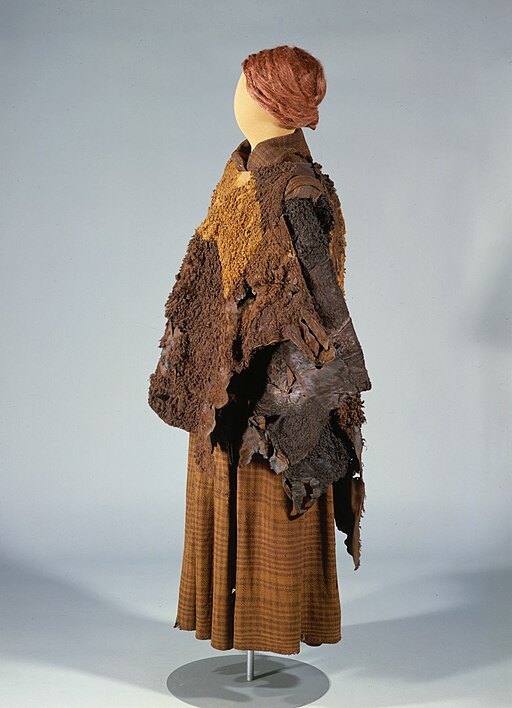
What Did People Wear in the Iron Age: Ancient Influencers
Flick through any fashion magazine (something I confess I rarely do!), and you’ll find its pages a rainbow of colour. Bright, bold hues covering the entire light spectrum, dazzle and draw our attention. Now contrast this with almost all depictions of ancient Ireland and what comes to mind? There may be a few blues and greens, but the comparison is barely worth entertaining. The beauty and boldness of contemporary fashion leaves our ancestorial cousins looking like washed-out potato bags. But this couldn’t be further from the truth and certainly not what the ancient myths describe in terms of the fashion in Iron Age Ireland.
“I see a crown encircling his head, the colour of beautiful gold over his yellow, curly hair. I see his cloak red, multihued, of excellent braided silk. I see a huge brooch, ornamented with gold, that shines with the vigour of the full moon…I see a tunic of splendid linen, silken in its sheen, refracted and many-coloured its hue.”1
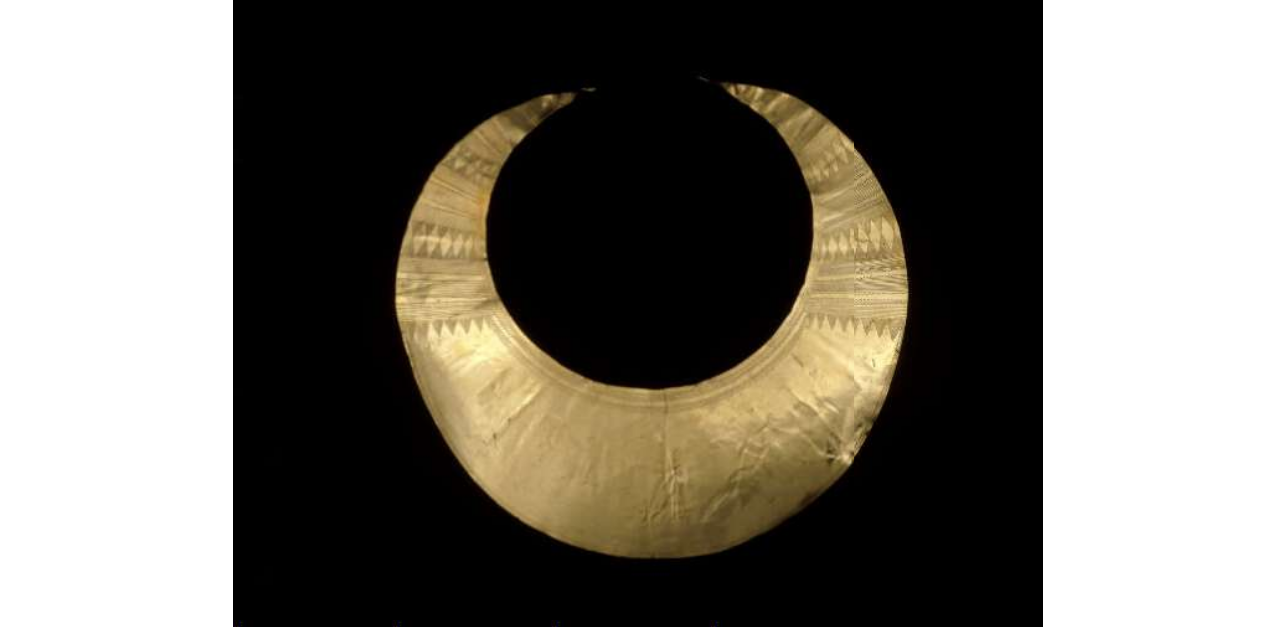
So goes the description of Conare Már, an Irish high king from the Irish myth ‘The Destruction of Da Derga’s Hostel’. While this is clearly not a typical outfit, it is comparable to our own fashionistas today – an ancient depiction of power and beauty. The choice of fabrics (silk and linen), colour (gold and red), and jewellery (brooch and crown), together convey a metaphorical and physical impression of a mighty king. The clothing, and its description, are sufficient to denote the status of the individual. To afford imported silk showed wealth. The crown denoted status. So, while this may not have been a typical Iron Age outfit, it gives us an insight into the idealised outfit of a leader.
But, as with our own contemporary celebrities, this ideal of perfection trickled down and was reflected in the many lesser outfits and styles of the time. Just as we wear the latest trends portrayed by our favourite movie-stars, these ancient leaders would have shaped the styles of their tribes and clans.
Credit: British Museum Collection
Iron Age Trending Fashion Styles
Spanning some 700 years (200BC-500AD), to describe Iron Age clothing in Ireland in any single way is always going to commit errors of oversimplification. But there are certain trends which historians and archaeologists have identified. Taking these as our startling point, we can begin to image the ways in which local particularities and seasons would have shaped these. To begin, the historian Kenneth Jackson provides a succinct summary:
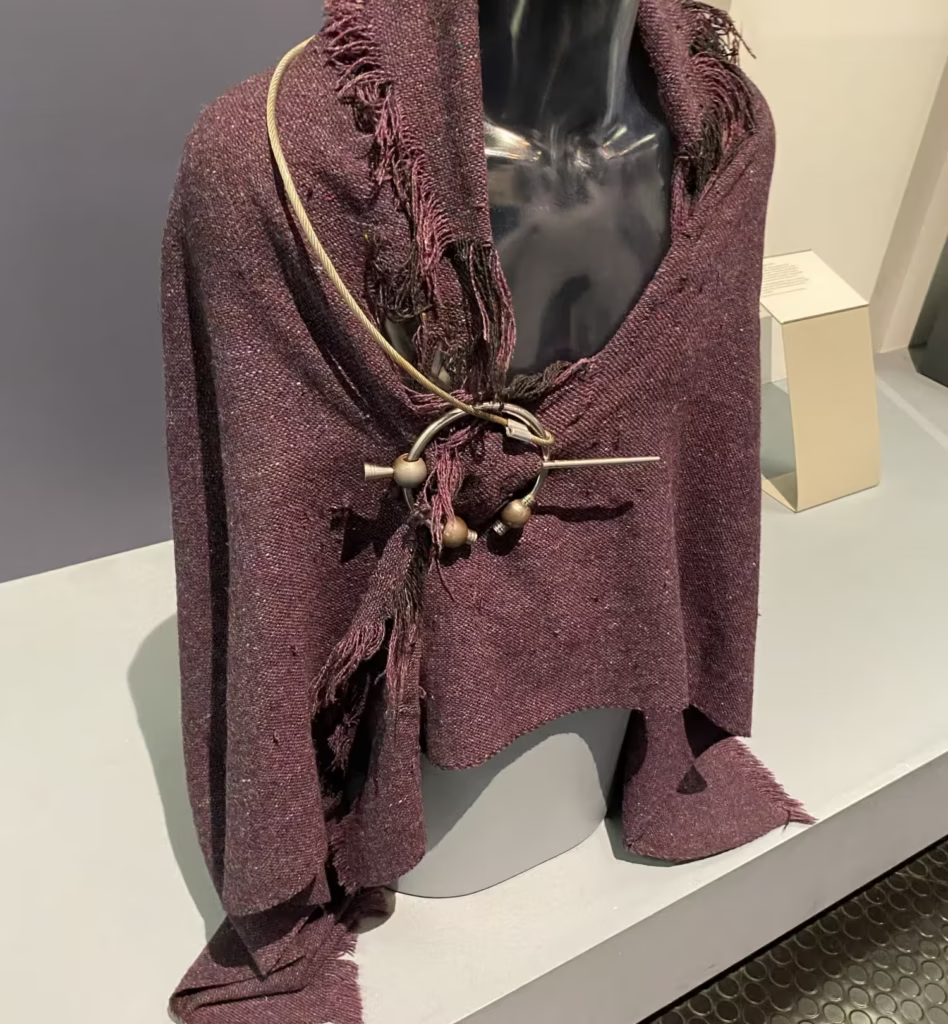
“The men wore a long woollen mantle pinned at the neck with a brooch of silver or gold decorated with engraving or gems and underneath, a tunic reaching to the knee…The women also wore mantles, and tunics to the feet, and did their hair in two or three plaits fastened with decorated beads.”2
P.W. Joyce gives a slightly different account, describing a typical ancient Irish outfit as consisting of four key parts:
1. A loose cloak without sleeves usually covering the whole person
2. A fitted coat or jacket with sleeves but no collar
3. A shoulder cape or sometimes hooded
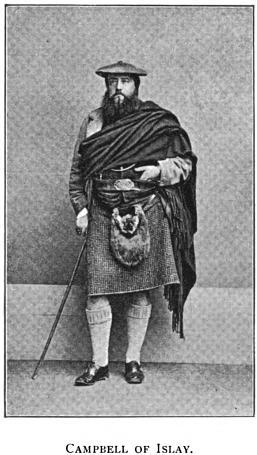
4. A kilt similar to those used by Scottish clans today3
Both men and women would have worn some combination of these four garments. There were also undergarments and trousers, but its these four garments which appear most frequently in the historical narratives and archaeological record. Indeed, the closeness to our own fashion is easy to see, with coats, jackets, jumpers, t-shirts, trousers, shorts, and skirts, all finding their place in this ancient Irish wardrobe, albeit in different shapes and forms.

Colour in Iron Age Clothing
The usage of colour is perhaps one of the most significant elements of ancient Irish fashion, for they loved colour. In the Irish epic narrative, The Tain, there is a wonderful description of three advancing armies:
“The first division wore dappled cloaks…The second division dun-grey cloaks and calf-length tunics with red embroidery…The third division…wore purple cloaks and hooded, ankle-length tunics with red embroidery.”4
I would love to hear a news report today describing the clothing of an opposing army. It would certainly be a welcome distraction. And yet, in such myths, these descriptions were commonplace. The colour of clothing would have given listeners a visual device to capture their imagination. Moreover, colour was an important symbol, signifying the status and power of the wearers.
The ancient Irish were able to use natural ingredients to dye clothing to great effect. Black was produced from sediment found in bogs. Red or crimson from a plant called roid. Blue was produced from woad. And purple from a lichen.5 To go to the effort of dyeing clothing shows there was a concern, not merely for the function of what they wore (to keep warm and protected), but to also to impress. In this way, these ancients would have gone to considerable effort to convey such power. An army of red cloaks would have been an intimidating sight (something the English army much later sought to emulate).
Shopping local: Materials and Economies of Fashion
Linen was likely the most common material used. It was widely produced throughout Ireland and would have been relatively cheap and hardwearing. Wool was also commonly used, but it may have been scarcer due to a low sheep population during this period. Silk and satin were restricted to those of wealth given they had to be imported. Besides these materials, furs and hide were used plentifully in the garments described above, but the animal they belonged to would have denoted the status of the wearer. The rarer and more difficult to obtain, the more desirable and costly. Ireland was well known for its exports of exotic hides and furs throughout Europe during the Iron Age (as discussed in more detail in my Iron Age Resources post).
Look at the label on most clothing today and you’ll hopefully see some of these materials (if not you need to shop for better quality clothing). I find it fascinating that the properties which made them attractive some 2,000 years ago remain compelling reasons why they continue to fill our stores today: their warmth, easily dyed, durability, and versatility. It’s strange to think that it is mostly the shape and structure of our clothing that has changed, a point easily lost when we feel compelled to change clothing as often as the seasons.
Iron Age Fashion Today
Fashion has and always will be connected to power and status. What we wear and how we present ourselves tells the world around us how we want to be understood. This hasn’t changed throughout history, only the means to achieve it has.
Disposable wealth is a much more modern phenomenon. Survival would have been much harder, wardrobes smaller, and worries about our clothing choices much more functional. Today that has obviously changed. We are blessed, possibly cursed, with a myriad of choices when it comes to clothing, whether in terms of colour, material, shape, or style. Personally I still consider function over form when it comes to my wardrobe (much to my wife’s dismay). But whether you agree or not, pausing to consider the choices, and how much they have and haven’t changed, hopefully will give you a fresh perspective when you next begin your day. What message are you trying to communicate with your outfit? And how does that differ from what your ancestors would have chosen?
Frequently Asked Questions: Iron Age Clothing in Ireland
Iron Age people in Ireland typically wore woolen tunics paired with loose cloaks. Men and women alike dressed in layered wool garments that provided warmth and kept out the damp climate. These outfits were hand-woven and practical, yet could be adorned with bright dyes or accessories to show status.
Yes. Simple leather shoes (similar to basic sandals or moccasins) have been found preserved in Irish bogs, indicating Iron Age people did wear shoes when needed. However, going barefoot was also common during warmer months or for daily routines, with shoes reserved for rough terrain or colder weather.
They fastened their garments with fibulae, which are essentially brooches or pins. Typically made from bronze or iron (and sometimes bone), these brooches secured cloaks at the shoulder or neck. Some were plain and utilitarian, while others were ornate pieces that reflected the wearer’s wealth or status.
The most common material was wool from sheep, which was spun and woven on looms. Linen (made from flax) was also used but was less common and considered a luxury in Iron Age Ireland. In addition, animal hides and furs provided leather for shoes or cloaks, and the choice of material often depended on social status and resources (for example, only the wealthy could afford imported silk).
While no complete tailored outfits have survived, archaeologists have discovered fragments of clothing. One notable find is the Moy Bog cloak, a large woolen cloth dating to the later Iron Age. Though tattered, this cloak fragment offers insights into Iron Age weaving patterns and suggests what garments looked like over 1,600 years ago.
- Gantz, J. ed., 1981. Early Irish myths and sagas (Vol. 20). Penguin UK., p90 ↩︎
- Jackson, K.H., 2011. The oldest Irish tradition: a window on the Iron Age (Vol. 64). Cambridge University Press., p15 ↩︎
- P.W. Joyce, A smaller social history of ancient Ireland. Dodo Press, 1908. p290 ↩︎
- The Tain. Penguin UK, 2008., p11 ↩︎
- Joyce, p359 ↩︎
YOU MAY ALSO LIKE
 Ancient Roads of Ireland – 5 Slíghe (Highways) Radiating from Tara
  Who is the Irish mother goddess Dana?
  Who were the Selkies in Irish Folklore & Mythology?
  Corrstown Bronze Age Village: Ireland’s Largest Settlement
  Irish Celtic Druids: Healers, Judges & Ancient Irish Wisdom
  What did people eat and drink in Iron Age Ireland?
  What is the history of Rathcroghan?
  Who was St Columba? Missionary, Monk, and Legend of Iona