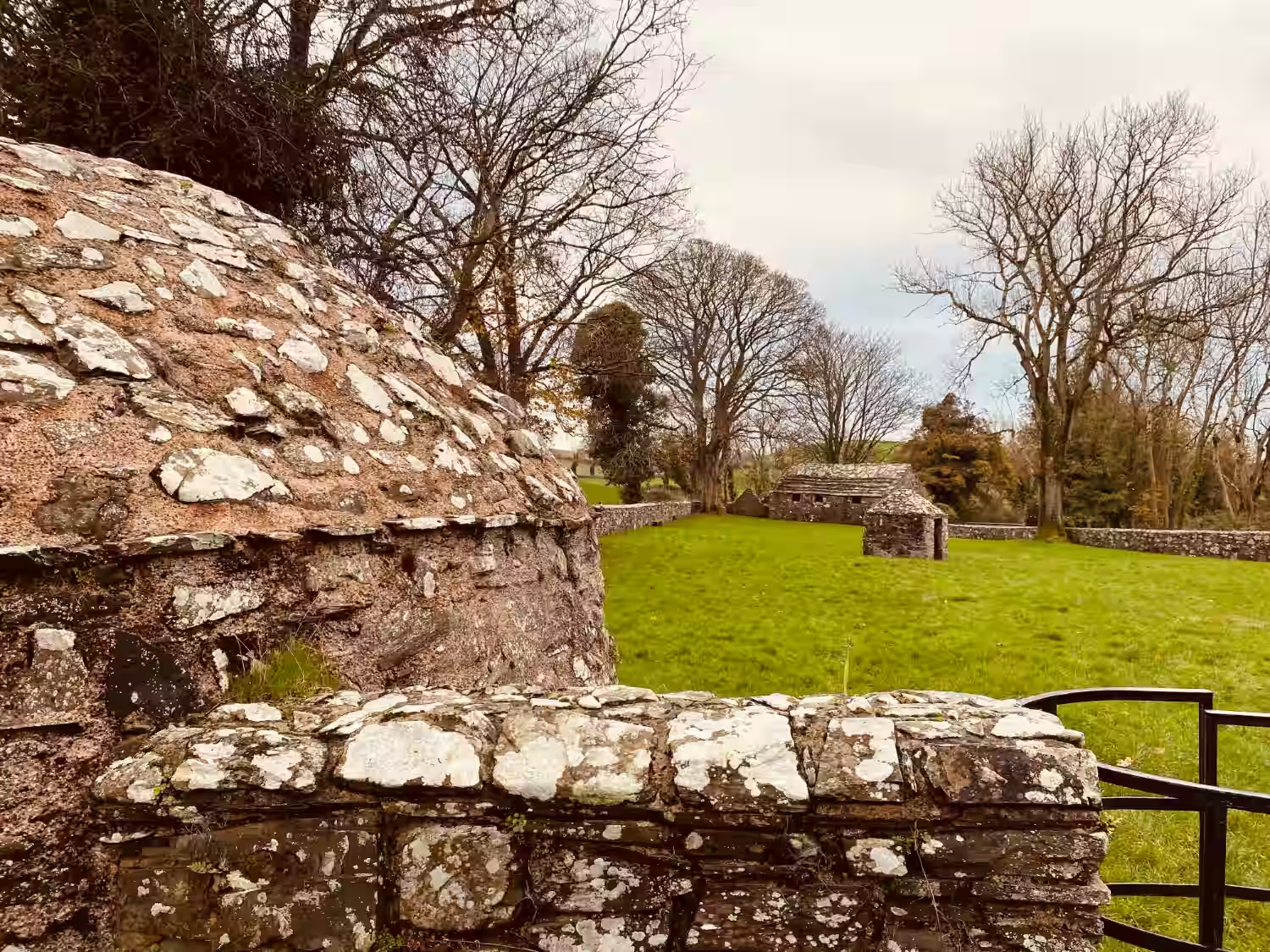
Water has long held strong spiritual symbolism and meaning. From river gods and sea spirits, to liminal lakes and healing wells. And the Struell Wells are arguably one of the most significant holy wells in Northern Ireland, possibly even the island of Ireland. For it was here that St Patrick was said to have blessed the springs, beginning centuries of Christian pilgrimage and countless stories of miraculous healings associated with the site.
By the medieval period pilgrims were travelling from across Ireland to bathe in Struell’s healing waters. Even today, the remains of four distinct wells and two bathhouses hint at the elaborate ritual life that once centred here. In this post we’ll explore this evolving significance, from prehistoric waters to Christian pilgrims. We’ll see why holy wells were considered so significant in Ireland and just how prevalent they were, before looking at Struell and how these wells became one of the most important Christian sites across the whole of Ireland.
What were Holy Wells in pre-Christian Ireland?
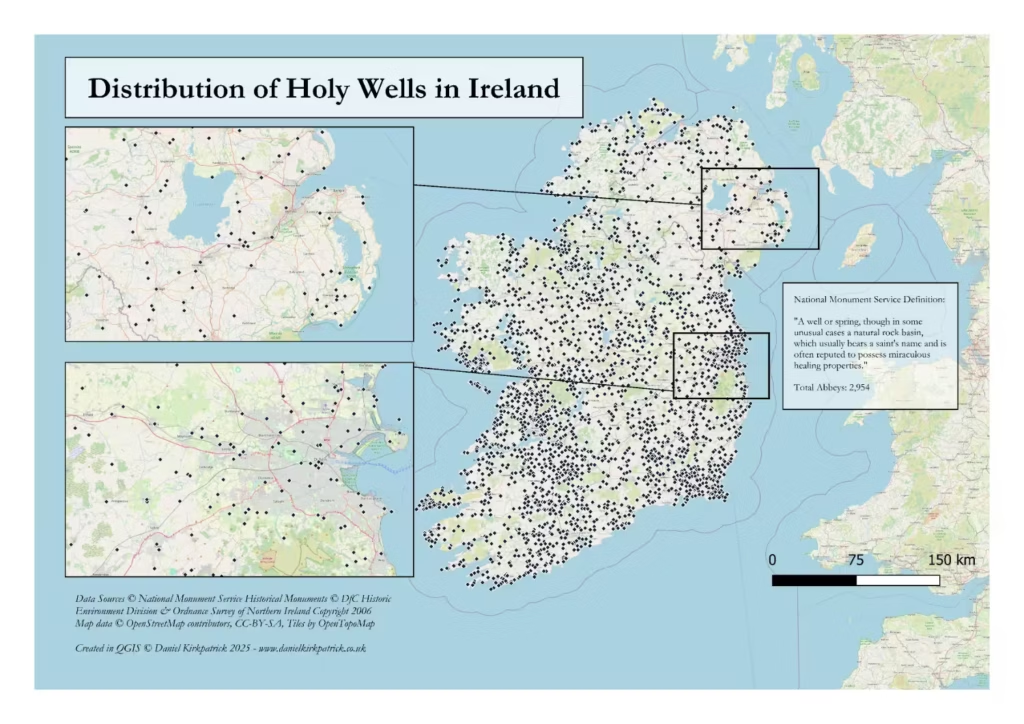
Holy wells are one the most distinctive and enduring features of Ireland’s sacred landscape. With 2,954 holy wells recorded across the whole of Ireland (based on the Government monument data), it’s likely that you’ll nearly always be within the vicinity of one. Typically they are natural springs or pools believed to possess spiritual or healing powers. They are often linked with local saints or biblical figures, but also often have traditions that predate Christianity, reflecting a long-standing reverence for water as a source of life, fertility, and purification.
In early Irish belief, water was seen as a threshold between worlds — a liminal space where the human and the divine could meet. Springs often emerged at landscape boundaries, places imbued with a sense of mystery and transformation. The practice of venerating water sources long predates Christianity. Archaeological finds from bogs and rivers — such as bronze votive offerings, weapons, and personal ornaments — reveal that ancient communities viewed water as a sacred place for communicating with the gods. It was seen as a life-giving force that connected the physical world with the spiritual realm.
So when Christianity more firmly took root in Ireland in the fifth century, these sacred sites were rebranded as places blessed by saints, whose prayers were believed to sanctify the water and infuse it with curative grace. It is this adaption which we turn to next.
Christianisation of Holy Wells
When Christianity spread across Ireland in the fifth century, missionaries recognised the spiritual resonance these places held. Instead of suppressing them, they adapted existing traditions to Christian worship. Many wells were re-dedicated to saints — particularly those associated with healing, like St. Patrick, St. Brigid, and St. Colman. This reflected the wider ‘Irish’ approach to early Christianity, subsuming existing beliefs and traditions rather than replacing them in totality.
Therefore, by the early medieval period holy wells had become focal points of rural devotion. They were typically associated with hermitages, small chapels, or monastic sites, where monks or pilgrims could perform acts of purification and prayer. Ritual washing or immersion symbolised both physical and spiritual cleansing — an echo of pre-Christian rites transformed into Christian practice. Many wells were also believed to cure specific ailments, from eye diseases, to paralysis or even melancholy. Pilgrims visited to perform rounds — ritual circuits around the well — reciting prayers, leaving offerings, and drinking or bathing in the water. Some wells were tied to specific feast days or patterns, when large gatherings of worshippers came to celebrate, seek healing, or give thanks.
Perhaps one of the most significant changes, however, was the structures grew up around such sites. The construction of stone surrounds, steps, and channels around these wells during the medieval era marked a shift from spontaneous folk practice to more formalised pilgrimage infrastructure. This development reflected both the growing popularity of holy wells and the Church’s attempts to guide and regulate their use.
Struell Wells exemplify this transformation — a natural spring system later enhanced with chapels, bathing houses, and sacred pools, creating one of Ireland’s most complete and enduring pilgrimage landscapes.
Why were the Struell Wells built?
The name Struell comes from the Irish An tSruthail meaning ‘the stream’. Tradition holds that St Patrick himself blessed the springs here in the 5th century, using their waters for healing and baptism during his mission to spread Christianity across Ulster. The wells’ enduring sanctity owes much to this association — for centuries, they have been regarded as a place touched by the saint’s hand, where the boundary between the earthly and the divine feels unusually thin. Again this has echoes of pre-Christian beliefs about the ‘thinness’ of spiritual sites.
The earliest records of pilgrimage to the site date to 1515AD with pilgrims likely coming from across Ireland, Scotland and England. Medieval records describe a complex of four wells, each with a distinct purpose — including the Eye Well, the Drinking Well, and two Bathing Wells — alongside a small chapel and dressing house. Pilgrims would visit during the Friday before Midsummer, when the waters were thought to hold special power. Ritual washing, prayer, and all-night vigils were common, reflecting both penitential practice and a profound belief in the wells’ curative abilities.
Over time, Struell evolved from a local shrine into a major religious site linked directly to St Patrick’s legacy. Its survival across centuries — through reformations, changing religious climates, and the fading of pilgrimage traditions elsewhere — speaks to the enduring cultural memory of Ireland’s early saints and the deep-rooted symbolism of sacred water in Irish spirituality. Which brings us to consider what remains of this site.
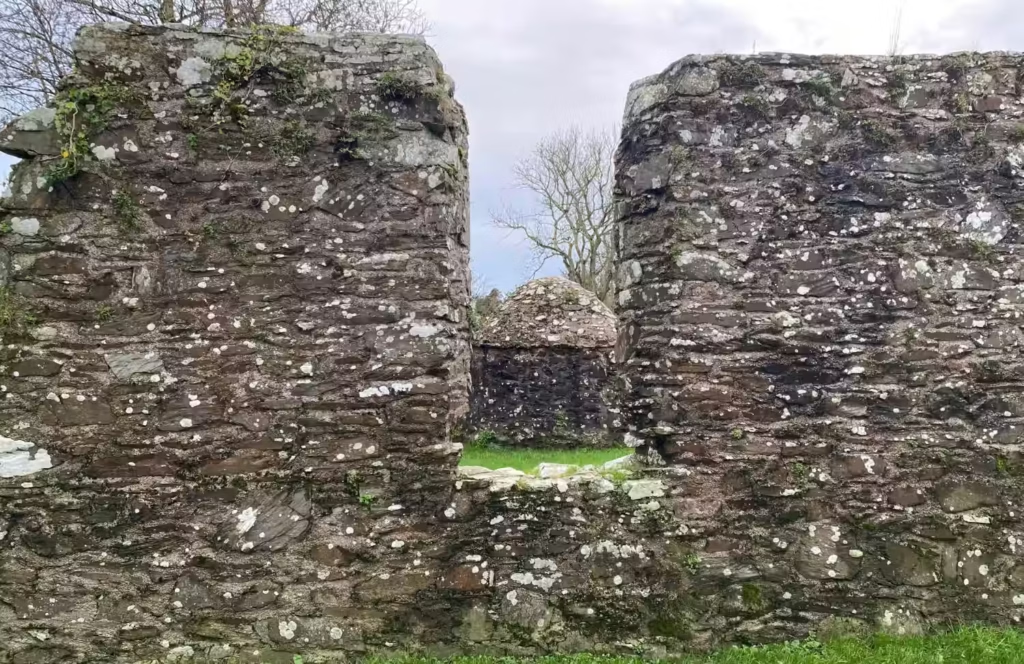
The History and Archaeology of the Struell Wells
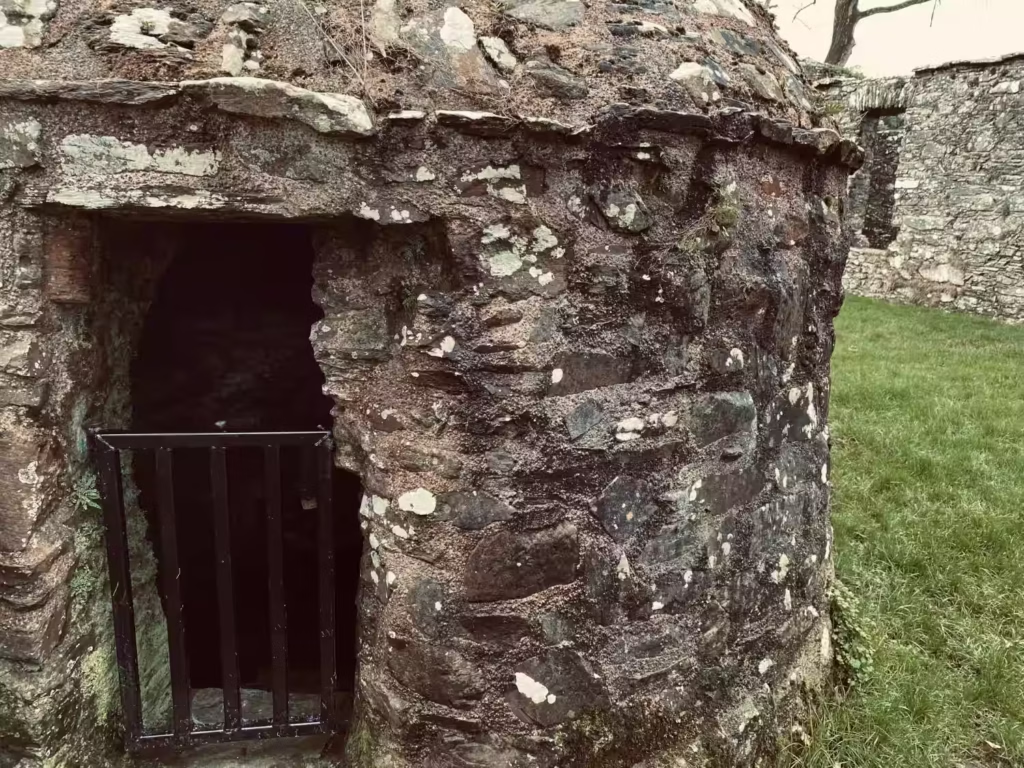
The surviving structures date primarily from the 12th to 17th centuries. Four wells form the heart of the complex — the Drinking Well, the Eye Well, and the two Bathing Wells — each enclosed within their own stone structures. The male bath house was also referred to as the ‘body well’ and is the most substantial building on the site. It was directly supplied with stream water via stone channels and it likely dates to the 17th century onwards. The woman’s bath house was previously known as the ‘limb well’. It is thought to predate the male bath house, possibly as early as the 13th century.
Nearby stands the Church of St Patrick’s Wells, a small rectangular chapel that likely served as the focus for prayers and vigils. Its simple construction, with narrow lancet windows and roughly dressed stone, suggests it too may date to the early 13th century.
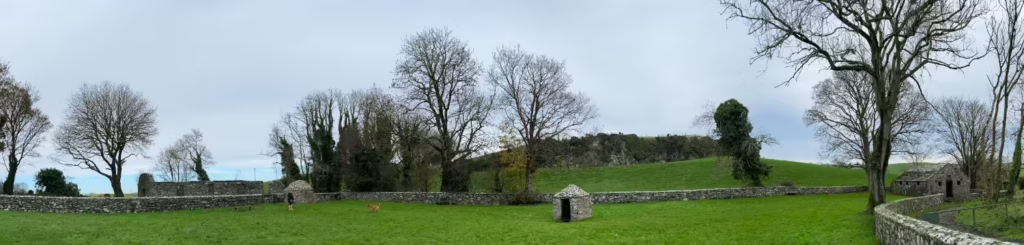
Excavations and surveys have revealed that the complex was carefully engineered to manage the natural water flow, with stone-lined conduits directing the spring’s output to each well. Traces of paving and platforms indicate areas used for processions or resting pilgrims. The entire site is enclosed within a boundary wall, suggesting formal management, possibly under monastic supervision — perhaps by the nearby Downpatrick monastery, which held the beliefs of St Patrick at its heart.
Medieval records and later accounts provide glimpses into Struell’s prominence. A 17th-century description notes hundreds attending the Midsummer pilgrimage, bathing by torchlight and leaving offerings at the wells. Despite ecclesiastical disapproval in later centuries, the tradition persisted well into the 19th century, showing how pilgrimage and local devotion remained intertwined long after official patronage waned.
Significance and Legacy Today
Struell Wells remains one of Ireland’s most evocative sacred landscapes. Though the great pilgrimages have long ceased, the valley retains a quiet sense of reverence that continues to draw visitors and historians alike. The wells’ association with St Patrick has anchored their importance for centuries.
It’s hard to image the hundreds of pilgrims who’d have undertaken perilous journeys just in the hope of witnessing the miraculous waters we can still see today. With nearly 1,500 years since St Patrick, and even more for the site’s prehistoric significance, this is one of the most ancient wells in Ireland, and certainly worthy of our continued respect.
Today, the site is managed by the Historic Environment Division of Northern Ireland, ensuring its preservation and accessibility. Archaeological conservation work continues to stabilise the medieval structures and protect the spring system from environmental damage. Interpretative signage allows visitors to explore the layout and understand how ritual and landscape intertwined.
Frequently Asked Questions: Struell Wells
Struell Wells are a group of four sacred wells and medieval stone structures located near Downpatrick, County Down. Used for centuries as a site of pilgrimage and healing, they include a drinking well, two bath houses, and a well house built around a spring thought to have curative powers.
Tradition holds that St Patrick visited Struell and blessed its waters, giving them healing properties. This connection made the site a major destination for pilgrims during the medieval period and remains central to its enduring reputation for sanctity.
Pilgrims once gathered on specific feast days, particularly around Midsummer and St John’s Eve. They bathed in the wells, drank the water, and performed prayers for healing and penance. The site’s layout reflects these ritual stages of purification and devotion.
YOU MAY ALSO LIKE
 Antrim Round Tower: History of Antrim’s medieval monastic site
 St Patrick: History, Mission and Legacy in Early Ireland
 Iron Age Trade in Ireland: Networks, Imports, and Economic Life
 St Brendan of Clonfert: Irish Monk, Atlantic Voyager & Saint
 Irish Bards and Ancient Music: The Sound of Iron Age Ireland
 Hill of Uisneach – Ireland’s Sacred Centre of Myth & History
 Who was St Columba? Missionary, Monk, and Legend of Iona
 Cailleach – Ireland’s Winter Hag and Shaper of Mountains