Ireland’s Sacred Centre
When you look at the location of cities, particularly capital cities, they’re nearly always along key waterways or oceans. London on the Thames. Dublin and Belfast on the Irish sea. Paris on the Seine. Berlin on the Spree. New York the Atlantic. The reasons are obvious: trade, travel, access to the abundant resources from fish to seaweed. So when there’s an ancient site that’s far from any waterway or coastline, it raises an obvious question about what was so important to justify the location. And the Hill of Usineach is a perfect example of such a puzzle.
The Hill of Uisneach in Co. Westmeath has long been called the omphalos or “navel” of Ireland – a symbolic centre where the ancient provinces met. Medieval writers describe all five Irish provinces converging at Uisneach’s summit on a great stone called the Ail na Míreann (Stone of Divisions). According to the legends, this very rock marked the point from which kings might watch in all directions. Early Christian authors even compare the festivals at Uisneach to the pan-Hellenic games of ancient Greece. So why did these festivals, and kings choose Uisneach as the centre of Ireland?
History & Archaeology of the Hill of Uisneach
Archaeology shows that Uisneach was used for many millennia, though – given the vast breadth of time – interpretations vary considerably. Excavations in the 1920s revealed a complex of earthworks. On the hilltop they cut trenches through a large conjoined ringfort – essentially two overlapping round forts – and found that beneath its walls lay an even older ditched enclosure dated by finds to the Iron Age (roughly AD 200–500).
This implies at least two main phases of activity: a prehistoric ritual enclosure first, later overlain by an early medieval fort. As such, Uisneach indicates three main structural phases: “a late prehistoric ceremonial enclosure, an early medieval conjoined ringfort, and a field system of possible medieval date”.1 In other words, early evidence suggests the Hill of Uisneach began as a ceremonial hill (with earthworks possibly used for rites) and only later became a high-status settlement (perhaps the seat of kings) in the early medieval period.
Archaeological Finds
Beneath the ringfort, were also found unusual small finds and deposits. For example, they recorded concentrations of water-worn quartz pebbles and a carved sandstone ball (with etched lines like a globe). Such items may have been ritual offerings. They also found broken everyday objects (fragments of a potter’s quern millstone, a bronze penannular brooch pin, etc.) in the hilltop trench, suggesting people deliberately placed items in ditches. These finds hint that Uisneach functioned as more than a farmstead – probably a place of ritual deposits and ceremonies.
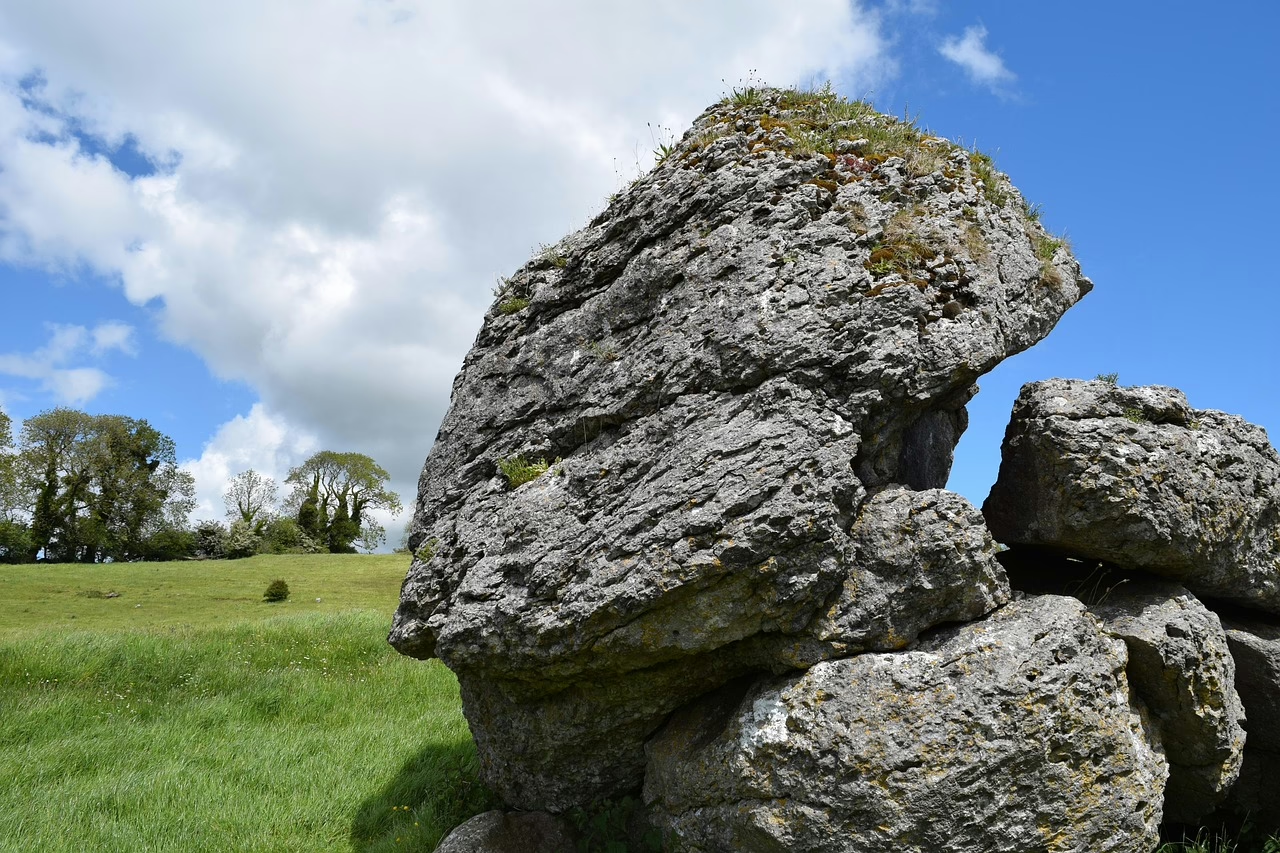
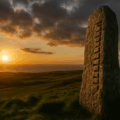
The Stone of Divisions (Ail na Míreann) itself is a giant glacial boulder on the southwest slope, set in a ring-barrow. According to tradition, it “marks the exact centre of Ireland and the meeting point of the ancient provinces”2. Archaeologically, the stone is just a natural limestone erratic, but its Bronze/Iron Age ring-cairn suggests ritual significance. Later legends (see below) say the sovereignty goddess Ériu is buried under this stone.
Table of Archaeological Discoveries
| Feature / Artifact | Location | Date / Period |
|---|---|---|
| Conjoined Ringfort (Rathnew) | Summit area | Iron Age to Early Medieval (3rd–5th century AD) |
| Stone Dress Pin with Silver Inlay | Excavated from Rathnew | Early Medieval |
| Souterrains (2) | Within Rathnew enclosures | Early Medieval |
| Animal Bone Pits & Ash Beds | Inside Rathnew | Iron Age to Early Medieval |
| St. Patrick’s Bed | Hill summit | Neolithic (c. 3700–2500 BCE) |
| Circular Enclosure (25m diameter) | Surrounding St. Patrick’s Bed | Neolithic |
| Carn Lughdach | East of Lough Lugh | Bronze Age |
| Lough Lugh (Loch Lugborta) | East of summit | Natural feature with mythological significance |
| Stone of the Divisions (Ail na Míreann / Catstone) | Southwest side of hill | Prehistoric; associated with provincial divisions |
| Holy Wells (e.g., Tobernaslath) | South of Lough Lugh | Early Christian period |
| Ancient Roadways | Leading to and from Rathnew | Early Medieval |
| Additional Earthworks | Across the hill | Neolithic to Medieval |
Myth and Spiritual Significance of Uisneach
Surrounding the summit are numerous earthworks. On the west side lies a large ring-barrow (a circular burial mound, about 25m across) encircling the Stone of Divisions. This aligns with Bronze/Iron Age burial practices, indicating the stone was already sacred in prehistory. On the east slope is Carn Lugdach, a large turf mound or cairn over the site of the god Lugh’s burial.
Geophysical surveys have revealed more buried enclosures and field boundaries beneath the turf, confirming that what we see today only hints at a much larger prehistoric complex. For instance, a flattened area on the summit called “St. Patrick’s Bed” has never been excavated, but surveys suggest it is the remains of a Neolithic passage tomb (with a 25m circular kerb) – possibly the oldest feature on Uisneach. The name “St. Patrick’s Bed” comes from later use as a rock for religious masses, but it likely served a very different ritual purpose around 3000 BC.
Excavation and survey also touch on the nearby Lough Lugh (“Lugh’s Lake”) just east of the hilltop.3 Today it is a small shallow lake surrounding a central island mound. Archaeologists note that a natural ice-age lake existed there, which was deliberately re-excavated in prehistoric times to maintain open water. In fact, a Discovery Programme used pollen cores from Lough Lugh to reconstruct the Iron Age environment around the Hill of Uisneach. The lake, the burial mound (Carn Lugdach), and the cairns would have given the hilltop a distinctly ceremonial character.
Mythology of Uisneach
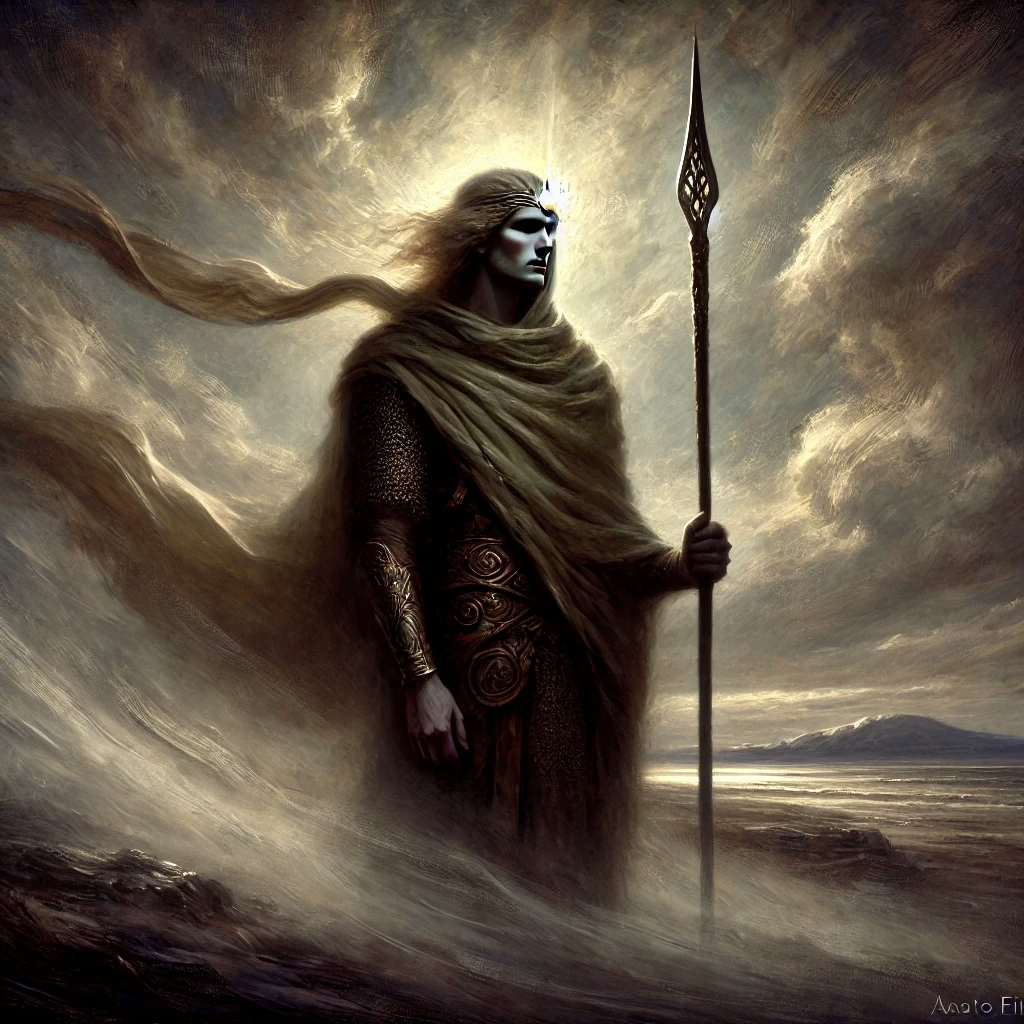
According to Irish legend, Uisneach sits at the centre of the island – not just geographically, but spiritually. Irish myth links Uisneach to the very naming of Ireland. In the Lebor Gabála Érenn (Book of the Taking of Ireland), the Gaels first meet the sovereignty goddess Ériu at Uisneach’s summit. Ériu promises them the land on the condition it bears her name, so “here on the Hill of Uisneach Éire/Ireland was named” after her.
Later tales say Ériu was buried under the Stone of Divisions, giving further status to that landmark. Some texts even hint at a “Fifth Province” of the Otherworld, accessible beneath Ail na Míreann – implying the hill was a gateway between realms. Similar legends surround other ancient sites from the spiritual thinness of Newgrange at the solstice, to the souterrain Cave of the Cats at Rathcroghan.
Many gods and heroes are tied to Uisneach. The Tuatha Dé Danann, Ireland’s legendary pre-Gaelic gods, were said to have assembled there. The Dagda (their father-god) supposedly made Uisneach his home, with “Ireland stretching equally far from it on every side”, though there are similar claims surrounding Newgrange.
The god Lugh, associated with light and sovereignty, meets his end at Uisneach: one story holds he drowned in Lough Lugh nearby. His burial mound is none other than Carn Lugdach (“Lugh’s Mound”) on the hill’s flank. Even the mythical warrior Fionn mac Cumhaill is linked to Uisneach – a well there bears his name in legend.
From Prehistory to the Medieval Age
Therefore, it is clear from the archaeological evidence that Uisneach was a multi-period ritual site. From a ceremonial enclosure in late prehistory (Bronze/Iron Age) to an early medieval royal fort, the hill’s monuments indicate continuous sacred use whose “sacred character was established and maintained over many millennia,”4 even if exactly what rituals took place can only be guessed. Notably, no temples or large standing stones survive; instead it is the earthworks and location (with panoramic views across Ireland) that underscore its special status contrasting with the likes of Newgrange with its many standing stones. Though you can see it’s relationship to nearby megalithic sites in my other post.
Despite the vast passing of time that the site has endured, there are therefore still a wide range of monuments visible today. Yet while these archaeological remains do not prove the more colorful myths, they do confirm that Uisneach served a significant cultural and religious purpose through the ages. Medieval annals mention battles and church foundations at Uisneach, but make no explicit reference to a regular óenach (assembly). And, like with most of ancient Irish history, modern scholars caution that much of what we “know” comes from later texts. Still, the density of monuments and significance of finds suggests extensive communal activity – even if the exact nature (religious rite, king-making, law-giving) remains debated.
The Fair of Uisneach: Fire Festivals
Medieval and early-modern tradition also made Uisneach the stage for great fairs and rituals. For example, there were references to how two bonfires were lit on Uisneach at Beltane (May Day) and cattle were driven through the flames to protect them from disease, evidently reflecting an ancient purification rite – a kind of Brigid’s fire festival that kept livestock healthy. Other claims refer to how, before the time of the High King Tuathal, the kings of Ireland gathered at the Hill of Uisneach every seven years, each buying a ceremonial seat there. Though the validity of such claims is very difficult to verify.
Modern scholars note that most assembly legends come from centuries after the fact. The early Irish annals themselves are silent on any regular Uisneach fairs. In other words, we do have texts that say kings met at Uisneach, but those texts are relatively late (medieval) and may reflect a desire to link later politics to prehistoric sanctity. It is entirely possible that Uisneach’s “assembly” is more a matter of literary tradition than a documented historical festival.
Separating the Myths from History
At the same time as this sceptism, the archaeology does not rule out gatherings. Its scale (over 200m across) is “truly monumental” and unlike ordinary farm enclosures.5 In this view, the Iron Age people who dug Lough Lugh, built cairns and banks, and modified the hilltop were creating a landscape of sacred markers – and later generations remembered these in myth.
The changing role of Uisneach from a presumably ritual centre to a medieval “royal site”. And as with the other ancient royal sites of Ireland, fact and legend converge on Uisneach, but with caution. The archaeology confirms very ancient use, and the myths reflect a memory (or invention) of that sacredness. We can say archaeologically that the Hill of Uisneach has ancient ceremonial features (ditches, tombs, mounds) and became a seat of power by the early Middle Ages, but little more besides.
Uisneach’s Significance Today
The Hill of Uisneach continues to inspire and endure as one of the most significant Irish cultural sites. Regarded as the mythological and sacred centre of the island, it serves as a tangible link to Ireland’s ancient past and enduring traditions. Annually, the hill becomes the focal point for the Bealtaine Fire Festival, a revival of an ancient Celtic tradition marking the onset of summer. This event draws people from diverse backgrounds to participate in ceremonies, music, and communal gatherings, reflecting a collective desire to reconnect with ancestral customs and the natural rhythms of the land.
Beyond its ceremonial role, Uisneach is a site of historical and mythological convergence. Its association with the burial place of the goddess Ériu, from whom Ireland derives its name, and has connections to significant figures in Irish mythology and history. Moreover, the hill’s landscape – dotted with ancient monuments and earthworks – offers insights into the island’s prehistoric and medieval periods. Personally I prefer the history of Tara, Newgrange and the many other sites I’ve reviewed, but the Hill of Uisneach has an indisputable place within ancient Irish history.
Visiting The Hill of Uisneach
Pre-Booking and Access: As the Hill is situated on private land and functions as a working farm, access is exclusively through guided tours. It’s essential to pre-book your visit to secure a spot and avoid disappointment.
Tour Details: Public tours are typically available from April to September on Saturdays and Sundays at 11:00 AM, and from October to March on Sundays at 11:00 AM. Each tour spans approximately two hours, covering about 3 kilometers of uneven terrain, so a moderate level of fitness is recommended.
Preparation: Given Ireland’s unpredictable weather, dress appropriately with sturdy footwear and waterproof clothing. Note that dogs are not permitted on the tours, and visitors must remain with the guide throughout the experience.
Visitor Centre: Begin your journey at the Visitor Centre, a restored Irish cottage offering refreshments and a space to relax before or after your tour.
Frequently Asked Questions: The Hill of Uisneach
The Hill of Uisneach is best known as the ceremonial and spiritual centre of ancient Ireland. It is closely associated with pre-Christian myth, royal gatherings, and the Bealtaine fire festival, symbolising unity between Ireland’s provinces.
Yes, the Hill of Uisneach is accessible through guided tours that explore its mythology, monuments, and landscape features, including the Catstone and surrounding ancient earthworks.
Each May, a fire is lit on Uisneach to revive the ancient Bealtaine tradition. Historically, this fire marked the beginning of the pastoral season and was believed to have protective powers, rekindled in modern ceremonial events.
Uisneach is linked to the goddess Ériu (the eponym of Ireland), the god Lugh, and other Tuatha Dé Danann figures. It’s said to be the burial place of Ériu and a site of divine assemblies in early Irish tradition.
Uisneach is often described as Ireland’s navel due to its geographical centrality and its mythological status as the meeting point of the five ancient provinces (the fifth being Mide). The Catstone (Ail na Míreann) symbolises this unification.
- https://archaeologydataservice.ac.uk/library/browse/details.xhtml?recordId=3056520#:~:text=Abstract%3A%20The%20paper%20represents%20the,and%20a%20field%20system%20of ↩︎
- https://uisneach.ie/archaeology/#:~:text=On%20the%20southwest%20side%20of,Ireland%20is%20laid%20to%20rest ↩︎
- For those unfamiliar with the Irish god Lugh, read my post on the god of the Long Arm. ↩︎
- https://www.academia.edu/12152447/From_cult_centre_to_royal_centre_monuments_myths_and_other_revelations_at_Uisneach#:~:text=,in%20a%20royal%20procession%20that ↩︎
- https://www.academia.edu/12152447/From_cult_centre_to_royal_centre_monuments_myths_and_other_revelations_at_Uisneach#:~:text=that%20have%20come%20to%20light,inferred%20from%20the%20character%20of ↩︎
YOU MAY ALSO LIKE
 Nuada of the Silver Hand: King of the Tuatha Dé Danann in Irish Mythology
 Iron Age Clothing in Ireland: What People Really Wore
 Ancient Irish Society: Language, Law & the Structures of Kinship
 Irish Festival Names Explained: The Etymology of Samhain, Imbolc, Bealtaine and Lughnasadh
 The Dagda: Irish All-Father God of Myth, Power & Wisdom
 Etymology of Irish Animal Names: Myth & Language Revealed
 Iron Age Trade in Ireland: Networks, Imports, and Economic Life
 Ogham Tree Alphabet: Irish Script, Meaning & Origins