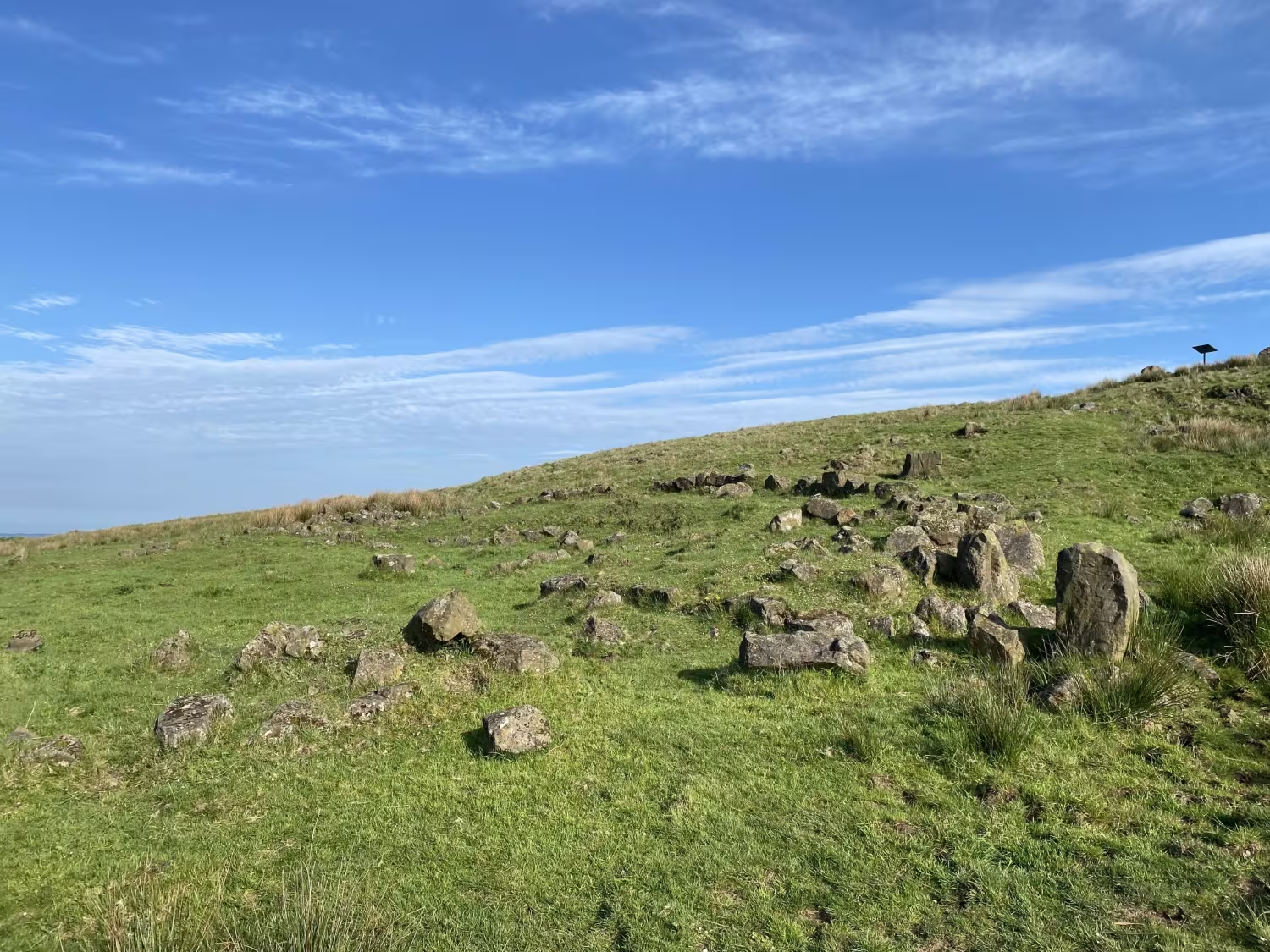
The Bronze Age marked a turning point in Ireland. Between roughly 2500 and 500 BC, communities across the island began to rely on new technologies (much like ourselves transitioning to AI or virtual socialisation). These new tools and weapons, reshaped everything from farming practices to social structures, to more permanent forms of settlement. It was a period defined by expansion and innovation. And so it was when upland areas, like that of Divis Mountain, became attractive for Bronze Age homesteads and settlements.
High above Belfast, the remains of a Bronze Age homestead reveal not only the presence of an ancient community but also a wider story about life in Ireland’s uplands over 3,000 years ago. The Divis site stands as one of several examples of early domestic settlement found across the island, offering rare insight into how ordinary people adapted to their environment long before written history. This post will consider the wider context of such Bronze Age homesteads, before focusing on the specific evidence from the one at Divis. It will set it in the context of wider social patterns across Ireland and consider the significance it has for us today. While the site now is little more than a pile of stones, it’s incredible how much such a modest historic site can tell us.
But first we must understand the context.
The Bronze Age in Ireland: A New Way of Life
The Bronze Age in Ireland was roughly from 2500 to 500 BC. It began with the introduction of metalworking, when copper and tin were first combined to create bronze — a stronger, more versatile material that reshaped every aspect of daily life. Tools became sharper, weapons more durable, and ornamentation more elaborate, marking a visible shift in craftsmanship and status.
Communities grew increasingly organised during this period. Settlements moved from temporary or seasonal camps to more permanent homesteads and enclosed farmsteads, often located on fertile ground or in upland areas that offered access to grazing and resources. Farming expanded, with cereals such as barley and emmer wheat forming part of a mixed economy that also relied heavily on livestock. Woodland clearance altered the landscape, creating open fields and pastures that would define rural Ireland for millennia.
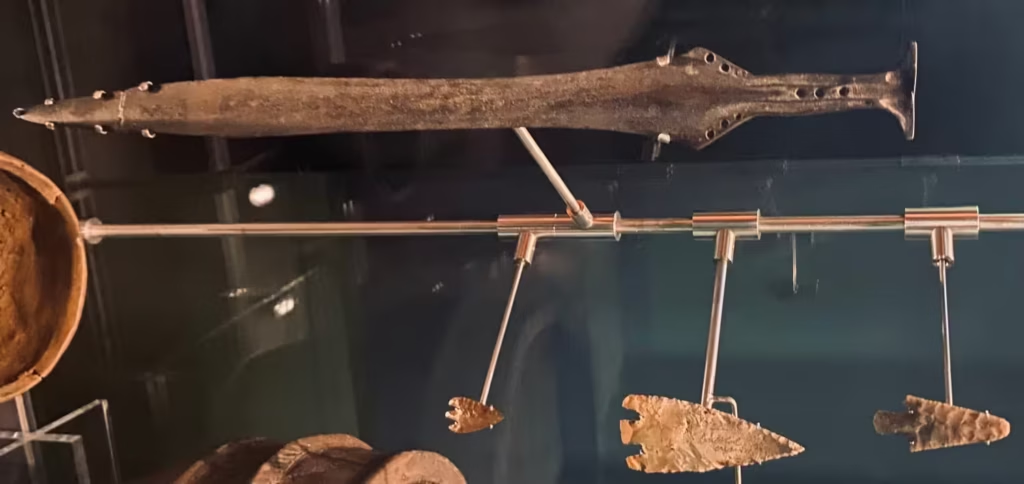
The Bronze Age also saw the development of far-reaching social and trade networks. Irish metalworkers were among the most skilled in Atlantic Europe, producing finely cast axes, swords, and ornaments that were exchanged across the Irish Sea and beyond. Examples in the image above show intricate metalwork from a sword discovered at what is now Ballymoney.
Goldwork flourished too, with torcs, lunulae, and dress fasteners expressing both artistry and hierarchy. These innovations were not isolated; they reflected a dynamic island deeply connected to the wider prehistoric world.
It was within this evolving landscape — one of expanding settlement, agriculture, and craftsmanship — that the homesteads of upland areas like Divis Mountain took shape.
What was the Divis Mountain Homestead?
The Divis Mountain Bronze Age homestead is a remarkable survival from a time when Ireland’s uplands were dotted with small farming communities. Located on the northern slopes of Divis and the Black Mountain, overlooking Belfast and Belfast Lough, the site represents a typical form of rural domestic life during the Middle to Late Bronze Age. At first glance it may appear as a faint ring of stones and earthworks, but this subtle outline conceals one of the most complete examples of an upland homestead in eastern Ulster.
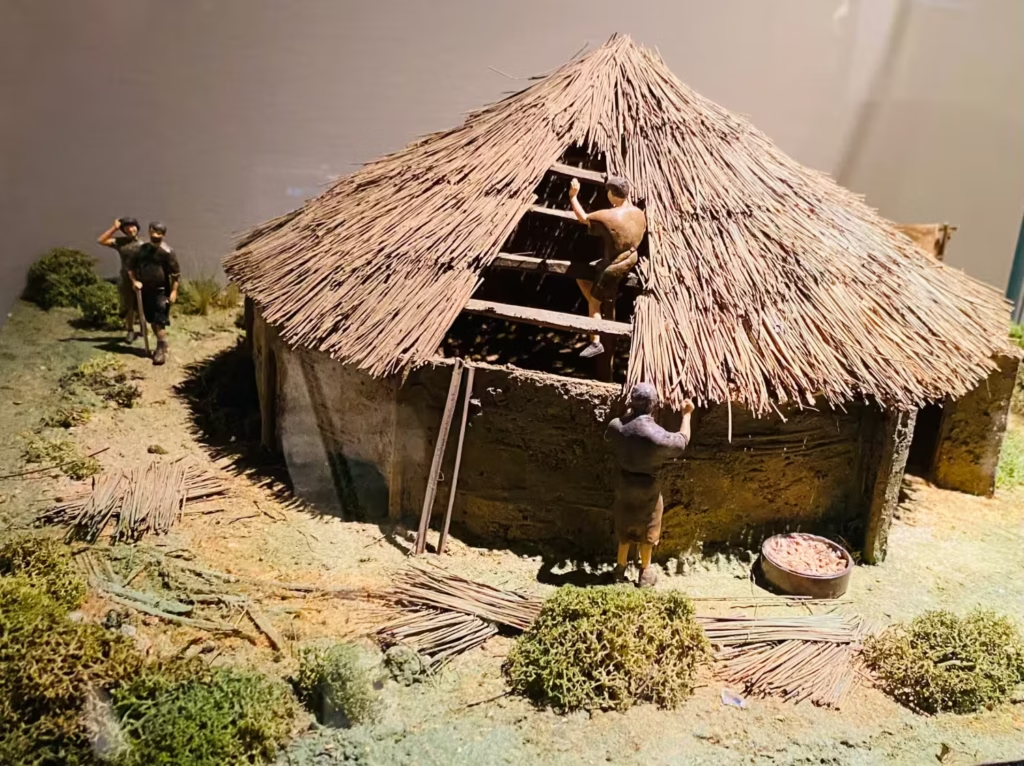
Archaeological surveys and aerial photography have identified the remains of circular house platforms enclosed by low banks and terraces. The main dwelling would likely have been a roundhouse constructed from timber posts, wattle walls, and a thatched roof of heather or reed. Around it, small enclosures or paddocks probably held livestock, while nearby pits and hearths suggest cooking, metalworking, or other domestic activities.
Sites such as Divis are characteristic of the shift in settlement patterns that defined the later Bronze Age. Communities moved away from temporary camps towards more permanent homesteads, often situated on elevated ground with good visibility over surrounding valleys. This placement offered both security and proximity to grazing land, essential for mixed farming economies.
The Divis homestead should therefore not be seen as an isolated curiosity, but as part of a widespread landscape of small, self-sufficient farms that sustained Bronze Age society. Its survival in the modern landscape allows archaeologists to glimpse the domestic realities behind the period’s grander metalworking and monumental traditions.
Archaeological Evidence at Divis Mountain
The Divis Mountain homestead offers a striking example of domestic life in Ireland during the Bronze Age. Situated on the slopes overlooking Belfast Lough, it forms part of a wider archaeological landscape in the Belfast hills dotted with prehistoric monuments, burial cairns, and field systems. The homestead itself was a small enclosed settlement, typical of the later Bronze Age (c. 1200–500 BC), when communities across Ireland began to favour more permanent and defensible dwellings set within clearly defined boundaries.
On the site itself, it’s worth quoting the evidence from one of the most recent archaeological surveys:
“The current survey included seven hut circles closely aligned along a 50m stretch of riverbank. The river adjacent to the hut sites appears to have been dug out to provide a sump or trough to store water. Numerous other possible hut sites were noted in relation to the river south of Mast Road.”
So, the Divis settlement likely consisted of a series of circular houses—likely built with timber posts, wattle walls, and a thatched roof—surrounded by a low earthen bank and ditch. These enclosing features marked out the domestic space from the wider landscape and reflected an increasing emphasis on private or family-oriented living. Such enclosures were not fortifications but symbolic and practical boundaries, helping to contain livestock, manage refuse, and delineate ownership.
Given the number of homesteads discovered – and there likely being many others whose evidence has been destroyed and lost – this was likely part of a wider network of small farming settlements. In other words, here we have one of the earliest pastoral ‘Belfast’ communities (building on evidence from the earlier Neolithic period). Sites like Divis show a trend towards settled, enclosed homesteads—suggesting greater investment in land, kinship, and long-term continuity.
But it’s worth taking a further step back and consider how this site then compares to others from across Ireland.
Bronze Age Homesteads Across Ireland
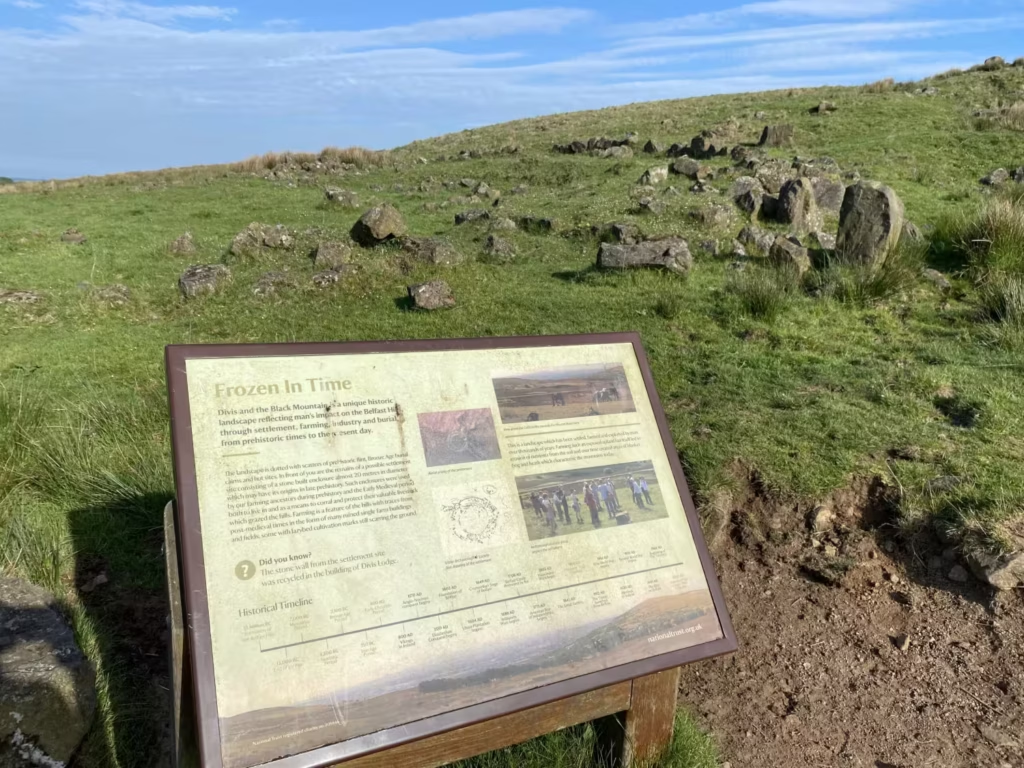
The Divis Mountain site belongs to a much broader pattern of Bronze Age settlement found across Ireland. Throughout the island, the Bronze Age saw the emergence of enclosed homesteads—small, often circular or subcircular settlements typically built on well-drained slopes or ridgelines, with commanding views over fertile land and access to water sources. Divis fits squarely within this pattern, occupying a strategic upland position that offered both visibility and security.
The typical Bronze Age homestead consisted of one or more roundhouses enclosed by an earthen bank, stone wall, or palisade. Excavations at other sites have revealed similar arrangements, however sites are typically very small. Homesteads typically have circular houses with central hearths, storage pits, and evidence of animal enclosures or small yards nearby. These domestic compounds varied in size, but all suggest a concern with order, control of space, and protection of resources. The Divis site follows this same model, its enclosing bank marking the threshold between domestic life and the wider environment.
Perhaps one of the most striking contrasts is the the settlement at Corrstown Village – the largest for this time period in Ireland, with up to 300 people. With strengthening trade networks with Britain, the comparable ease of travelling by waterways and seaways compared to land, and the need for abundant pasture for growing herds, both settlements make sense.
But it then begs the question of: ‘what was life like in one of these settlements?’
Daily Life in a Bronze Age Homestead
Daily life on the Divis Mountain homestead would have revolved around subsistence, family, and the careful management of resources in an upland environment – think modern-day preppers but without all the luxuries and utilities of modern life.
The homestead’s layout—enclosed and compact—suggests a close-knit family or small kin group, perhaps eight to twelve individuals, living and working together through the changing seasons. At the heart of the dwelling burned an open fire, used for cooking, light, and warmth. Smoke drifted through the thatch, keeping pests at bay and helping to preserve foodstuffs hanging from rafters above.
Cooking and food preparation were daily routines that connected the inhabitants directly to their landscape. Charred grains found at Bronze Age settlements elsewhere suggest that cereal cultivation was an important part of their diet – grown in nearby plots, harvested with bronze sickles, and ground into flour using stone querns. Meat came from livestock kept within or near the enclosure. Seasonal hunting and fishing, particularly in the nearby rivers and Lough Neagh basin, would have supplemented this diet with wild game and fish.
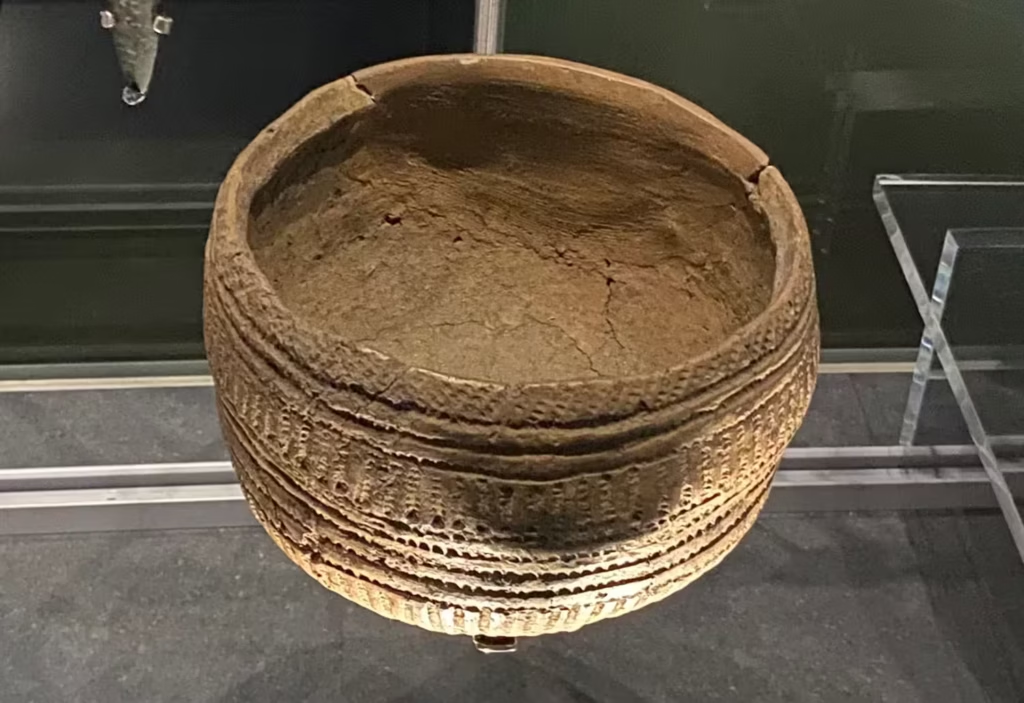
Craftwork and maintenance filled much of the remaining time. Bronze artefacts—though rare and valuable—were used for practical tools such as sickles, axes, and awls, while wooden and bone implements handled everyday chores. Pottery, simple and functional, was made from local clay and fired in open hearths or pits. These vessels were essential for cooking, storage, and serving, reflecting the rhythms of domestic life.
This is but a taste of what life may have been like. So why does it matter today?
Legacy and Meaning Today
The Divis Mountain Bronze Age settlement provides a tangible link to Ireland’s distant past, particularly around what is now Belfast. Though the remains are subtle—a series of low banks and traces of circular house platforms—the site embodies the patterns of settlement, agriculture, and craft that sustained communities across Ireland over three millennia ago.
Today, Divis forms part of a protected landscape under the stewardship of local conservation authorities, ensuring that its archaeological and ecological value is preserved. Its location within the Divis and Black Mountain area allows researchers and visitors alike to engage with a landscape that has retained much of its prehistoric character.
I recently had the pleasure of visiting the site and walking along the nearby river. I’ll confess it took me a while to locate the site, given it is honestly little more than a few remaining stones. But it is humbling to stand at such sites and reflect on all the families, lives, experiences, which have come and gone before us. Though I didn’t have long to reflect before several of the roaming cows decided to intimidate my dog and I away. Who knows – perhaps our forbears experienced similar encounters.
Frequently Asked Questions: Divis Mountain Homestead
The Divis Mountain homestead is an archaeological site located on the slopes of Divis and Black Mountain near Belfast. It is a typical Bronze Age settlement, consisting of a circular timber roundhouse enclosed by a low earthen bank, reflecting domestic life and small-scale farming practices between c. 1200–600 BC.
Yes. Divis Mountain and the surrounding Black Mountain area are accessible for walking and exploration. While the homestead itself survives as subtle earthworks, the landscape context allows visitors to visualise Bronze Age life and settlement patterns.
Divis is one of many upland homesteads in Ireland, similar in structure to settlements found in the Sperrins, Wicklow Mountains, and elsewhere. Its elevated location highlights adaptations to marginal land, seasonal grazing, and resource management strategies.