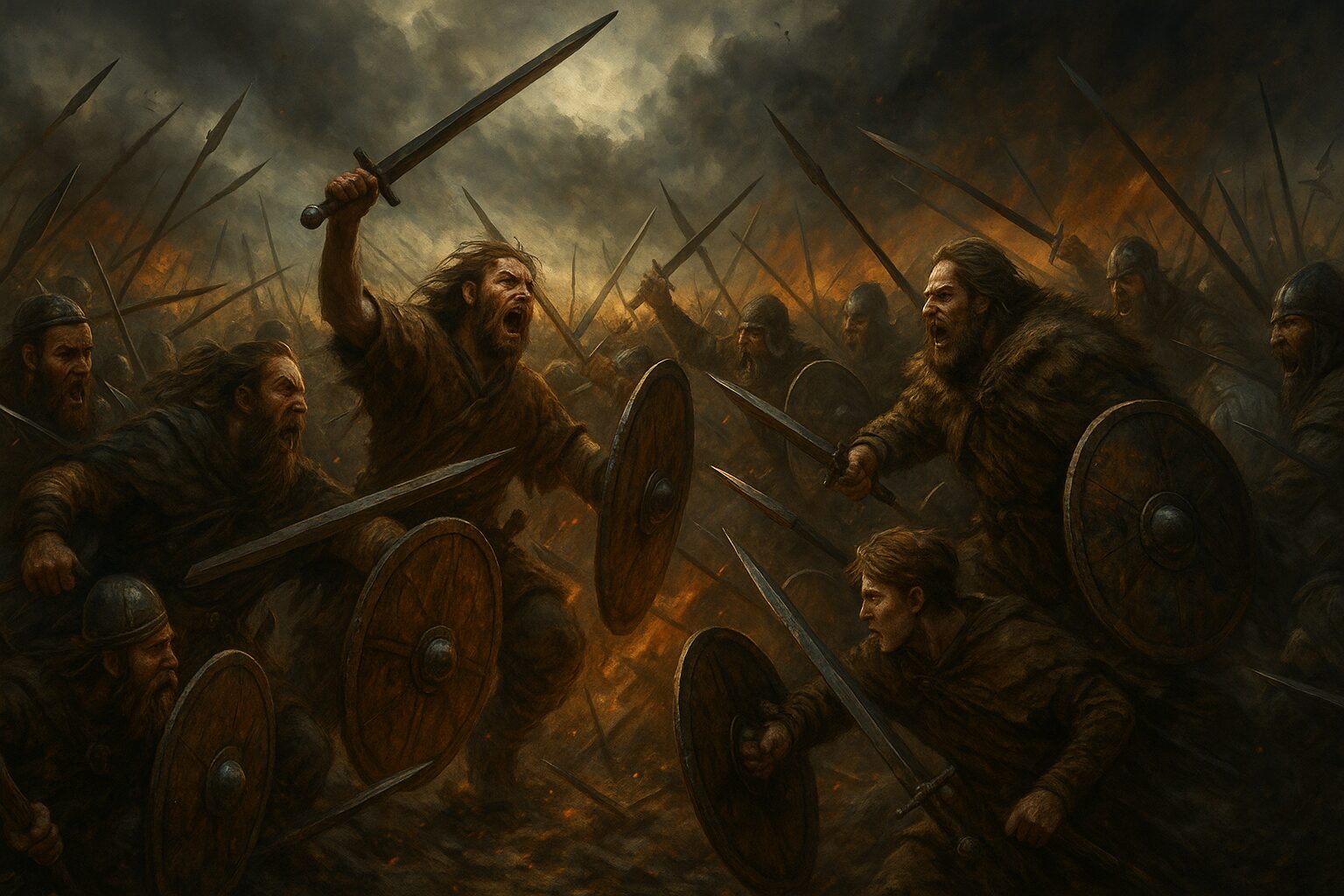
Irish Iron Age warfare (≈ 500 BC – AD 400) sat at the heart of early Irish life. Dozens of kin-based túatha—mini-kingdoms scattered across wooded valleys and hilltop forts—measured power in cattle herds and the warriors who could steal or defend them. Dawn raids, hit-and-run ambushes and the occasional clash of massed spears weren’t background noise; they were the motors of politics, trade and legend. When we track these tactics—why cattle functioned as currency, why ring-forts ringed every pasture, why bards glorified single-combat heroes—we uncover an Ireland engineered around mobile warbands, fortified homesteads and fiercely competitive warrior elites.
In this post, I map out Irish Iron Age warfare from the ground up—breaking down the key tactics (raids, ambushes, skirmishes, champion duels), the strategic logic behind hillforts and cattle economics, and how these shaped power politics among rival túatha. You’ll see how archaeology, saga literature and landscape evidence combine to reveal a mobile, cattle-centred war culture that set the foundations of early Irish society.
Timeline of key developments (c. 500 BC–AD 400)
| Period | Key Developments & Highlights |
|---|---|
| 500 – 300 BC Early Iron Age | • Iron metallurgy becomes widespread; La Tène-style weapons and art appear. • Emergence of high-status “royal seats” on hilltops—Navan Fort in Ulster, Rathcroghan in Connacht, Dún Ailinne in Leinster, and the Hill of Tara in Meath—serving political and ritual roles. |
| 400 – 150 BC Classic Late Iron Age | • Peak hillfort construction—500 + sites across Ireland, several per county. • Mixed farming and cattle-rearing dominate; elites measure wealth in herds. • Corlea bog roadway (built 148 BC) links major ritual centres, proving large-scale labour mobilisation. |
| 100 BC – AD 100 Roman Era Influence | • No Roman conquest, but active idea and goods exchange across the Irish Sea. • Roman writers praise Ireland’s cattle and metal wealth; Tacitus notes Agricola considered conquest. • Larger tribal confederations form (proto-kingdoms in Ulaid, Connachta, Laigin); fortifications continue. |
| AD 100 – 400 Late Iron Age → Early Medieval | • Ringfort (rath) building persists as Roman power wanes. • Sagas such as Táin Bó Cúailnge preserve themes of cattle raiding and champion duels. • By AD 400, new horse breeds and incoming Christianity signal the end of prehistoric Ireland. |
5 Tactical Practices of the Ancient Irish
Irish Iron Age warfare was dominated by raiding and surprise tactics. Cattle were the principal measure of wealth, so cattle-raids (crech) were perennial causes of conflict. Medieval law tracts and saga literature alike stress cattle as “currency” – for instance, the epic Táin Bó Cúailnge centres on stealing a magical bull and repeatedly notes that Medb and Ailill compare their livestock fortunes before battle.
Archaeologists observe that even later fort designs (ringforts with multiple banks and ditches) seem built to protect cattle from theft. In short, warfare often meant bands of warriors swooping down on neighbors to drive off herds, or to retaliate after a raid.
This section considers 5 tactical practices of Iron Age Ireland, focusing on what they were and why they were used.
Tactic 1: Ambush and Hit-and-Run
Like other early Celtic peoples, the Irish preferred surprise attacks over formal set-piece battles. Fighters would hide in woods or on hillsides and strike undefended villages or small groups, then melt away. A summary of Gaelic warfare notes that “the Gaelic Irish preferred hit-and-run tactics and shock tactics like ambushes and raids… catching the enemy unaware”.
Such tactics exploited Ireland’s wooded terrain and scattered settlement pattern. For example, a warrior band could attack at dawn, drive off cattle, and vanish before a counter-attack. Modern scholars argue that Iron Age conflict in northwest Europe was often low-level and raiding-based, not continuous war – “bottom-up or factional conflict as well as small-scale raiding… [was] at least as important as large-scale pitched battles”.
Tactic 2: Seasonal Raiding (Crech)
In Celtic custom, newly-elected kings or ambitious lords would launch yearly raids on neighbors to assert their prowess. This “king’s raid” (creach rígh) was almost ceremonial. Wealth gathered from a successful raid (cattle, slaves, goods) funded feasting and reinforced the king’s prestige.
The Irish Brehon laws and literature stress compensation for stolen livestock and even prescribe counter-raids as penalties. While Táin sagas mix myth and history, their repeated theme is that war was often about cattle. Indeed, scholars note the significant role of cattle in Iron Age Ireland which speaks to why raiding would have been so pivotal: “The cow was the basic unit of wealth and one’s social status in this rigidly hierarchical society was to a large extent based on the number of cows that one had at one’s disposal.”
Tactic 3: Skirmishing and Missile Weapons
Warriors were typically lightly armed and mobile. Infantry formed up with spears and small round shields (wooden, often bossed with bronze); a few carried swords or slings. Large bows were likely rare (rope and bow finds are scarce), but slings or throwing darts (berdachs) may have been common for skirmishing.
Before any melee, Irish fighters probably engaged in loose skirmishes – hurling javelins from cover, or volleying missiles from behind earthworks. There is no evidence they dug pike trenches or had tight phalanxes; instead they resembled other Celts in moving flexibly.
By analogy with Iron Age Britain and Gaul, one can imagine an Irish warband forming up as a shield-wall or wedge of spearmen, with missile troops on flanks. However, no detailed formation is preserved in the Irish record. The weight of evidence (few heavy armor finds) suggests battles were often fluid mêlées rather than long-distance massed fights.
Tactic 4: Single Combat and Champion Fights
Irish sagas highlight single combat as a way to settle conflicts, a practice called lúin or comitium. For example, in the Táin, the hero Cú Chulainn stands alone in single combat against successive champions of the invading army. Archaeology cannot confirm if such duels actually resolved disputes, but culturally they appear significant.
Medieval sources (and Classical parallels) note Celtic warrior elites often embraced individual glory. That said, these literary duels are highly stylised. In reality, large-scale battles probably did occur occasionally (as some urn burials and burned fort sites suggest), but many conflicts may have been decided by raiding gains rather than single combat.
Tactic 5: Cavalry and Chariots
Unlike the Gauls and Britons, there is no clear evidence of chariot warfare in Iron Age Ireland. No Iron Age chariot rims or elaborate spoked wheels have been found. Indigenous horses certainly existed, but they were mostly pack or riding animals for hunting/ceremony.
Later Irish warfare (medieval period) made some use of light horse (hobelar) designs, but in the pre-Roman period Ireland appears to have been largely an infantry society. The emphasis was on foot warriors; if mounted scouts or riders were used, it was minimal. The absence of war chariots in Ireland contrasts with Gaulish texts (Caesar famously reports British tribes deploy chariots to disrupt Roman lines).
Table: Summary of Military Tactics in Irish Iron Age Warfare
| Tactic/Feature | Description & Evidence |
|---|---|
| Ambush/Hit‑and‑Run | Surprise attacks from concealment, exploiting terrain and forests. Gaelic custom favored catching foes off-guard. Archaeology shows no large conscript armies, supporting this guerrilla style. |
| Raiding (Crech) | Seasonal cattle-raiding to seize wealth. Cattle = currency in Ireland; Táin texts and law tracts stress livestock as wealth. Fortified farms (ringforts) often built to secure herds. |
| Skirmishing | Lightly-armed fighters exchanging projectiles (spears, darts, slings). Likely preceded major clashes. Iron Age weapons finds (spears, darts) suggest mixed missile and melee tactics. |
| Champion Duels | Ritual single combats occur in myth (Ulster Cycle). No direct archaeological proof, but Gaelic legal texts acknowledge ordeals. Probably occasional but not routine in real warfare. |
| Infantry Formations | Spearmen with shields, possibly arrayed in loose lines or wedge. Unlike Greek-style phalanx, formation was flexible. Celtic parallels (Britons/Gauls) suggest arraying “flashily” but not tightly drilled. |
| Cavalry/Chariot Use | Virtually none in Ireland’s Iron Age. Irish used horses (no spoked wheels found, few horse-bits) mainly for status and transport. Contrast Gaul/Britain, where tribal cavalry/chariots are recorded. |
| Fortified Warfare | Use of hillforts, ringforts and duns for refuge and defense. Many forts are small (protecting local herds), but some (“royal fortresses” like Dún Ailinne) are enormous and likely symbolic. |
4 Strategic Considerations in Ancient Irish Warfare
Tactics win moments; strategy wins seasons. In Iron Age Ireland, strategy meant leveraging the island’s patchwork of hillforts, fertile pastures and kinship networks to protect wealth and project power. A túath’s leaders had to think beyond the clash of spears: Which ridge commands the river ford? Which alliance secures winter grazing? Which trackway lets warriors move faster than news of their approach?
The answers to these questions shaped where forts were built, how cattle were guarded or stolen, and why tribal loyalties shifted as quickly as the weather. The following subsections unpack these strategic layers—fortifications, cattle economics, political alliances and settlement influence—to show how landscape and society set the stage for every raid or battle that followed.
Controlling the Landscape: Fortifications and Terrain
Iron Age Irish built many hillforts, ringforts (raths), and promontory forts to control territory. Over 500 hillforts are documented, an average of ~15 per county. Most were modest (enclosing a few hectares) – akin to fortified villages protecting homesteads and cattle. A few giants (like Dún Ailinne in Kildare or Navan Fort in Armagh) cover dozens of hectares and likely served as ritual-political centres rather than purely military outposts.
Hillforts often occupied high ground near fords or borders, giving watch over valleys. For instance, a fort’s defenders could light signal fires to warn neighboring forts of a raid relaying danger to deter cattle-raiders.
Wealth and Warfare: Cattle and Natural Resources
The economy of war in Ireland revolved around herds and pastures. Control of rich grazing lands was a strategic imperative. Forts typically sit amid open fields ideal for cattle. Many ringforts have multiple concentric banks (ditches) – flat raths – apparently designed to keep livestock in and raiders out. Winning or losing a herd could make or break a kin-group’s fortunes, so ongoing low-level war over land and livestock was the norm.
Also vital were hillforts near bogs of bog-iron and copper deposits: a chieftain who controlled metal resources could equip warriors. Because metals were the means of making weapons, hillforts positioned beside ore sources became power centres in their own right. Bog iron was especially prized: nodules could be dug from wetland margins and smelted in simple bloomery furnaces, so a fort that overlooked a peat bog effectively owned a renewable arms supply.
Power through Kinship: Tribal Alliances and Politics
Politically, Ireland lacked the large states seen on the Continent. Instead there were dozens of petty kingdoms (each ruled by a rí or king of a túath), occasionally banding into over-kingdoms (e.g. the legendary Four Provinces). Alliances and feuds shifted constantly. Marriage, fosterage, and tribute bound tribes together – but war could erupt when alliances frayed.
In battle strategy, kings often mobilised all able warriors (often kin and client followers) for raids. Some larger confederations did form: for example, the Ulster Cycle depicts provincial muster at Emain Macha for defense against Connacht invaders. But unlike Roman or Greek city-states, Irish tribes had no standing armies – warfare was basically fought by able-bodied free men and professional warriors (fían or cohort riders later) drawn from the king’s retinue.
Settlements as Strategic Assets
The ringfort and farmstead pattern also reflects strategy. In many cases Iron Age settlements were ringforts that persisted into the Early Medieval era. Recent excavations show some ringforts have Iron Age occupation, suggesting continuity. These enclosed farmsteads could act as local garrisons or refuges.
Meanwhile, the locations of large royal sites like Tara (Meath) or Emain Macha (Armagh) suggest a strategy of projecting power through central places – inaugurations at Tara, warrior training at Emain. Control of these centres implied legitimacy and control over the surrounding territory.
Overall, the strategic picture is one of local strongpoints guarding land and herds, with major fortress-palaces for kings. Warfare was often about seizing resources (cattle, land, tribute) and controlling important routes. For instance, the Corlea trackway (148 BC) mentioned above may have facilitated moving warriors or trade between royal sites. Control of river fords and passes was crucial; many hillforts overlook such chokepoints.
Table: Comparison between Warfare in Iron Age Ireland and other Cultures
| Feature | Iron Age Ireland | Iron Age Britain & Gaul | Roman Empire |
|---|---|---|---|
| Core Warfare Style | Raiding, ambush, skirmish tactics; tribal and seasonal | Similar tribal raiding, but also pitched battles with chariots or cavalry flanks | Formal pitched battles with structured ranks, siege engines, and legions |
| Organisation | Decentralised túatha; no standing armies; kin-based warbands (fían) | Tribal confederacies (e.g., Aedui, Iceni) with regional coordination | Centralised state control with professional, salaried soldiers |
| Combat Ethos | Emphasis on individual honour and champion combat (e.g., Táin Bó Cúailnge) | Similar heroic culture, evident in Gaulish myths and Classical reports | Collective discipline, unit cohesion, and battlefield formations (testudo, maniples) |
| Weapons & Armour | Spears, darts, slings, La Tène swords; rare helmets; little or no body armour | Broader variety of swords, spears, shields; helmets and mail more common in Gaul | Standardised equipment: pila, gladii, scutum, segmented armour, helmets |
| Fortifications | Numerous hillforts and ringforts on elevated, often remote sites; some symbolic | Oppida in Gaul were larger, enclosed towns with defensive ditches; British hillforts widespread | Stone forts, walled towns, and military camps; planned defensive architecture |
| Use of Chariots & Cavalry | No clear archaeological evidence for war chariots; minimal horse use | Chariot warfare reported by Caesar in Britain; Gallic tribes used cavalry | Heavy and light cavalry were integral to legions and auxiliary forces |
| Battlefield Formations | Loosely organised infantry; likely shield-walls or wedges in melee | More variation—chariots, cavalry flanks, infantry formations possible | Tight formations with trained manoeuvres; highly coordinated troop actions |
| Tactical Focus | Hit-and-run raids (crech), cattle theft, ambushes; terrain-dependent | Mix of raids and formal engagements; some field battles against Rome | Siege warfare, ambushes, and set battles executed with strategic planning |
Archaeological Evidence for Warfare
Archaeology provides the primary evidence for Iron Age Irish warfare, though interpretations remain tentative. Firstly, there are over 500 hillforts in Ireland. Most are small ringworks, but a few complex sites invite inference of military use. For example, some show evidence of defensive planning: concentric ditches, palisade posts found in soil layers, gateways with guard chambers, and traces of burnt gates (suggesting attacks). At Dun Aonghasa (Aran Islands) and others, excavations have revealed wooden stockades. These defensive works indicate occasional siege or attack scenarios.
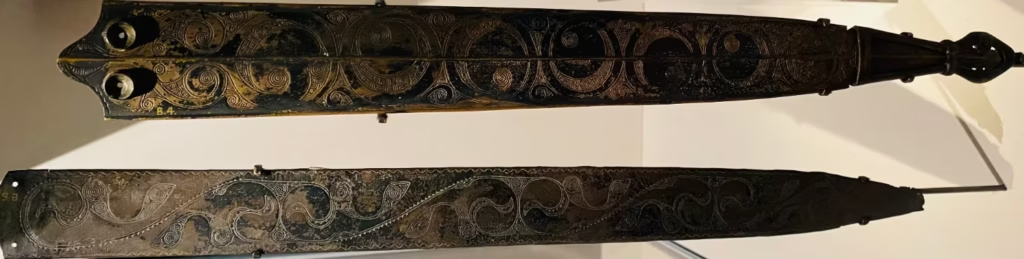
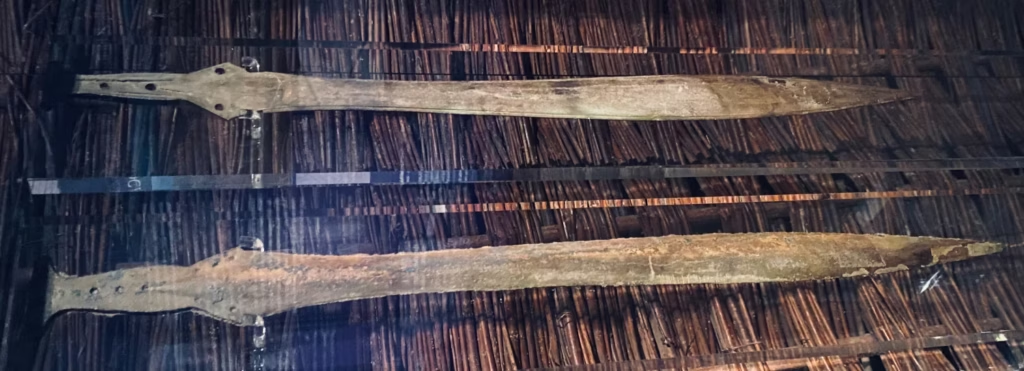
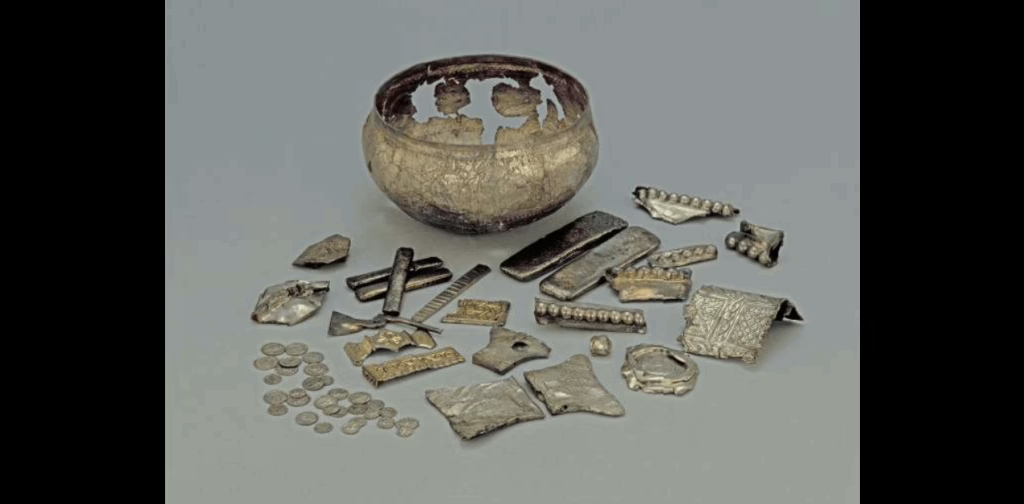
Actual weapons from the Iron Age are scarce in Ireland, but known examples include a few La Tène-style iron swords, numerous spearheads (sometimes massed in hoards), and some bronze shields (ornamental or parade quality). A famous cache at Ballyvourney (Co. Cork) included 10 sword blades. Burials of the period occasionally contain small weapon assemblages (spears, daggers) suggesting warrior burials. Sling-stones (pebble tools) are common at fort entrances, implying they were used defensively.
Modern techniques (LiDAR and GIS) show hillforts often overlook fields and cattle pastures, consistent with protecting herds. Linear earthworks and alignment of forts suggest chains of communication. The preservation of the Corlea roadway (with planks dated dendrochronologically to 148 BC) is especially telling: it shows tribal leaders directed communal labor on infrastructure, which could move not only trade but troops.
Irish Mythology and Warfare
Irish mythological texts – especially the Ulster Cycle – are invaluable for color and context, though they are not literal accounts. Myths like Táin Bó Cúailnge (Cattle Raid of Cooley) dramatise Iron Age martial values: personal bravery, prestige duels, warrior bands, and the centrality of cattle.
In the saga, the Ulstermen muster an army (in theory) but are felled by a curse of debility, leaving the young hero Cú Chulainn to hold off the army of Queen Medb by single combat. While fantastical, this story underscores some cultural truths: Irish kings were expected to lead in war; cattle were worth waging epic campaigns over; and the ideal warrior (like Cú Chulainn) could “one-man-army” through cunning and skill.
In the Mythological Cycle, the Mórrígan – a war goddess – appears on battlefields as a crow or raven, cursing or inspiring warriors. Her presence in myth reflects how martial prowess and fate were intertwined in the Irish psyche. The gods themselves (Dagda, Nuada, etc. in the Tuatha Dé Danann) fought in tribal battles in the mythic past. These figures highlight that warfare was seen as part of the origin myth for the Irish, central to their pseudo-history.
However, archaeologists note that while the Táin and these myths may indicate what society valued, they were mostly written in c.8th–12th centuries AD. Therefore, we should view the Táin and other myths only to illustrate concepts (e.g. cattle raids, hero cults) with the caveat that it’s a literary reflection of Iron Age traditions, not a play-by-play battle chronicle.
Legacy and Significance
Ireland’s Iron Age was a society of warriors and herdsmen, where military tactics were adapted to small-scale, mobile conflict. Ambush, raiding and skirmishing dominated rather than formal set battles. Cattle – the lifeblood of clans – drove much of the warfare, while fortified farms and hilltop enclosures served to safeguard wealth and people. In strategic terms, control of land, cattle and key centres (like Navan Fort and Dún Ailinne) was paramount, and alliances among tribes were fluid.
Comparisons show Ireland shared the wider Celtic penchant for warrior culture, but lacked the heavy cavalry and urban armies of Gaul or Britain. Roman writers noted Ireland’s military potential yet never challenged it, indirectly confirming a distinct war regime. Mythology like The Táin vividly illustrates Irish Iron Age warfare’s spirit – heroic champions, fierce goddess-portents (e.g. the Morrigan) and, always, the quest for booty – but historians use these narratives only to illuminate beliefs, not as factual accounts.
Much still lies in the archaeological shadows. Burned gateways and weapon hoards hint at clashes that written sources never record, and debate continues over how often small raids escalated into pitched battle. Even so, every spearhead, ringfort and saga episode points to a society calibrated for mobile conflict—one where kinship, cattle and fortified homesteads forged a distinctly Irish path through the Iron Age and seeded the martial traditions that echo in Ireland’s later history.
Frequently Asked Questions: Irish Iron Age warfare
Raiding and ambush dominated. Small warbands struck at dawn, drove off cattle, and vanished into wooded terrain. Larger pitched battles happened, but the everyday “business of war” was quick hit-and-run attacks backed by loose spear-and-shield formations.
Cattle were both currency and status. Controlling herds meant controlling wealth, dowries, and tribute, so stealing or defending livestock was a direct road to power for any túath (kin-group kingdom).
No clear archaeological evidence for chariot warfare exists in Ireland. Warfare remained overwhelmingly infantry-based until the medieval period, unlike Britain or Gaul where chariots and cavalry are well documented.
Most forces were small—likely in the low hundreds—pulled from a túath’s able-bodied freemen and elite retinues. Ireland’s low population density and fragmented politics made mass armies rare.
Over 500 hillforts, ringforts with multiple banks, burned gateways, weapon hoards (spearheads, La Tène swords) and the Corlea bog road all testify to organised defence, raiding, and the ability to mobilise labour for strategic projects.
YOU MAY ALSO LIKE
 Irish Celtic Druids: Healers, Judges & Ancient Irish Wisdom
 Iron-Age Hillforts in Ireland: Daily Life, Purpose & Key Sites
 Iron Age Trade in Ireland: Networks, Imports, and Economic Life
 Rathcroghan: The history of Connacht’s ancient royal hillfort
 Iron Age Clothing in Ireland: What People Really Wore
 Irish Festival Names Explained: The Etymology of Samhain, Imbolc, Bealtaine and Lughnasadh
 Balor of the Evil Eye: King of the Fomorians
 St Brendan of Clonfert: Irish Monk, Atlantic Voyager & Saint