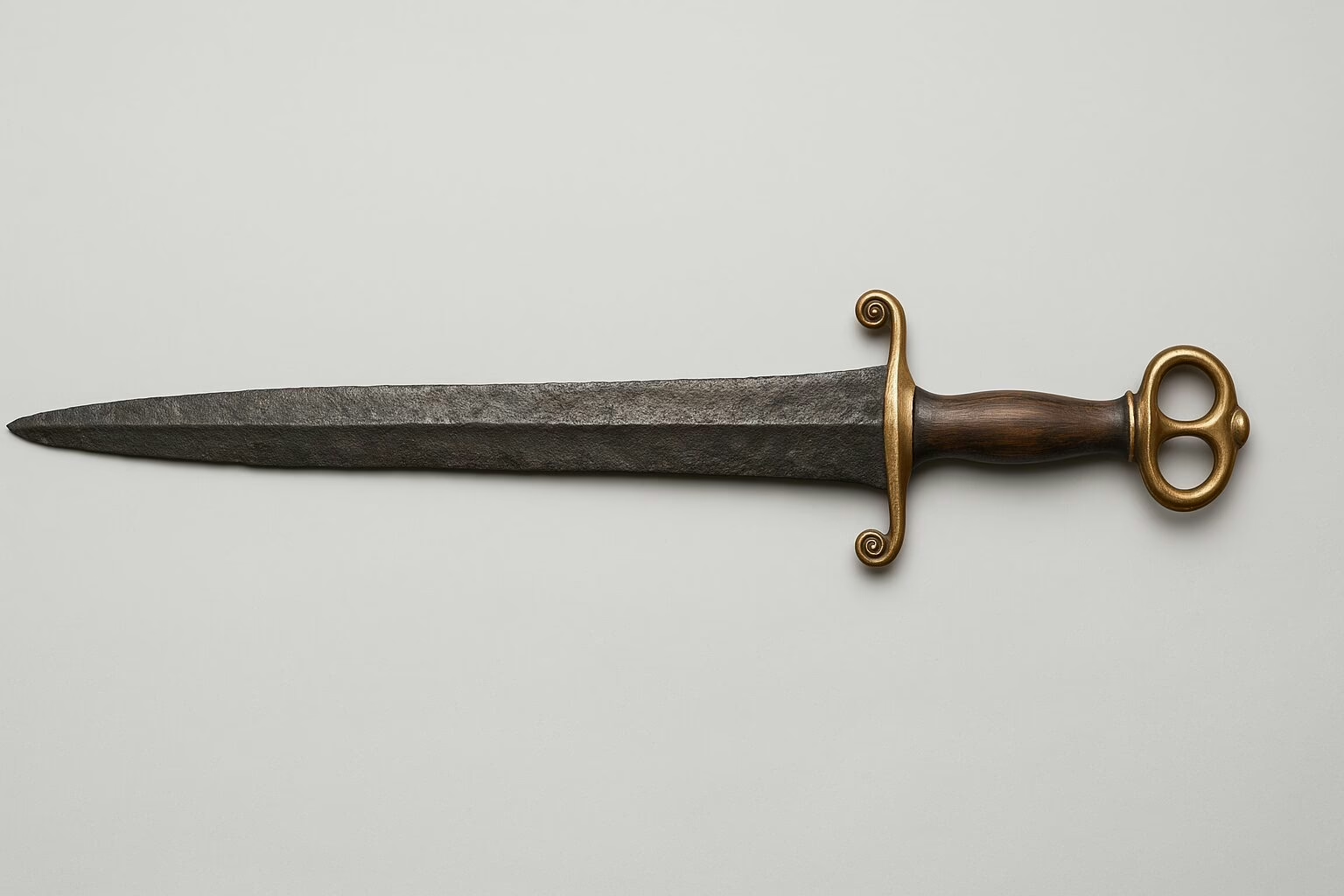
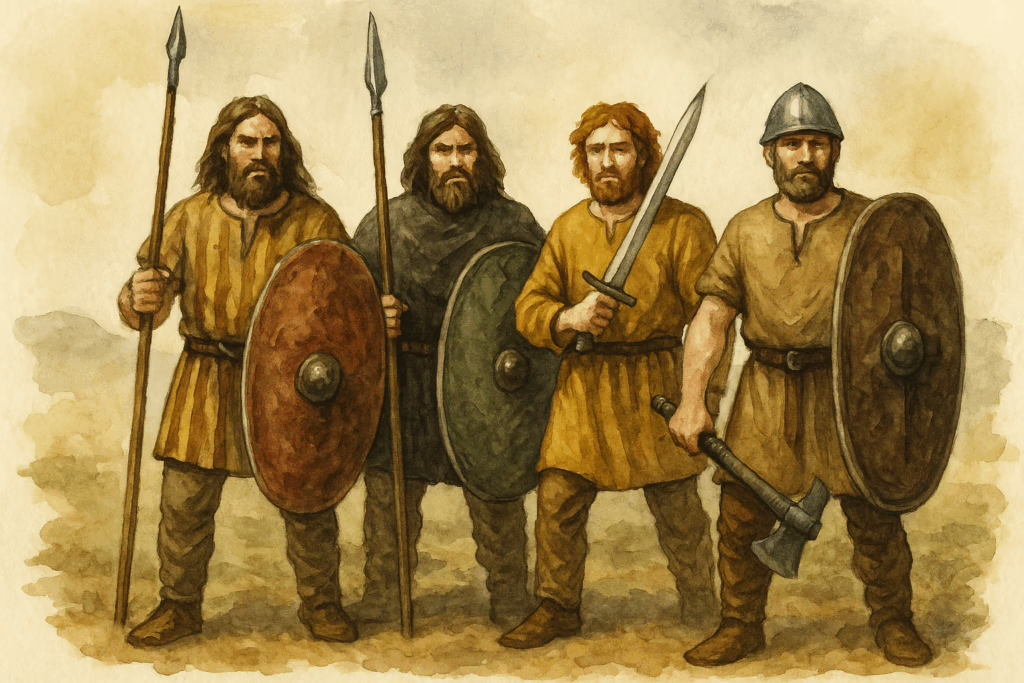
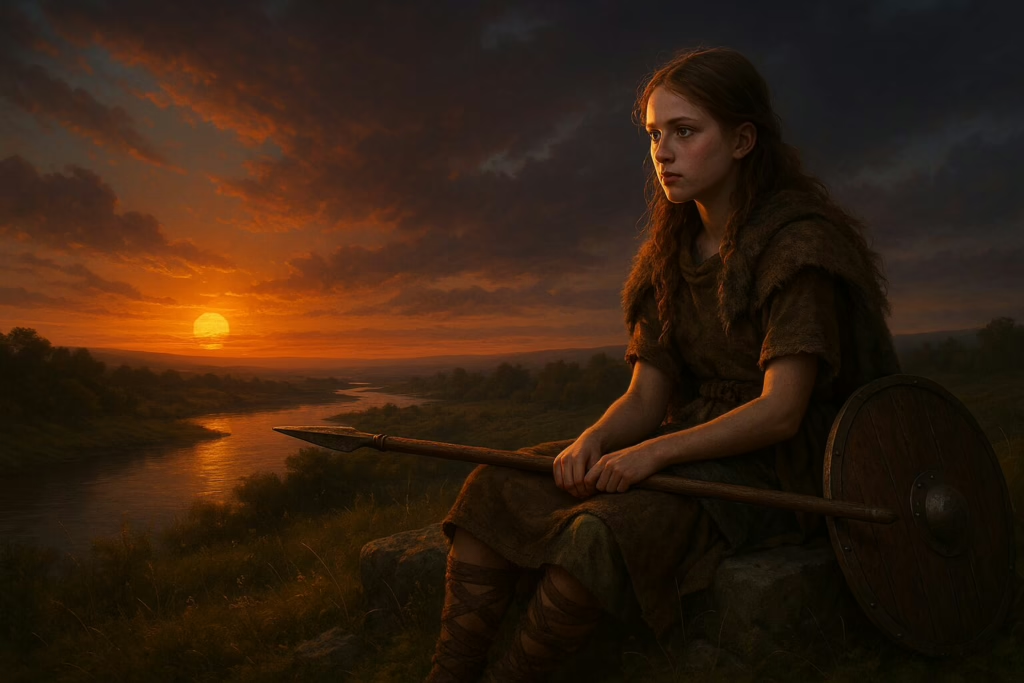
When we think of ancient Irish warriors, our minds will likely go straight to the modern depictions of sword/axe-wielding warriors, regaled in Iron armour, with helms of all varieties. But this is far from the reality for Ireland. For the weapons they carried and battledress they wore were distinct from the other cultures at this time. Spears over swords. Unarmoured and shielded. These warriors viewed weapons not merely as functional tools, but as sacred and aesthetic symbols.
Across bogs, lakes, and royal sites, archaeologists have uncovered swords, spears, and shields that reveal a rich martial culture shaped by La Tène influences and indigenous traditions. These weapons—typically short, functional, and often ornately decorated—offer clues to how the Irish fought, how they ruled, and how they remembered. They tell stories not only of warriors but of ceremonies, offerings, and mythology.
This post explores the weapons of Iron Age Ireland: their construction and use, their symbolic and ritual functions, and their place in both archaeological record and mythic imagination. Through blade and boss, I trace the legacy of a society where arms were not just forged in fire—but also bound to the sacred.
Historical and Archaeological Overview
The Irish Iron Age, typically dated from around 800 BC to AD 400, witnessed a slow but decisive transition from bronze to iron technology. While ironworking was known in Ireland as early as the 8th century BC—evidenced by charcoal-rich furnaces and early slag finds at sites like Kinnegad and Rossan—iron weapons did not dominate until several centuries later. By the mid-Iron Age (c. 500–200 BC), the distinctive La Tène artistic and material culture, arriving via Britain or the Continent, began to influence Irish metalwork.
Weapons became not only more functional but more expressive. Swords, spearheads, and shield fittings—often compact and stylistically unique—appear increasingly in both settlement contexts and bog hoards. The La Tène style, with its curvilinear motifs and fine metalwork, influenced Irish weapons, though regional distinctions remained. Unlike their Continental counterparts, Irish arms tended to be smaller: swords rarely exceeded 60 cm in length, and shields like the Clonoura example were compact and made from perishable materials like wood and leather.
In the following sections, we’ll explore the main types of Irish Iron Age weapons—swords, spears, and shields—and the roles they played both on the battlefield and in ritual life.
Table: Types of Irish Iron Age Weaponry
| Weapon Type | Key Features | Example Finds |
|---|---|---|
| Swords | Short iron blades (16–62 cm), often La Tène-style hilts, double-edged | Dún Ailinne sword, Lisnacrogher scabbard |
| Spears / Lances | Iron spearheads (17–51 cm), socketed onto long shafts (2–3.5 m) | Rathcroghan and Banagher deposits |
| Shields | Small wooden or leather-covered bucklers (~67×38 cm) | Clonoura shield (Tipperary) |
| Helmets / Armour | No archaeological evidence in Ireland | None |
| Other Weapons | Axes, daggers, slings, bows (poorly attested); horse gear in deposits | Bronze butt-spikes, horse bits from hoards |
Swords – Form, Function, and Symbolism
Swords in Iron Age Ireland were relatively short by European standards. Most measured between 16 and 62 centimetres in blade length, significantly shorter than the metre-long slashing swords used in Gaul or Roman military contexts. These Irish blades typically featured double edges, tapered points, and occasionally La Tène-style hilts or pommels. Scabbards—usually bronze—have also survived, although many swords are found without their fittings, suggesting either disintegration or deliberate stripping before deposition.
One of the best-known examples is the Dún Ailinne sword from County Kildare. While typologically La Tène (3rd–2nd century BC), it was deposited in a 1st-century AD context. The Lisnacrogher hoard (Co. Antrim) yielded several finely crafted swords and scabbards, indicating both the functional and symbolic status of these items. Metallurgical analysis reveals a wide quality range: from crude utilitarian pieces to carefully forged prestige weapons.
Interpretation of their use varies. Contemporary studies emphasise that Irish Iron Age swords were notably short, and this feature has led scholars to interpret them primarily as thrusting weapons suited to close-quarters combat.. However, literary traditions—such as tales from the Ulster Cycle—often depict warriors using both spear and sword, with the sword drawn once the spear breaks. This dual-weapon strategy aligns with classical accounts of Celtic warfare, where swords were backup weapons rather than primary arms.
Spears and Lances – Ireland’s Primary Iron Age Weapon
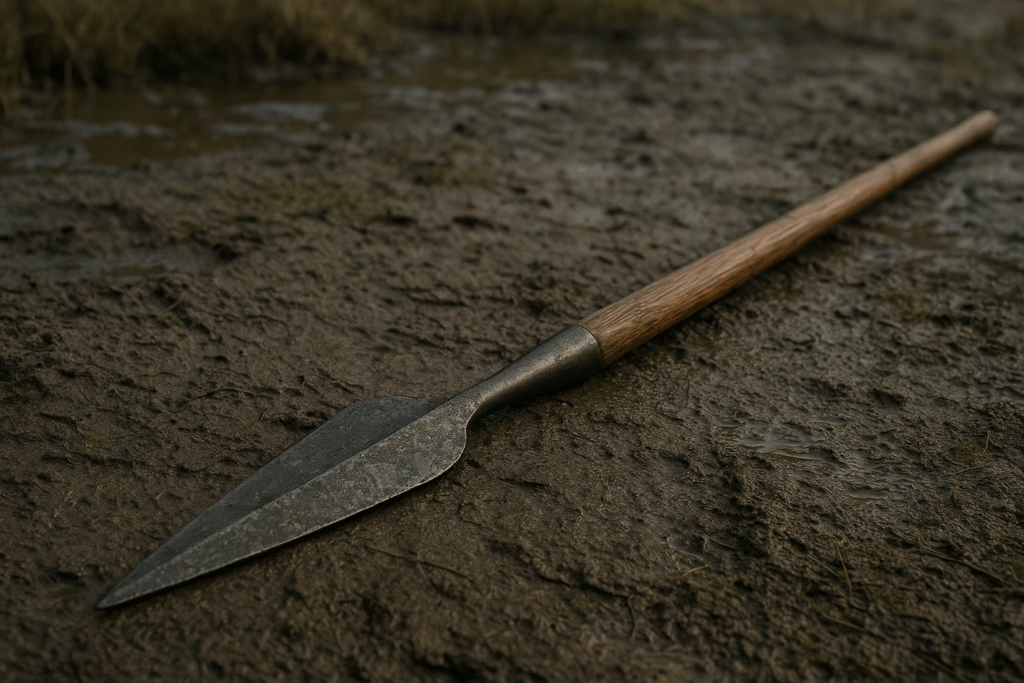
Of all the weapons in the Irish Iron Age arsenal, the spear was the most widespread and versatile. Archaeological finds from across the island suggest it was the principal weapon for combat, ceremony, and status display. Spears also dominate in literary depictions—heroes such as Cú Chulainn are repeatedly portrayed wielding powerful spears, most famously the magical Gáe Bolg.
Iron spearheads from this period typically measure between 17 and 51 centimetres in blade length and are socketed to attach to long ash shafts. While most spear shafts have decayed, one rare example was recorded at 3.5 metres in length—emphasising the range and reach afforded by these weapons. Spearbutts—metal fittings attached to the shaft’s base—are also found, some in iron and others in bronze.
Functionally, spears were multipurpose. Ethnographic and classical parallels suggest that light spears (javelins) were used for throwing in the first charge, while heavier lances were reserved for close combat. This dual function aligns with Irish myths in which warriors switch from projectile attacks to hand-to-hand fighting as battles intensify. Literary sources also indicate that each warrior may have carried multiple spears—highlighting both their utility and symbolic value.
Shields – Defensive Utility and Symbolic Power
In the Iron Age Irish warrior’s toolkit, the shield served both as a practical defence and a symbolic object. Though far fewer shields survive than spearheads or sword fragments, what evidence we do have offers valuable insight into the role and design of defensive gear.
The most famous example is the Clonoura shield, discovered in a bog in County Tipperary and dated to around AD 30–60. Made of alder wood and covered in leather, it measures approximately 67 × 38 centimetres—small by Continental standards. Its cut marks and punctures show it was used in actual combat. This rare survival suggests at least some Irish shields were compact, light bucklers, likely suited to mobile close-quarters fighting rather than long engagements behind a shield wall.
Elsewhere in Ireland, fragmentary shield components have been found, including wooden ribs and bronze bosses. These reinforce the picture of small, round or oval shields, held with a central grip. The absence of larger or heavier examples—such as the 1-metre-plus oval shields seen in Gaul or among Roman troops—points to a distinct insular fighting style, likely based on agility and personal combat.
In mythology, shields often denote heroism or sovereignty. The Ulster Cycle occasionally describes the ornate shields of champions, sometimes adorned with animal motifs or described as roaring in battle—a metaphor for status and supernatural force. Though these literary descriptions postdate the Iron Age, they likely echo older oral traditions that linked shields to individual identity and charisma.
Helmets and Body Armour – The Great Absence
Among Iron Age finds in Ireland, perhaps the most striking absence is that of helmets and body armour. While other Celtic regions—particularly in continental Europe and Britain—have yielded bronze or iron helmets, scale armour, and chainmail fragments, no such protective equipment has been securely identified in Irish archaeological contexts.
This absence is not simply due to preservation issues. Acidic Irish soils do degrade organic materials, but metal items—such as spearheads and sword blades—survive in large numbers. The lack of helmets or cuirasses suggests that Irish Iron Age warriors either did not use them or crafted them from non-metallic materials now lost to time, such as hardened leather or layered textiles.
Even in late Iron Age contexts where Roman influence was increasing—such as the Lambay Island burial site off the coast of Dublin—no helmets or body armour were present, despite the discovery of imported Roman items. This suggests that military dress in Ireland remained distinct, with an emphasis on mobility and ritual symbolism rather than heavy protection.
Irish mythology, however, is filled with references to crested helmets, heroic visors, and armoured champions. In the Ulster Cycle, warriors like Cú Chulainn don dazzling war gear, sometimes imbued with magical qualities. These may reflect either later literary embellishment or idealised memories of elite status markers, rather than accurate depictions of everyday gear.
Other Weapons – Axes, Projectiles, and Cavalry Gear
While swords and spears dominate the Irish Iron Age weapon record, a range of lesser-known or rarely surviving weapons also played important roles—particularly in specialist combat or elite display.
Axes and Daggers
Iron battle axes appear only occasionally in the archaeological record. Most axe finds from the Iron Age are functional woodworking tools rather than clearly designated weapons.
That said, a handful of iron axeheads and short daggers—some found in bog deposits—suggest occasional use in combat or ritual. These weapons may have been more prominent in specific regions or used in close-quarters fighting where space was limited. Their rarity makes it difficult to determine whether they were standard battlefield arms or symbolic items.
Projectile Weapon
Evidence for bows and slings in Iron Age Ireland is extremely limited. Organic materials such as wood, sinew, or hide degrade rapidly in Irish soils, leaving little trace of these weapons. No complete bows survive from the period, and securely dated Iron Age arrowheads are extremely scarce. Slingstones—commonly found in other parts of the Celtic world—are likewise absent from Irish contexts.
Yet later medieval sources and Irish mythology frequently mention slingers and archers, implying that projectile weapons did exist, albeit in forms or contexts that have left little archaeological footprint.
Cavalry and Horse Gear
Although mounted combat remains speculative, the Irish archaeological record shows a strong emphasis on horse trappings and harness fittings. Bronze and iron bits, yokes, and decorative mounts frequently appear in votive hoards, suggesting that horses were important not just for transport but possibly for ceremonial or elite martial display. Items such as bronze ring bits, yoke-mounts, and bridle decorations often occur in the same deposits as weapons—highlighting a symbolic connection between equine control and military authority.
Some researchers argue that Irish Iron Age elites maintained a tradition of mounted procession or ritual kingship, rather than full-scale cavalry warfare. The emphasis on horse gear in hoards supports this interpretation, placing horses at the intersection of status, ritual, and martial identity.
In sum, while these weapons and accessories do not dominate the material record like swords and spears, they offer critical insights into the diversity of martial tools, elite practices, and ritual behaviours that shaped warfare in Iron Age Ireland.
Ritual Deposition and the Sacred Role of Weapons
In Iron Age Ireland, weapons were not simply instruments of war—they were also deeply embedded in ritual and spiritual life. Archaeological finds consistently show that swords, spears, and other martial objects were deliberately deposited in bogs, lakes, rivers, and boundary zones. These deposits were not accidental losses or battlefield discards; they were intentional offerings to the gods, ancestors, or local spirits.
Ritual deposition reveals how deeply warfare was woven into the spiritual and political fabric of Iron Age Ireland. To own a weapon was to hold both power and responsibility—and to offer one was to participate in a dialogue with the unseen forces that governed land, kingship, and survival.
Table: Sacred Roles of Irish Iron Age Weapons
| Context | Summary |
|---|---|
| Votive Deposits | Weapons like spearheads, sword fragments, and shield bosses were deposited in bogs and wetlands, often near tribal boundaries. These hoards, with no signs of habitation or burial, suggest deliberate ritual offerings—such as the Clonoura shield in Co. Tipperary. |
| Kingship Rituals | At sites like Rathcroghan and Emain Macha, weapons and horse gear were placed at ceremonial boundaries. These acts likely marked kingship inaugurations or territorial claims, symbolising the chieftain’s divine authority to wield violence and uphold justice. |
| Bog Bodies & Sacrifice | Late Iron Age bog bodies such as Old Croghan Man and Clonycavan Man show signs of ritual killing. Though not buried with weapons, they may represent sacrificial victims—possibly symbolic kings—within a martial and religious framework. |
| Mythological Parallels | Stories from the Ulster Cycle and Mythological Cycle (e.g. Lugh’s spear, Cú Chulainn’s Gáe Bolg) reflect real practices of offering weapons to gods. These tales suggest weapons were not just functional but imbued with sacred, heroic power. |
Legendary Weapons in Irish Mythology
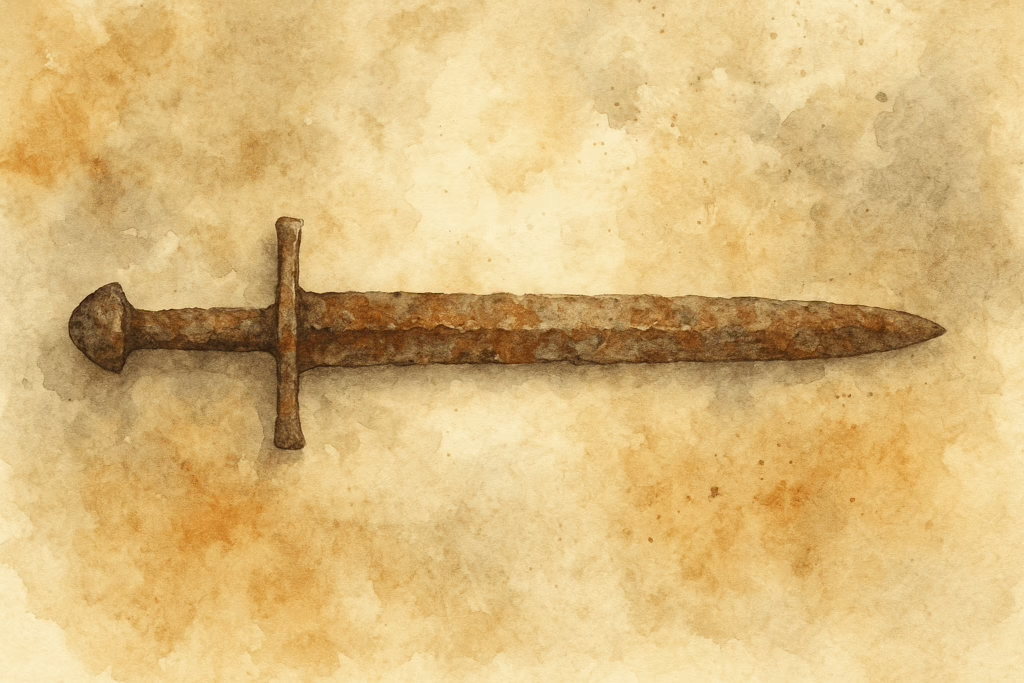
While archaeological finds give us physical evidence of Iron Age weaponry, Irish mythology preserves a parallel world of supernatural arms—imbued with divine origin, magical properties, and heroic significance. These legendary weapons reveal how Iron Age peoples perceived warfare not only as physical conflict, but as a realm infused with mythic and cosmic meaning.
Lugh’s Spear – The Spear of Assal
Perhaps the most famous mythic weapon is the spear of the god Lugh Lámhfhada, one of the Tuatha Dé Danann. It is said to be so deadly that no enemy could escape it, and in some versions, it had to be kept in a cauldron of water to stop it bursting into flames. The Spear of Assal represents invincible power and divine justice, symbolising sovereignty and rightful rule.
Nuada’s Sword and Arm
Nuada, the first king of the Tuatha Dé Danann, wields a gleaming sword that no one can escape once it is drawn. In battle, he loses an arm and is fitted with a silver prosthesis—both sword and limb become emblems of kingship, loss, and renewal. His sword, sometimes conflated with the Claíomh Solais (Sword of Light), reflects the sacred aura surrounding royal weapons.
Cú Chulainn’s Gáe Bolg
In the Ulster Cycle, the warrior Cú Chulainn uses a terrifying barbed spear called the Gáe Bolg, taught to him by the warrior woman Scáthach. Thrown from between the toes and impossible to extract once it pierces flesh, the Gáe Bolg combines mastery, tragedy, and destiny—it is used to kill his best friend, Ferdiad, in one of the most dramatic episodes in Irish myth.
Named Swords in Heroic Tales
Later sagas include swords such as Mac an Luin (“Son of the Sword”), used by Fionn mac Cumhaill, and Fraoch’s weapon in the Táin Bó Fraích. These blades are often gifted, stolen, or won through feats, underscoring the belief that weapons had individual personalities and histories. Possession of a famous weapon often signifies a hero’s right to lead or exact vengeance.
Legacy of Iron Age Irish Weapons
Weapons in Iron Age Ireland were never just instruments of war. They were deeply symbolic artefacts that embodied identity, belief, and power. From the deliberately deposited spearheads found in bogs to the short swords crafted in the La Tène style, these objects tell a story of a society that merged martial prowess with ritual obligation. The absence of helmets or large battlefield assemblages may suggest less formalised warfare than on the Continent, but it does not imply a lesser role for the warrior. Rather, Irish arms were tied to social rank, kingship rites, and the relationship between people, land, and their gods.
What survives in archaeology is just a fragment of that world—iron blades dulled by time, shield bosses rusted in peat, horse bits worn by centuries. Yet these fragments point to a living culture where weapons defined both status and the sacred. Their echoes live on in Irish myth, where heroes wield named swords and divine spears, and in the land itself, where wetland votive sites still yield traces of a martial past shaped as much by ritual as by conflict. And so, in understanding these weapons, we glimpse not only how the Irish fought, but how they saw the world.
Frequently Asked Questions: Iron Age Irish Weapons
The main weapons used in Iron Age Ireland included short iron swords, socketed spears, small wooden shields, and occasionally axes or daggers. Swords and spears were especially important both in combat and ritual, often found deposited in bogs and lakes as offerings.
Irish swords from the Iron Age typically measure between 16 and 62 cm, much shorter than Continental or Roman swords. Scholars suggest they were used for close-range thrusting combat, and some believe their design may reflect a ceremonial or symbolic function rather than purely battlefield use.
No. There is no archaeological evidence for helmets or body armour in Iron Age Ireland. Unlike their counterparts in Britain or Gaul, Irish warriors likely fought without metal protection, relying instead on shields and agility in close combat.
Weapons deposited in bogs, lakes, and rivers were likely votive offerings—ritual gifts to gods or spirits. These deposits suggest a strong link between warfare, kingship, and religious practice in Iron Age Irish society.
Yes. Irish mythology features legendary weapons such as Lugh’s Spear, Cú Chulainn’s Gáe Bolg, and Nuada’s Silver Sword. Though mythic, these weapons reflect real beliefs about the power and symbolism of arms in Iron Age culture.
YOU MAY ALSO LIKE
 Who was St Columba? Missionary, Monk, and Legend of Iona
 Iron Age Clothing in Ireland: What People Really Wore
 Iron Age Trade in Ireland: Networks, Imports, and Economic Life
 Irish Celtic Druids: Healers, Judges & Ancient Irish Wisdom
 Irish Festival Names Explained: The Etymology of Samhain, Imbolc, Bealtaine and Lughnasadh
 Iron-Age Hillforts in Ireland: Daily Life, Purpose & Key Sites
 Ancient Roads of Ireland – 5 Slíghe (Highways) Radiating from Tara
 Etymology of Irish Animal Names: Myth & Language Revealed