When we think of the Roman Empire’s vast reach, from the deserts of North Africa to the highlands of Scotland, one land sits conspicuously outside its imperial grasp: Ireland. Never conquered, never garrisoned, and absent from Roman provincial maps, Ireland nonetheless bears traces of contact with the Roman world. Archaeological discoveries, cryptic mentions in classical texts, and the eventual spread of Christianity all hint at a more complex relationship than one of total isolation.
This post explores the idea of Roman Ireland—not as a Roman province, but as a cultural frontier. I’ll examine the historical sources that describe Roman knowledge of Hibernia, review archaeological evidence of Roman artefacts within Irish soil, and consider how Roman culture may have influenced Ireland indirectly through trade, religion, and intellectual contact. Along the way, I’ll be asking: what does it mean for a land to be influenced without being conquered?
Roman Ireland in Historical Sources
Although Ireland was never formally integrated into the Roman Empire, it was not unknown to Roman writers, geographers, or generals. The island—referred to as Hibernia or occasionally Iuverna—was considered a land at the edge of the known world. What emerges from the Roman literary record is a picture of Ireland as both distant and tantalisingly close.
Ptolemy’s Map of Ireland
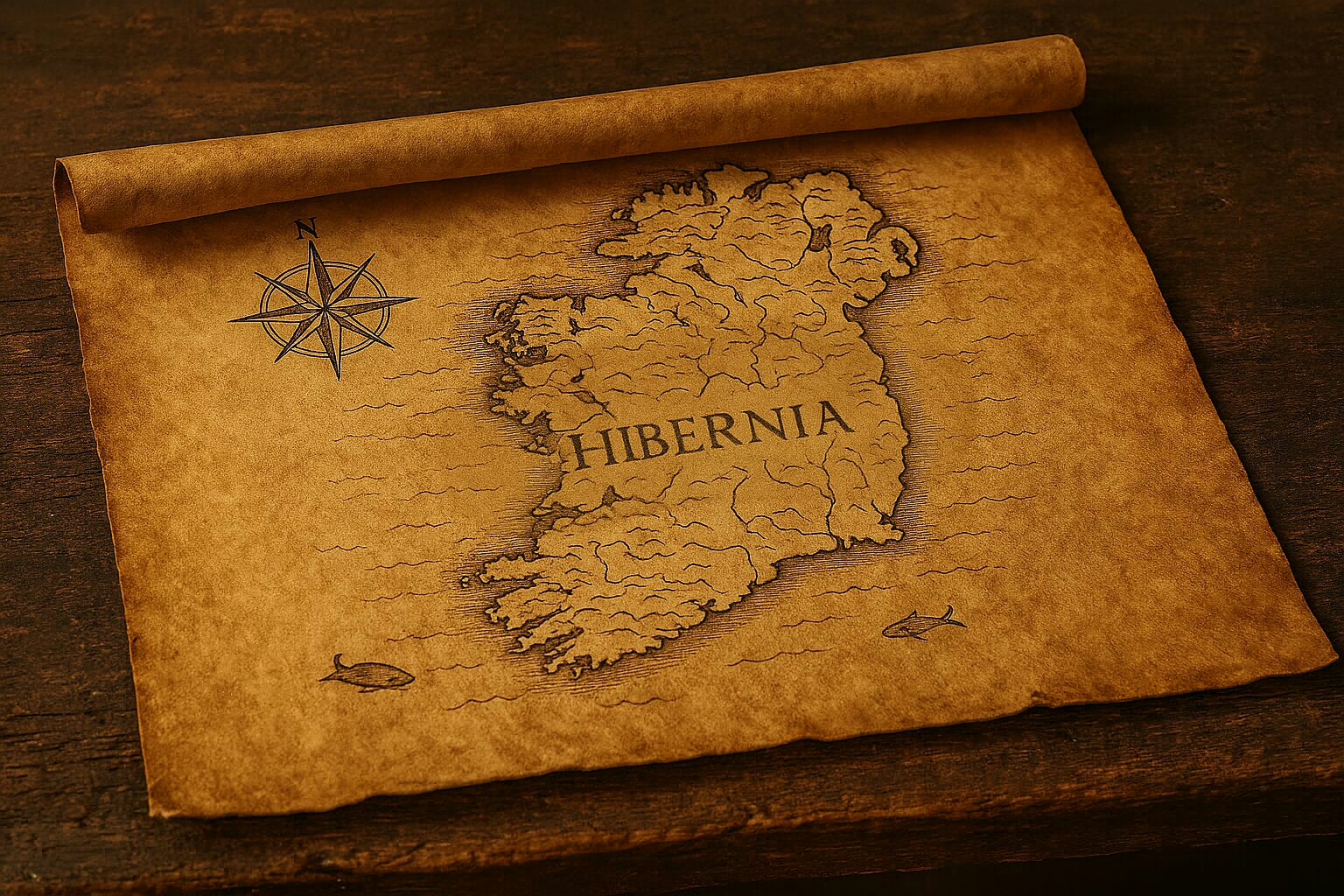
One of the most famous depictions of ancient Ireland is actually a map. The classical geographer Claudius Ptolemy included Hibernia in his maps of the world. In his Geographia (c. AD 150), Ptolemy recorded the names of rivers and settlements along Ireland’s coast—likely derived from traders or seafarers familiar with the island. This suggests not only awareness but also a degree of interaction, likely through maritime exchange routes that connected Roman Britain, Gaul, and the Irish coast.
A more ambiguous strand of evidence concerns potential Irish involvement with the Roman military, particularly through mercenary service or diplomatic envoys. While no direct literary or epigraphic record confirms Irish soldiers serving in the Roman legions, it is plausible that Irish elites, particularly from eastern Ireland, maintained some level of contact with their Romanised neighbours. Later medieval sources occasionally mention Irish figures who travelled to the Continent or interacted with Roman Christians, but these are retrospective and cannot be relied upon for firm historical detail.
Nevertheless, the literary sources suggest that Rome viewed Ireland as accessible, valuable, and culturally significant—even if it remained outside the imperial frontier. Ireland may have lingered on the edge of Roman plans, but it was never out of sight.
Archaeological Evidence of Roman Artefacts
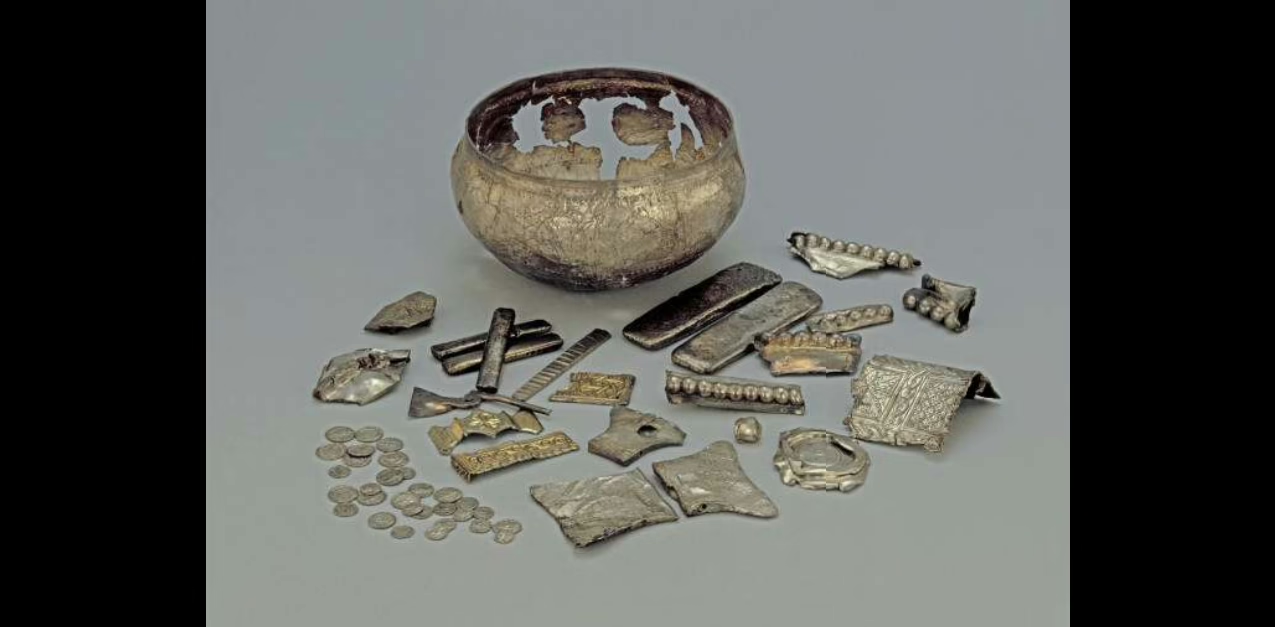
Despite the absence of Roman forts, roads, or settlements on Irish soil, a growing body of archaeological evidence suggests that Ireland did not remain entirely outside Rome’s material sphere. Over the past century, artefacts of clear Roman origin—ranging from coins and brooches to pottery and glassware—have been uncovered across Ireland, particularly in the east. These finds offer tantalising glimpses into trade, diplomacy, and cultural contact between the Roman world and the Irish elite.
Roman Hoards in Ireland
One of the most frequently cited sites is Drumanagh, a coastal promontory fort near Loughshinny in north County Dublin. Excavations and surface surveys at Drumanagh have revealed a significant concentration of Roman material, including fibulae (brooches), terra sigillata pottery, and amphorae fragments. Some have interpreted the site as a possible trading post or even a Roman military outpost, though this remains speculative due to the lack of formal excavation data and the possibility that local elites acquired Roman goods through trade or raids on Britain.
Nearby, Lambay Island has produced additional Roman-era finds, including glassware and bronze fittings, again hinting at sustained contact or exchange. Elsewhere, high-status sites such as the Hill of Tara, traditionally associated with the kingship of Ireland, have yielded scattered Roman artefacts—particularly coins from the 2nd to 4th centuries AD. While the number of items is small, their presence at a ceremonial and political centre suggests these goods may have been prestige items, used as symbols of status or offerings in ritual contexts.
Where did Roman objects come from?
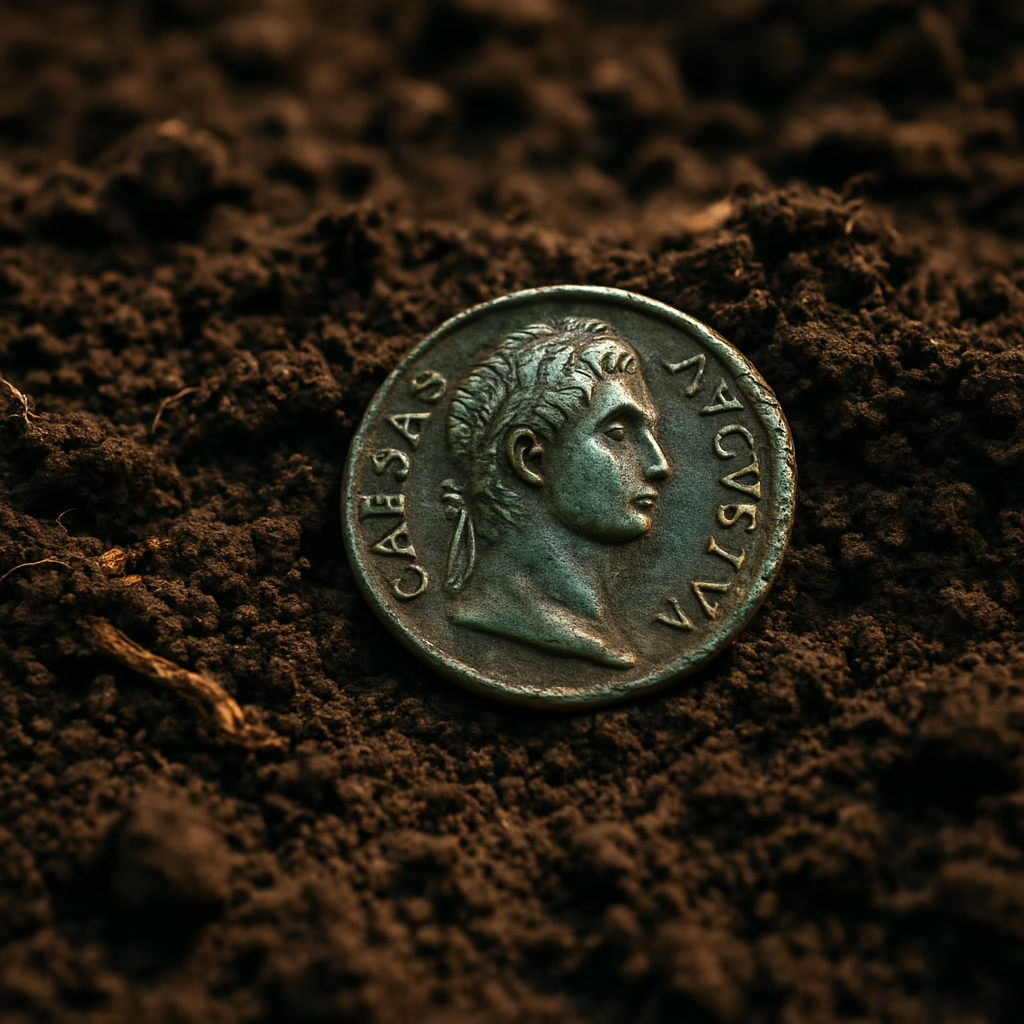
Roman coins have also been discovered across Ireland, often in isolation. These include sestertii and denarii from emperors such as Hadrian, Antoninus Pius, and Constantine I. Their distribution does not indicate a coherent trade network, but rather sporadic movement of goods, possibly through Irish raids on Roman Britain, gift-exchange diplomacy, or the spoils of mercenary service abroad.
Some Roman objects found in Ireland, like intaglios (gemstones) or enamelled bronze pieces, are believed to have been recycled and reworked into native styles—evidence not just of import, but of cultural adaptation. This selective use suggests that Roman goods were not simply valued for their origin, but for how they could be integrated into Irish social and symbolic systems.
However, caution is necessary. Many finds lack secure archaeological contexts, and their presence does not automatically imply a sustained Roman presence. Most likely, these items reached Ireland through intermittent trade, indirect contact via Romanised Britain, or opportunistic raiding rather than any formal colonial infrastructure.
Still, the cumulative weight of this material—particularly at sites like Drumanagh—challenges the older view of Ireland as a culturally isolated island during the Roman period. Instead, it paints a picture of an indigenous society engaging with, adapting, and sometimes resisting external influences from the imperial world just across the sea.
Table: Notable Roman Artefacts in Ireland
| Site | Artefact Type | Estimated Date | Interpretation |
|---|---|---|---|
| Drumanagh | Brooches, pottery, amphorae | 1st–2nd c. AD | Trade post or elite contact zone |
| Lambay Island | Bronze fittings, glassware | 1st–3rd c. AD | Coastal trade or informal contact |
| Hill of Tara | Coins, intaglios | 2nd–4th c. AD | Ritual or prestige deposition |
| Ballinderry Crannóg | Roman enamel, rings | 3rd–4th c. AD | Reused in local elite contexts |
| Various eastern sites | Coins (Hadrian to Constantine) | 2nd–4th c. AD | Sporadic contact or raiding returns |
Agricola’s Ambitions and the Missed Invasion
Among the most compelling pieces of historical testimony regarding Roman interest in Ireland is found in Tacitus’ Agricola, a biography of his father-in-law, Gnaeus Julius Agricola, who served as governor of Roman Britain from AD 77 to 85. Writing around AD 98, Tacitus records that Agricola “often said that Ireland could be taken and held with one legion and a few auxiliaries.” While no such invasion ever took place, this statement has fuelled centuries of speculation.
Tacitus goes further, noting that Agricola had offered refuge to an exiled Irish king, possibly to later install him as a Roman-friendly client ruler. This detail suggests more than casual interest—it implies a strategic vision for incorporating Ireland into Rome’s western frontier, perhaps as a stabilising buffer or stepping-stone for future operations. The supposed presence of this chieftain in Britain may even point to cross-channel diplomacy or soft-power interference in Irish politics.
Why didn’t Rome Invade Ireland?
Ireland’s geography offers both challenges and temptations. The east coast of Ireland is just 100km from Anglesey, and the natural harbours around Drumanagh and Lambay Island would have made suitable landing sites. Roman control of Britain had expanded into northern Scotland by Agricola’s time, so the logistical reach was theoretically possible.
However, there were practical considerations. Ireland lacked the centralised political structures that Rome often exploited elsewhere for efficient conquest. It also posed limited strategic or economic value compared to the cost of military occupation. Rome may have calculated that indirect influence through trade, diplomacy, and religious spread was preferable to a full-scale campaign.
Some modern scholars have proposed that Drumanagh itself may have functioned as a temporary base or staging post, supporting the theory that a limited expedition did occur, even if it was not recorded—or that Rome at least prepared for one. However, the evidence remains inconclusive. Drumanagh’s Roman artefacts could just as plausibly result from trading networks or elite emulation, rather than military presence.
It’s also worth noting the timing. Agricola’s governorship was cut short in AD 85, and imperial priorities shifted under Emperor Domitian. With unrest in Dacia and increasing demands on the Danube frontier, Ireland likely fell off the strategic agenda. Tacitus may have recorded Agricola’s ambitions less as a real campaign plan and more as an idealised example of unfulfilled potential, casting his father-in-law as a model of Roman vigour restrained only by imperial caution.
In sum, Agricola’s supposed invasion of Ireland reflects a moment of Roman curiosity and calculated ambition, but also the limits of imperial expansion. Ireland remained, as Tacitus wrote, “beyond the range of conquest, but not of influence.”
Cultural Influence: Christianity, Law, and Society
While Ireland lay beyond the physical boundaries of the Roman Empire, its cultural landscape—especially from the 4th century onwards—was increasingly shaped by ideas that had Roman origins. These influences were not imposed by conquest, but arrived through indirect transmission, especially via Roman Britain and Gaul. Among the most significant of these was Christianity, which would go on to transform Irish society in uniquely local ways.
Christianity: Roman Religion, Irish Adoption
The spread of Christianity to Ireland is one of the clearest examples of Roman cultural influence, though its route and nature were distinctly Irish. Christianity had become the state religion of the Roman Empire by the late 4th century, and Roman Britain had an established Christian presence before its collapse in the early 5th century. Irish raiders, slaves, and merchants likely encountered Christian communities during this time—St Patrick himself, the most iconic figure of Irish Christianity, was kidnapped from Roman Britain and later returned as a missionary.
However, Ireland’s conversion was not directed by Rome. Instead, it took place largely through independent evangelism, with no evidence of official Roman ecclesiastical missions. The result was a form of Christianity that, while doctrinally orthodox, developed distinctively Irish characteristics—monastic rather than diocesan, deeply embedded in native customs, and relatively autonomous from Roman church authority until the later Middle Ages. Indeed, the uniquely Irish distinctiveness is even evident in the architecture in monuments such as Antrim Round Tower.
The adoption of Latin literacy for Christian purposes—scripture, hymnody, and law—was perhaps the most profound intellectual inheritance from Rome. Yet even this was adapted. Irish monasteries became centres not just of Christian devotion, but of classical learning and native literary production, fusing Latin models with local oral traditions.
Social Structures and Institutions
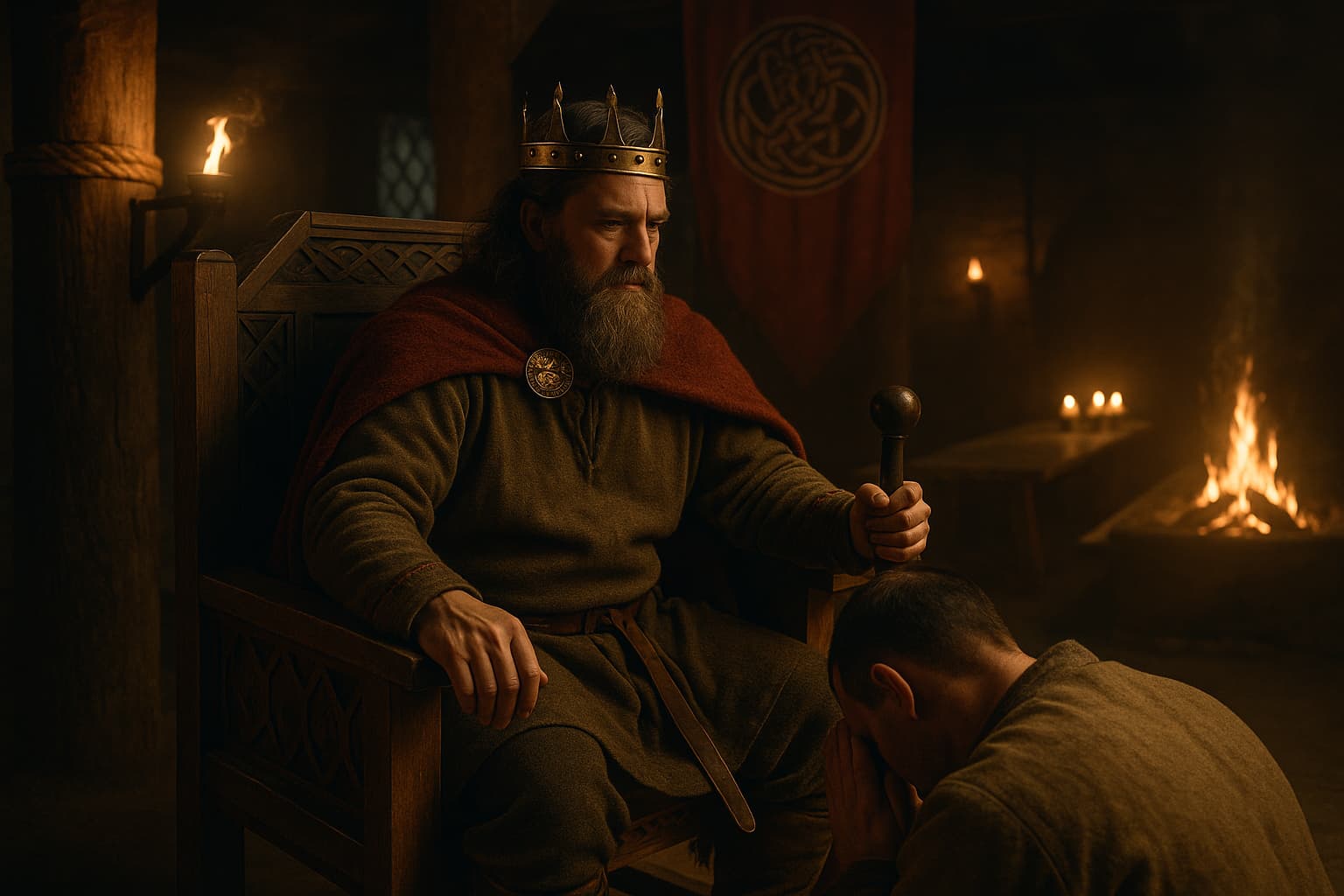
Roman society was highly centralised and urbanised, with a clear distinction between citizens and subjects, and a reliance on formal institutions of empire. In contrast, early Irish society remained decentralised, built around kinship groups (fine) and local chieftains (rí). The túath—the basic unit of political organisation—was more akin to a tribal federation than a Roman province.
Nevertheless, contact with the Roman world may have influenced certain elite behaviours. The adoption of prestige items, use of Latin inscriptions in later Christian sites, and the development of monastic schools echo Roman models in form if not in structure.
Although Ireland was never governed by Rome, its religion, literacy, and aspects of elite culture were shaped—selectively and creatively—by a Roman world that loomed just across the sea. The transformation was not a product of conquest but of contact, curiosity, and conversion.
Cultural Comparisons: Rome and Native Ireland
To understand the nature of Roman influence on Ireland, it is helpful to contrast the two societies across key domains—law, religion, military structure, urban development, and literacy. What emerges is not a story of imitation, but of divergence shaped by selective contact. While some Roman ideas found a foothold, Irish society largely maintained its own trajectories, shaped by oral tradition, kinship bonds, and decentralised authority.
Law: Codification vs Custom
Roman law was among the most sophisticated in the ancient world, based on codified statutes, property rights, and citizenship status. It was rationalised into a vast legal bureaucracy under the empire. In contrast, Irish Brehon Law remained an oral and customary system, later written down in vernacular Irish under monastic patronage. While both systems dealt with contracts, land, and fines, Irish law emphasised honour-price (lóg n-enech) and social standing over abstract principles of justice.
No direct Roman legal texts were transmitted to Ireland during the early Christian period. What did filter through was a broader concept of written legal authority and precedent, likely reinforced by the monastic scribal culture that emerged in the 6th century.
Religion: Imperial Orthodoxy vs Syncretic Christianity
Rome transitioned from polytheism to Christianity as the empire consolidated, with strong state control over religious orthodoxy after the 4th century. Irish religion, by contrast, was originally polytheistic, focused on local deities, landscape spirits, and seasonal festivals.
The arrival of Christianity in Ireland brought Roman theology but not Roman hierarchy. The Irish church developed around monasteries rather than cities, and maintained unique liturgical and ascetic traditions—such as the practice of peregrinatio, or voluntary exile for Christ. This independent development led to clashes with Roman norms, most famously over the dating of Easter, before eventual alignment in later centuries.
Military Structure: Professional Army vs Warrior Bands
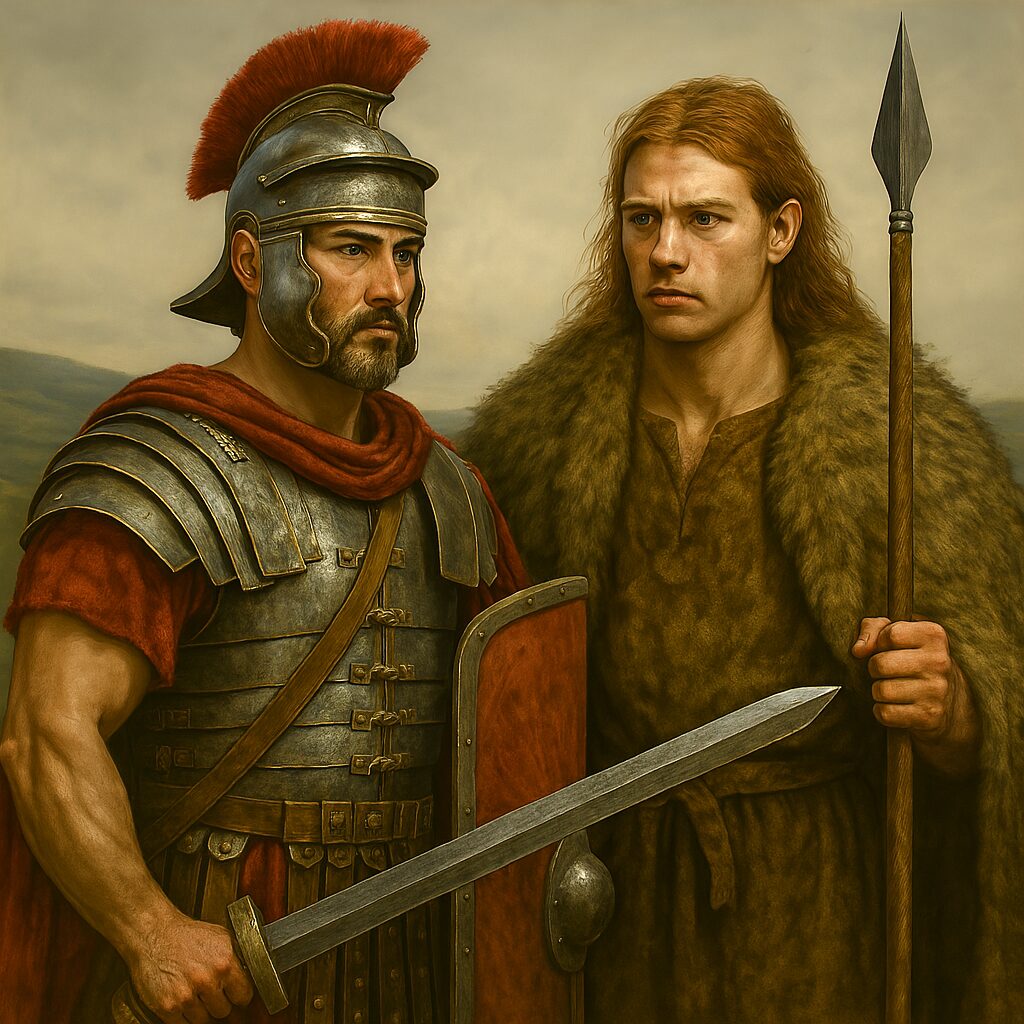
The Roman legions were highly professionalised, state-funded military units with strict discipline, permanent forts, and advanced logistics. Ireland had no comparable system. Warfare was conducted by small warbands (fían) under local leaders, often involved in cattle raiding, feuding, or territorial skirmishes. These bands were supported by kin-based alliances, rather than centralised state infrastructure.
However, Irish elites were likely aware of Roman military customs through contact with Britain. Some warrior elites may have worn Roman-style gear acquired through trade or raiding, but there was no large-scale emulation of Roman martial organisation.
Urbanism and Settlement: Cities vs Royal Sites
Perhaps the most visible contrast is urban. Rome was a civilisation of cities—planned urban centres with forums, aqueducts, and temples—designed as symbols of imperial order. Ireland, by contrast, remained non-urban well into the early medieval period. Instead, power was exercised from royal sites like Tara, Emain Macha, and Rathcroghan—places of ceremony, seasonal assembly, and symbolic kingship, rather than permanent urban residence.
This distinction reflects not only different political models but different relationships to land, mobility, and landscape. Ireland’s ringforts and crannógs, while complex in their own right, functioned within a dispersed settlement pattern that emphasised familial autonomy over civic administration.
Literacy: Latin and Law vs Ogham and Oral Culture
Rome’s cultural apparatus depended on Latin literacy, which was used in law, administration, literature, and religion. While Latin entered Ireland through Christianity, the island retained a strong oral tradition. The ogham script, used from the 4th century AD, is a native writing system based on notches and strokes. It is primarily used for names on standing stones.
Ogham marks the beginning of Irish literacy, but it was not used for extended texts. That leap occurred only with the Christianisation of Ireland, when Latin script was adapted to the Irish language. This enabled the production of sagas, laws, annals, and theological texts in the centuries to follow.
Table: Roman vs Irish Institutions
| Domain | Roman Practice | Irish Practice | Notes |
|---|---|---|---|
| Law | Codified civil law (e.g. Lex Julia) | Customary Brehon law | Written only after Christianisation |
| Religion | State Christianity, centralised hierarchy | Syncretic Christianity, monastic focus | Developed independently of Roman Church |
| Military | Professional legions, forts, road system | Warrior bands (fían), túath-based alliances | No permanent standing army |
| Governance | Central empire, imperial provinces | Local kingships (rí), túatha | Fragmented, kinship-based rule |
| Urbanism | Cities with civic infrastructure | Ceremonial royal sites, rural settlement | Non-urban society with strong landscape symbolism |
| Literacy | Latin language and literature | Ogham script → Irish vernacular in Latin form | Literacy began with Christian influence |
Roman Ireland was not Rome in miniature. Rather, it was a parallel society, engaging with the empire at its own pace and on its own terms. The selective adoption of Roman forms—through Christianity, trade, and literacy—demonstrates how influence can flow without domination, and how native cultures can absorb external forces without losing their identity.
Conclusion
Ireland was never drawn into the administrative machinery of the Roman Empire. There were no legions stationed along its rivers, no forums or aqueducts built on its hills. And yet, the story of Roman Ireland is not one of isolation, but of quiet, persistent contact.
Historical sources show that Rome was aware of Ireland and, at times, contemplated its conquest. Archaeological finds—from coins and brooches to glassware and amphorae—indicate that Roman goods circulated among Irish elites, particularly along the eastern coast. Christianity, perhaps the most enduring legacy of Roman civilisation, arrived not through imperial imposition, but via the porous channels of trade, travel, and cultural exchange with Britain and Gaul.
Crucially, Ireland adopted Roman elements on its own terms. Roman religion was transformed into a distinctive Irish Christianity. Latin literacy gave rise to a vernacular literary tradition unparalleled in early medieval Europe. Prestige goods were reworked into native styles; foreign ideas were folded into familiar forms. This was not Romanisation in the usual sense—it was a selective and creative engagement.
Roman Ireland, then, represents an encounter between two worlds: one imperial and outward-facing, the other rooted, local, and resilient. In a landscape untouched by conquest, the legacy of Rome was carried not by soldiers, but by stories, objects, and faith. And in that quiet exchange, Ireland forged a cultural path all its own.
Frequently Asked Questions: Roman Ireland
No. Although Tacitus wrote that Agricola considered it, no invasion occurred.
A term describing the archaeological and cultural traces of Roman contact with Ireland, despite no formal occupation.
Yes—items like coins, brooches, and pottery have been found, particularly on the east coast.
Indirectly. It came via Roman Britain and Gaul, but the Irish Church developed in distinct ways.
YOU MAY ALSO LIKE
 St Brendan of Clonfert: Irish Monk, Atlantic Voyager & Saint
 Irish Festival Names Explained: The Etymology of Samhain, Imbolc, Bealtaine and Lughnasadh
 Iron Age Clothing in Ireland: What People Really Wore
 Who was St Columba? Missionary, Monk, and Legend of Iona
 Ogham Tree Alphabet: Irish Script, Meaning & Origins
 Iron-Age Hillforts in Ireland: Daily Life, Purpose & Key Sites
 Ancient Irish Society: Language, Law & the Structures of Kinship
 Etymology of Irish Animal Names: Myth & Language Revealed