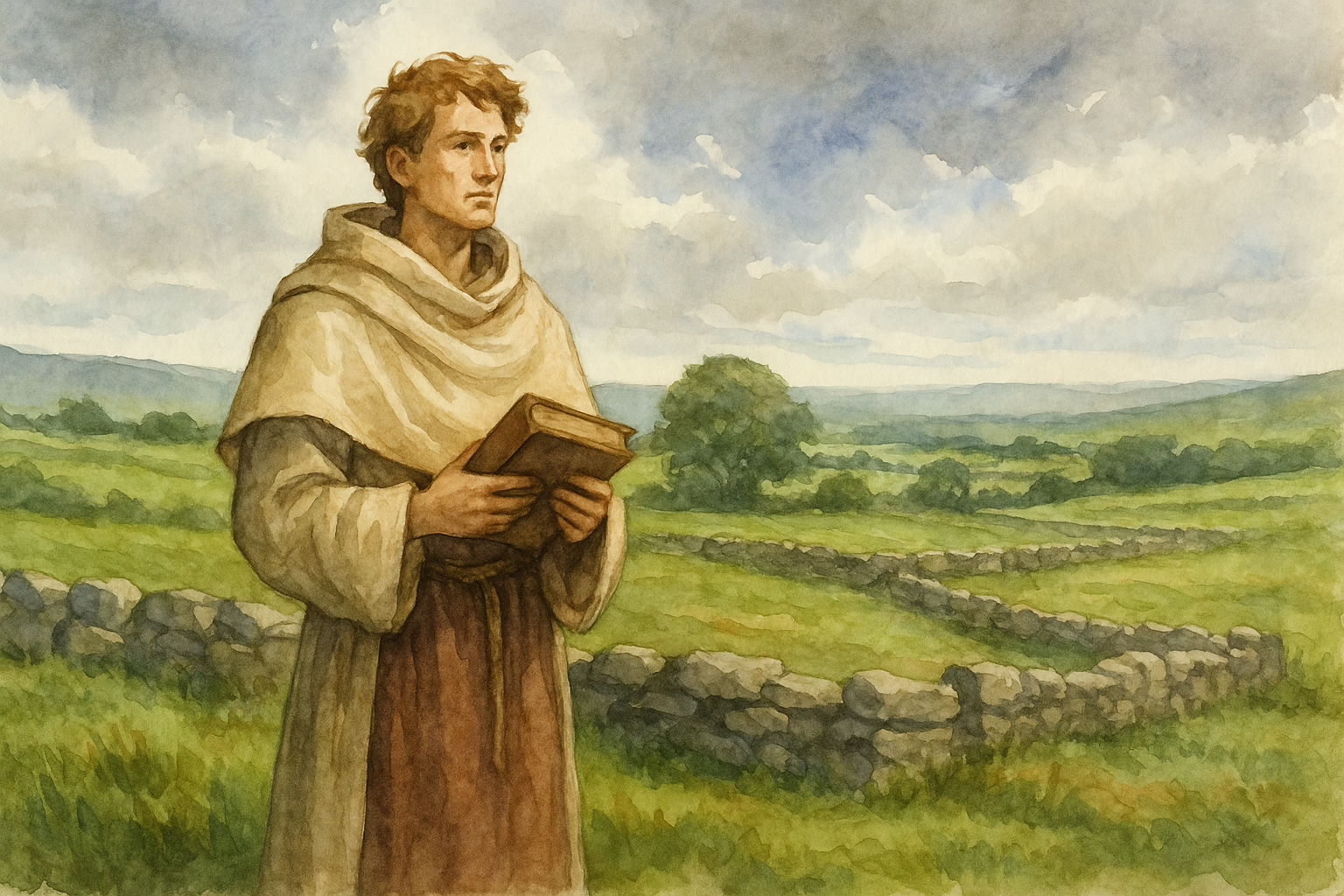
Among the early saints of Ireland, few figures have left as wide a legacy as St Columba. Born into a powerful aristocratic family in the north-west of Ireland during the sixth century, Columba—known in Irish as Colum Cille, “Dove of the Church”—would go on to become a central force in the religious and cultural life of both Ireland and Scotland. His name is linked with the foundation of great monastic centres, the spread of Christianity among the Picts, and the establishment of Iona, a site that shaped the spiritual landscape of northern Britain for centuries.
But Columba was more than a holy man. His life reflects a complex figure—part missionary, part monk, part politician. He is remembered not only for his sanctity and scholarship, but for his role in dynastic rivalries and the turbulent politics of early medieval Ireland. His story offers a window into the world of early Irish Christianity: a landscape of sacred exile, charismatic leadership, and cross-sea networks of influence.
This post explores the history and mythology surrounding St Columba. I will trace his early life in Ireland, his departure following conflict, the founding of Iona, his missionary work in Scotland, and the legacy that continued long after his death. Through archaeological evidence, place-names, miracle stories, and historical texts, I uncover how Columba became one of the most enduring saints of the Gaelic world—and a figure central to understanding Irish history.
The Historical Columba – Context and Early Life
St Columba was born around 521 AD into the Cenél Conaill, a noble branch of the powerful Uí Néill dynasty in north-western Ireland.1 Later tradition places his birth in Gartan, County Donegal, and links him to the legendary High King Niall of the Nine Hostages. These claims reflect his elevated status in medieval genealogies, although they should be viewed with caution.
From a young age, Columba received a rigorous religious education. He trained under prominent ecclesiastical figures, including Finnian of Movilla and Finnian of Clonard.2 Sources describe him as a gifted scholar and poet. Three short Latin hymns are attributed to him in later manuscripts, though their authorship remains uncertain. What is more certain is that he was steeped in monastic learning and gained a reputation for personal austerity and spiritual discipline.
St Columba’s Early Years
Columba’s early years were marked by religious ambition and noble patronage. He is credited in medieval sources with founding numerous monasteries across Ireland during the 550s. Among the most prominent are Derry (c. 546), Durrow (c. 553), and Kells (c. 550). While these attributions are not all historically secure3 they reflect his growing renown as a monastic founder. Some hagiographies even claim he established thirty-five communities, though this likely represents a legendary amplification of his influence.
Despite the uncertainty surrounding precise dates and numbers, Columba’s impact on early Irish monasticism is undeniable. The Vita Columbae, written by Adomnán in the late 7th century, presents him as a revered abbot and spiritual leader. It describes his role at Derry and Durrow and frames his actions within a broader religious mission. One later legend from the 11th century even claims that the clay of Gartan, his birthplace, took on healing properties at his birth—a story which, while folkloric, reflects his growing status.
Columba’s early life, then, was not only shaped by piety but by power. He emerged as a figure capable of uniting noble lineage with monastic authority—a pattern seen in other early Irish saints such as St Patrick. But his later journey to Iona would build on this foundation, projecting his influence far beyond the borders of his native Donegal.
Table: Timeline of St Columba’s Life
| Year (Approx.) | Event | Location | Description |
|---|---|---|---|
| 521 AD | Birth of Columba | Gartan, Donegal | Born into the Cenél Conaill dynasty |
| c.546 | Monastery founded at Derry | Derry (Doire) | Traditional date; possibly legendary |
| c.553 | Monastery founded at Durrow | Offaly | Securely attributed to Columba |
| c.550 | Monastery associated with Kells | Meath | Association likely posthumous |
| 563 | Arrival on Iona | Scotland | Begins mission to Picts |
| 597 | Death of Columba | Iona | Buried on the island, aged ~76 |
Conflict, Exile, and the Journey to Iona
One of the most dramatic episodes in St Columba’s life was his departure from Ireland in the year 563. Tradition holds that his exile followed a bitter dispute over the copying of a psalter. According to later legend, Columba secretly made a copy of a manuscript belonging to his teacher, Finnian of Movilla. When the dispute reached the High King, Diarmait mac Cerbaill, the king ruled in Finnian’s favour: “To every cow belongs her calf, to every book its copy.”4 Outraged by this judgement, Columba is said to have supported his kinsmen in a battle at Cúl Dreimhne, where many were killed.
Modern historians view this story with scepticism. The earliest surviving account of the manuscript dispute appears centuries later. The “Battle of the Book” is likely a retrospective invention. Earlier sources suggest that Columba’s conflict with the High King stemmed from a violation of sanctuary. Around 559, Curnán mac Áedo, a young prince under Columba’s protection, was slain at Kells. This event may have sparked the violence more directly than any dispute over a manuscript.
Whatever the cause, the consequences were significant. Columba left Ireland not as an exile in disgrace, but as a self-imposed pilgrim. His hagiographer, Adomnán of Iona, writes that Columba undertook his departure as a “pilgrimage for Christ”. The Chronicles of Iona also state that he left in his forty-second year to serve God abroad. This interpretation, favoured by monastic writers, casts Columba’s journey as an act of religious devotion rather than penance.
Columba’s Arrival at Iona
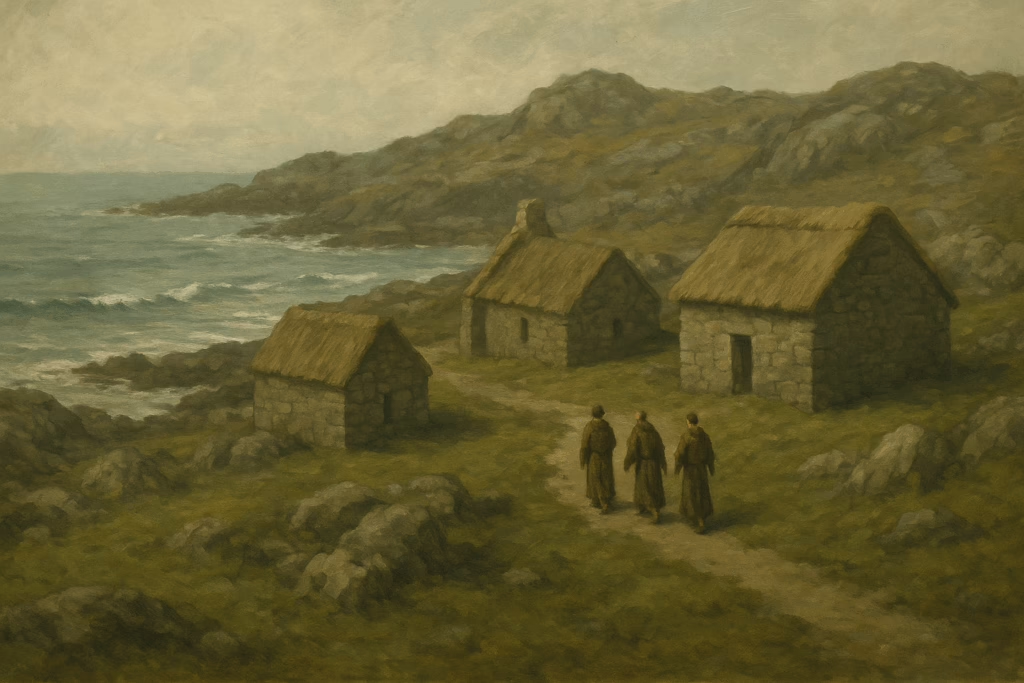
In 563, Columba and twelve companions crossed the sea to the Isle of Iona, just off the west coast of what is now Scotland. The choice of Iona was strategic. It was close enough to Ireland for support but remote enough to serve as a base for new missions. The location placed Columba at the edge of Gaelic Ireland and within reach of the Pictish kingdoms of northern Britain. His departure marked not a retreat, but the beginning of a new phase in his religious and political career.
By establishing a monastery on Iona, Columba laid the foundations for a religious centre that would shape the history of Christianity in both Ireland and Britain. His voyage across the sea, while shrouded in legend, reflects the wider currents of monastic expansion, dynastic rivalry, and sacred geography in early medieval Europe.
Columba’s Mission and Role in Early Christianity
When Columba arrived on Iona in 563 AD, he did not come merely to retreat into solitude. His goal was evangelism. Within a short time, he established a functioning monastery on the island—likely a cluster of simple wooden huts, a small church, and an enclosure. Archaeological investigations on Tòrr an Aba (the Abbot’s Mound) have uncovered charred timber and layers of ash radiocarbon-dated to the mid-7th century, confirming that early monastic structures once stood on this sacred ground.
Converting the Picts to Christianity
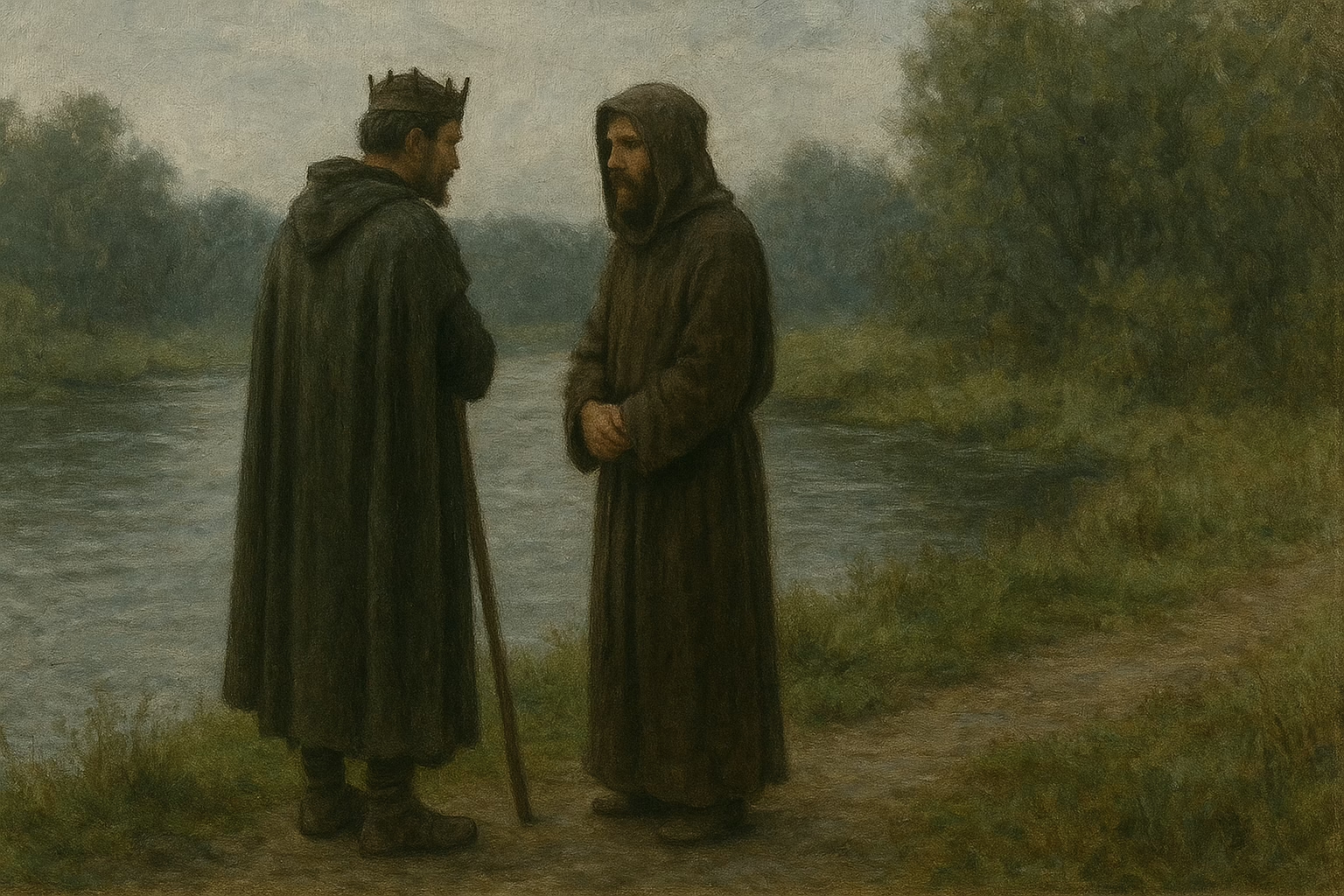
From Iona, Columba began a campaign of Christian evangelisation aimed at the Pictish peoples of northern Britain. His most notable contact was with King Bridei son of Maelchon, who ruled a kingdom near present-day Inverness. Adomnán’s Vita Columbae describes how Columba visited Bridei’s court and, through prayer and miracles, impressed the king and his retinue. In one striking episode, Columba blessed a white stone that then floated on water—a clear symbolic gesture demonstrating divine power. In another, he resurrected a Pictish child, reportedly earning the awe of local leaders.
Whether or not these stories are historically accurate, they reflect the kind of authority Columba was believed to possess. His presence in Pictish territory aligned religious influence with regional diplomacy. While it is not certain that Bridei converted during Columba’s lifetime, later tradition credits the saint with laying the foundation for the spread of Christianity throughout “Scotia”—the term used at the time for Gaelic-influenced northern Britain.
Columba and Britain
Columba’s influence extended far beyond Iona and its immediate surroundings. Later hagiographers recount how King Oswald of Northumbria received a vision of Columba before a decisive battle. Inspired by the saint’s appearance, Oswald invited Irish monks from Iona to establish a monastery at Lindisfarne in 635. Though the vision likely postdates Columba’s life, it reflects his growing role in the Christian imagination of Britain.
By the late 6th century, Iona had become a hub of Christian learning, spirituality, and missionary work. Its monks travelled across the region to spread the faith, support local kings, and build new communities. Over time, Iona became one of the most important monastic centres in the British Isles. It played a vital role in shaping what we now call Celtic Christianity—a tradition defined by its asceticism, scholarship, and distinctive liturgy, often set apart from the Roman practices of the continent.
In all of this, Columba was not just a saintly recluse but an active participant in the religious and political life of his time. His monastery became a symbol of sacred authority, while his mission work laid the groundwork for the Christianisation of large parts of Scotland. His story is inseparable from the broader currents of faith, diplomacy, and cultural change in the post-Roman world.
Monastic Life and Miracles – The Hagiographic Columba
Much of what we know about Columba’s life comes from the Vita Columbae, a sacred biography written between 697 and 700 AD by Adomnán, ninth abbot of Iona. This text, compiled over a century after Columba’s death, draws on oral tradition, earlier miracle lists, and monastic annals. While it remains our richest source, its purpose was not historical record but spiritual edification. Adomnán’s Columba is a visionary and holy man whose life overflows with miraculous deeds.
According to the Vita, Columba possessed divine gifts that included prophecy, healing, and command over nature. In one story, he calms a storm at sea through prayer. In another, he turns water into wine for Mass, mirroring Christ’s miracle at Cana. A recurring motif is his radiant aura—he is said to have glowed with heavenly light during private prayer. These miracles, modelled on Biblical examples, served to affirm Columba’s sanctity and portray him as a spiritual authority.
Signs and Wonders of St Columba
Among the most vivid episodes are accounts of Columba raising the dead. The Vita recounts how he revived a young boy in Pictland at the request of the grieving mother. Elsewhere, he blesses a pebble that miraculously floats, demonstrating divine favour to King Bridei. Such stories are not isolated embellishments but part of a broader hagiographic tradition that shaped the lives of many early saints.
These miraculous acts served both religious and political purposes. They strengthened the saint’s authority in foreign courts, reinforced the legitimacy of his monastery, and inspired awe in followers. They also reflected broader Irish views on sanctity. In early medieval Ireland, holy men were seen as powerful figures who bridged the human and divine. By performing miracles, Columba showed that Christian holiness could rival or surpass the traditional powers of druids and kings.
Even stories composed long after his death reinforced this image. Columba was said to appear in dreams and visions to offer guidance or protection. The most famous of these later tales involves King Oswald of Northumbria, who, before battle, reportedly dreamt of Columba blessing his campaign. Although clearly symbolic, this vision story reflects how Columba’s spiritual legacy extended far beyond Iona and into the political mythology of later kingdoms.
Columba’s miracles tell us much about the values, fears, and hopes of the early medieval church. They also show how the memory of one Irish monk became central to the religious imagination of an entire region.
Table: Miracles Attributed to Columba (from the Vita Columbae)
| Miracle | Description | Symbolic Meaning |
|---|---|---|
| Calming of a storm | Prays during sea voyage; storm ceases | Christ-like power over nature |
| Floating pebble | Pebble blessed by Columba floats in water | Divine authority before King Bridei |
| Raising the dead | Revives Pictish child | Power of life and sanctity |
| Water turned to wine | Produces wine for Mass | Echo of Gospel miracles |
| Prophetic visions | Sees events at a distance or in dreams | Spiritual insight and divine favour |
Sacred Landscapes and Archaeological Evidence
Although the world of St Columba is largely preserved through text, physical traces of his life and legacy remain embedded in the landscapes of Ireland and Scotland. These sites—monastic ruins, sacred wells, place-names, and burial grounds—offer a tangible link to the saint’s enduring influence, even if most structures from his lifetime no longer survive.
On Iona, the centrepiece of Columba’s mission, visible archaeology is limited but significant. Excavations at Tòrr an Aba, long identified as the site of Columba’s hut, uncovered burnt timbers and a layer of ash dated to around 650 AD. These remains align with descriptions of early wooden cells recorded in the Vita Columbae. The large earthen vallum—a sacred boundary around the monastery—still encircles part of the site today. Though the present stone abbey dates from the 13th century, the earlier monastery shaped the spiritual topography of the island. Iona also became a royal burial ground, with early kings of Dalriada and Scotland interred at the Reilig Odhráin cemetery. These burials reflect the prestige Columba’s monastery held as a sanctified space.
Evidence of Columba’s Impact on Ireland
In Ireland, the monastic foundations attributed to Columba offer further insight. While not all claims of his founding role are supported by contemporary sources, places like Durrow and Kells preserve compelling evidence of a Columban heritage. At Durrow, founded around 553 AD, a high cross and the early Book of Durrow attest to its standing as a centre of early Christian art and devotion. The monastery’s reputation continued long after Columba’s death, helping to spread his cult across the Midlands.
Kells, though not securely linked to Columba’s own hand, was closely associated with his community in later centuries. The Cross of Kells, carved in the 9th century, bears an inscription dedicated to both St Patrick and St Columba, underscoring the saint’s dual significance in Irish memory. Nearby, St Columb’s House—a small stone oratory—has long been venerated as a shrine for Columba’s relics, said to have been brought from Iona during Viking raids in the late 9th century.
Columba’s presence is also remembered in Donegal, near his supposed birthplace. The village of Gartan preserves traditions of “Gartan clay”, once believed to have healing powers, and hosts a modern church dedicated to the saint. Nearby in Glencolumbkille, an ancient pilgrimage route known as Turas Cholm Cille includes holy wells, carved crosses, and the ruins of a chapel linked to the saint. These sites remain active places of devotion, showing how memory and ritual continue to sustain his legacy.
Evidence of Columba in Irish Placenames
Even where the physical structures no longer survive, place-names echo his influence. Names like Cill Choluim Chille (“church of Colum Cille”) and Tobar Cholm Cille (“Columba’s well”) are scattered across the Irish and Scottish landscapes. Some of these are medieval in origin; others likely preserve older oral traditions.
These toponyms serve as linguistic monuments, preserving memory where stone has vanished. Many are associated with sites where Columba was believed to have preached, performed miracles, or passed through during his travels. In Donegal, for instance, Glencolmcille (“Valley of Colum Cille”) still draws pilgrims to its holy wells and ancient stations. In Scotland, dedications such as Kilcolmkill or Inchcolm suggest how deeply his influence took root beyond Ireland.
Through these scattered traces we are reminded that while the historical details may be shaped by hagiography, the places he touched still carry meaning. In both landscape and legend, Columba’s presence continues to shape Irish and Scottish identity.
Table: Monasteries Associated with St. Columba
| Monastery | Founded by Columba? | Key Features |
|---|---|---|
| Iona | Yes (563 AD) | Missionary base, burial site, pilgrimage centre |
| Durrow | Yes (c.553 AD) | Home of the Book of Durrow, early cross-slab |
| Derry | Traditional | Strong medieval following, little early evidence |
| Kells | Traditional | Later home of the Book of Kells, 9th-century cross |
| Dunkeld | Posthumous | Important medieval centre of Columban traditions |
Legacy and Cultural Impact
St Columba’s influence stretched far beyond his own lifetime. Over the centuries, he became one of the most important saints in the Gaelic world—venerated in both Ireland and Scotland as a founding figure of Christian tradition. His feast day, celebrated on 9 June, was marked in medieval calendars across the British Isles and remains an important date in the liturgical year for churches honouring early Celtic saints.
Columba’s monasteries—especially Iona—continued to wield enormous influence. During the 7th and 8th centuries, Iona was a centre of learning, scriptural illumination, and missionary activity. Its monks helped spread Christianity throughout Scotland and into Anglo-Saxon England, with Lindisfarne and other foundations tracing their roots to Iona. This led to the development of a distinctive Insular Christianity, rooted in Irish monastic practice and culture, and later admired even on the continent.
In popular memory, Columba remains a figure of both spiritual devotion and national pride. He continues to be remembered as the “Apostle to the Picts” sharing the title of patron saint alongside Andrew. And his influence survives in place-names, folklore, churches, and schools bearing the name Colum Cille or Columba. But his influence goes far beyond these mere facts, reaching into the very roots of Irish Christianity. This is a theme I’ll pick up in my other posts as I continue to explore these topics.
Frequently Asked Questions: St Columba in Irish History
St Columba (also known as Colum Cille) was a 6th-century Irish monk and missionary. Born in Donegal around 521 AD, he became one of Ireland’s most influential saints, founding the monastery of Iona and spreading Christianity in Scotland.
Yes. His feast day is celebrated on 9 June, and his legacy is honoured in churches, place-names, and pilgrimage sites throughout Ireland and Scotland.
The Book of Kells is traditionally linked to Columba’s monastic community. Though created after his death, it may have originated at Iona before being moved to Kells due to Viking threats.
St Columba died on Iona in 597 AD. While the exact location of his grave is unknown, it is traditionally believed that he was buried on the island near the Reilig Odhráin cemetery, a site of royal and monastic burials.
The Vita Columbae describes many miracles, including calming storms, raising the dead, and seeing visions. These reflect traditional hagiographic motifs rather than confirmed historical events.
A popular legend claims Columba copied a manuscript without permission, leading to the “Battle of the Book.” However, this story appears only in much later sources and is likely symbolic rather than historical.
He is best known for founding the monastery on the Isle of Iona in 563 AD, which became a major centre of Christian learning and missionary work. Columba is also credited with founding monasteries in Ireland, such as Durrow and Kells.
- Known in Irish as Colum Cille, meaning “dove of the church”. ↩︎
- These were two prominent Irish Christian missionaries and founders of monasteries in the 6th century. ↩︎
- Durrow is the only one firmly supported by early sources. ↩︎
- Betha Colaim Chille (“The Life of Colum Cille”), Available at: https://celt.ucc.ie/published/G201012/index.html. ↩︎
YOU MAY ALSO LIKE
 Antrim Round Tower: History of Antrim’s medieval monastic site
 Irish Iron Age Warfare: Military Tactics, Raids & Strategy
 Iron Age Trade in Ireland: Networks, Imports, and Economic Life
 St Patrick: History, Mission and Legacy in Early Ireland
 St Brendan of Clonfert: Irish Monk, Atlantic Voyager & Saint
 Iron Age Clothing in Ireland: What People Really Wore
 Irish Festival Names Explained: The Etymology of Samhain, Imbolc, Bealtaine and Lughnasadh
![Dun Ailinne Excavation Photograph. Hamish Forbes. Notebook East Area 1975 Book 3 Hamish Forbes Field Notes. Text [Type]. Digital Repository of Ireland (2024) [Publisher]. https://doi.org/10.7486/DRI.ns06j259](https://www.danielkirkpatrick.co.uk/wp-content/uploads/2024/09/Dun-Ailinne-Exacation-Photograph-120x120.jpg) Dun Ailinne: Exploring Leinster’s Ancient Royal Hillfort
Dun Ailinne: Exploring Leinster’s Ancient Royal Hillfort