When I walk down my street and look at the other cars, it’s difficult not to make assumptions about the owners. From the practical Skoda drivers, to the aggressive BMWs, to the showy Ferraris. What we drive says so much more about us than our mere economic status (often not even that due to the debt people are willing to endure). It’s an indicator of our personality; so much so we often make shorthand assumptions based merely on the make and model. And if we do that today, I’ve no doubt that 2,000 years ago there would have been the equivalent in the Irish Iron‑Age chariot.
From the showy embossed chariots with their feathered covers, to the practical ox-driven carts of tradesman and craftsmen, to the agile chariots of warriors. Chariots were not mere vehicles of war – they represented wealth, status, function, culture, and even art. So let’s turn to the Iron Age’s Irish car showroom.
The Design of Irish Iron Age Chariots
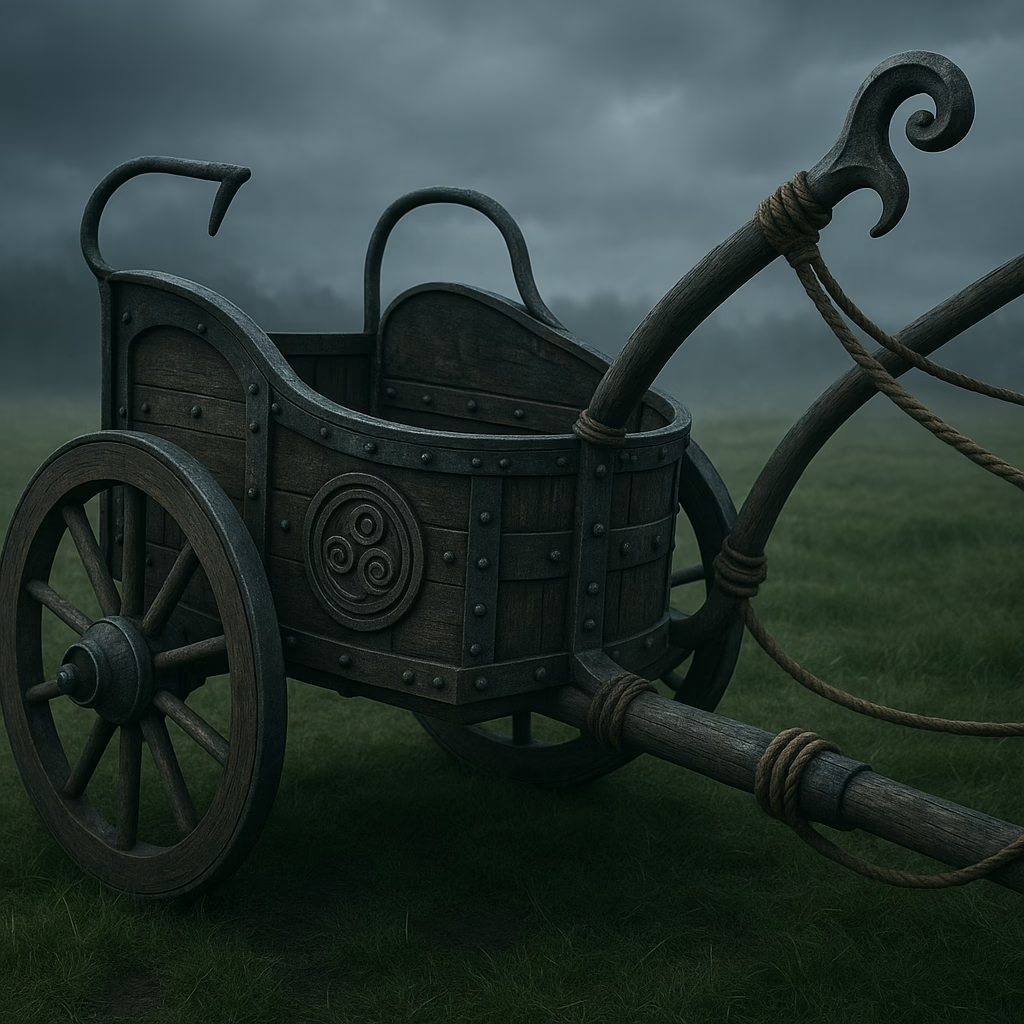
The Irish chariot (carbad in Irish), typically consisted of a body (the cret) usually made of wickerwood – a durable and malleable material – two iron-shod spoked wheels made of hardwood like oak, and with two hardwood shafts for two horses. Though there is evidence that there was actually only one front pole with two rear shafts, with the two front shaft design only being introduced in the early Christian period.1 In fact, it’ll be no surprise that there were many variations on this, ranging from one to four horses, but two was the most typical in Ireland. Yet this was the basic design most chariots followed.
Chariots were mainly built for up to two occupants, a driver and passenger. The driver – aka charioteer – would direct the horses with reins, while the passenger could do anything a passenger might need to do: from throwing spears, to sitting quietly, though the chariots themselves were anything but quiet. Indeed, the Irish took pride in the noise their chariots made2 – something many young drivers have continued to emulate even today. In many respects, they do so for very similar reasons too, trying to show off their wealth, status, and skill – albeit the ancient charioteers would have had much more success in this regard.
Materials Used in an Celtic Iron Age Chariot
| Material | Function | Notes |
|---|---|---|
| Wood (oak, ash) | Structural frame, wheels, yoke and poles | Durable, flexible, locally abundant |
| Iron | Wheel fittings, hubs, linchpins, reinforcement bands | Provided strength and durability |
| Bronze | Decorative fittings, harness ornaments | Indicated status; ornamental use |
| Leather | Suspension, harnesses, reins, protective bindings | Flexible, strong, weather-resistant |
| Wickerwork | Side panels, lightweight enclosure | Lightweight and versatile |
| Rawhide | Wheel coverings, lashings, bindings | Durable, abrasion-resistant |
Functions of Irish Iron Age Chariots
Irish chariots were much more than mere tools of war. They were a primary mode of transport for those who had the wealth to afford such a luxury. Roads of varying quality were built across ancient Ireland, connecting the centres of power with wooden walkways and pathways – spanning from Dunseverick in the North to the seat of the High King in Tara, and on South and West. In the Irish legends – The Tain – there are numerous references to warriors travelling around by chariot from one region to another. But warriors weren’t the only riders.
“There was often an awning or hood overhead, commonly of cloth, dyed in some bright colour; but in elaborate chariots, the awning was occasionally covered with the plumage of birds.”3
Like our cars today, chariots were much more than functional modes of travel. They were symbols of power and prestige. From the colourful shields and severed heads warriors adorned their carts with, to the feathered canopies and bright coloured awnings of the wealthy chieftains; a chariot sent a message by its very appearance.
The Sound of Power
You can imagine walking along one of these roads, some 2,000 years ago, having grown up in a remote village with limited outside contact. Then, all of a sudden, you hear the thundering sound of the iron-shod wheels churning up earth as they clatter over loose stones. Out of the cloud of dust, you see two horses heaving and pulling as they race towards you. As you jump out of harms way, you catch a glimpse of the mighty rider with her driver. Their colourful shields and billowing cloaks lodge in your memory; a memory you’ll retell again and again to your fellow villagers until the next sighting of someone so powerful.
The chariot would serve this purpose well. In this sense, it goes well beyond any modern comparison as there are simply too many cars to compare with making another – even one worth a large fortune – much less impactful. In Iron Age Ireland, a chariot sighting would have been an event itself. Indeed, it was likely only at grand and important events that such ‘sightings’ would have been commonplace except in the centres of power themselves.
Macha’s Fateful Race
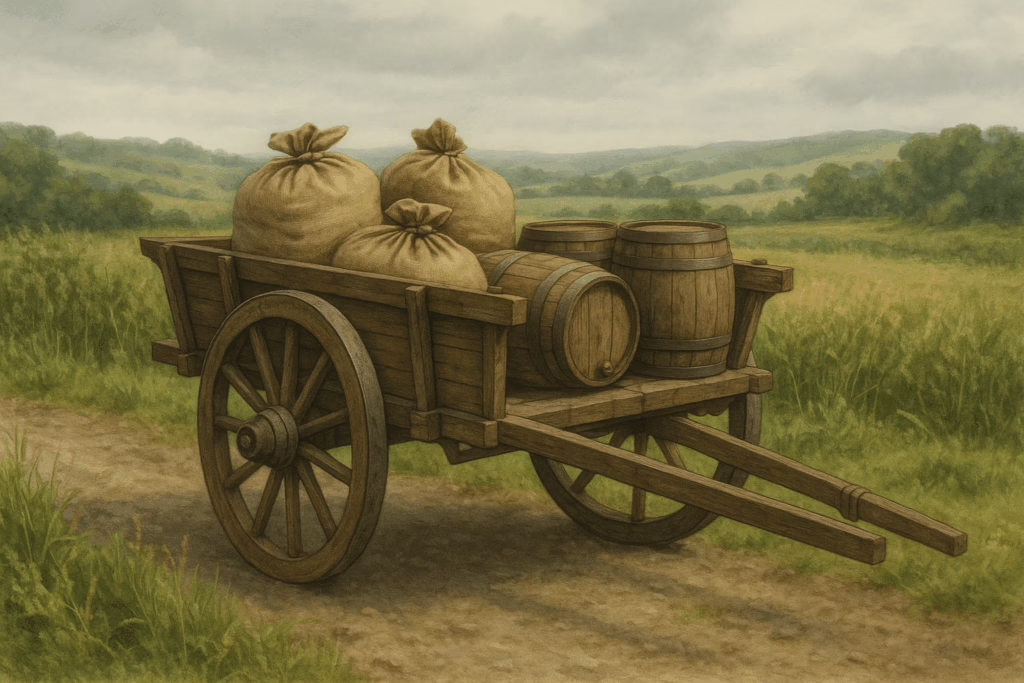
One of the most tragic and surreal Irish legends is of the Irish goddess Macha, the namesake of Ulster’s ancient capital. In this story, the goddess visits a rather unimportant – and extremely lucky – man, becomes his wife, and provides for all his physical needs. However, the story doesn’t end there, for this man decides to go to the Ulster King’s fair, only for Macha to warn him not to do anything foolish – words which echo throughout the rest of the story. For he – of course – eventually drinks too much and is overheard boasting that his wife could out-run the King’s prized chariot.
Macha’s husband seems unaware of his stupidity until Macha is brought before the King and ordered to prove the boast false. Macha begs the King to forgive her foolish husband but not make her race for she is heavily pregnant. The King stubbornly refuses, and so the race takes place.
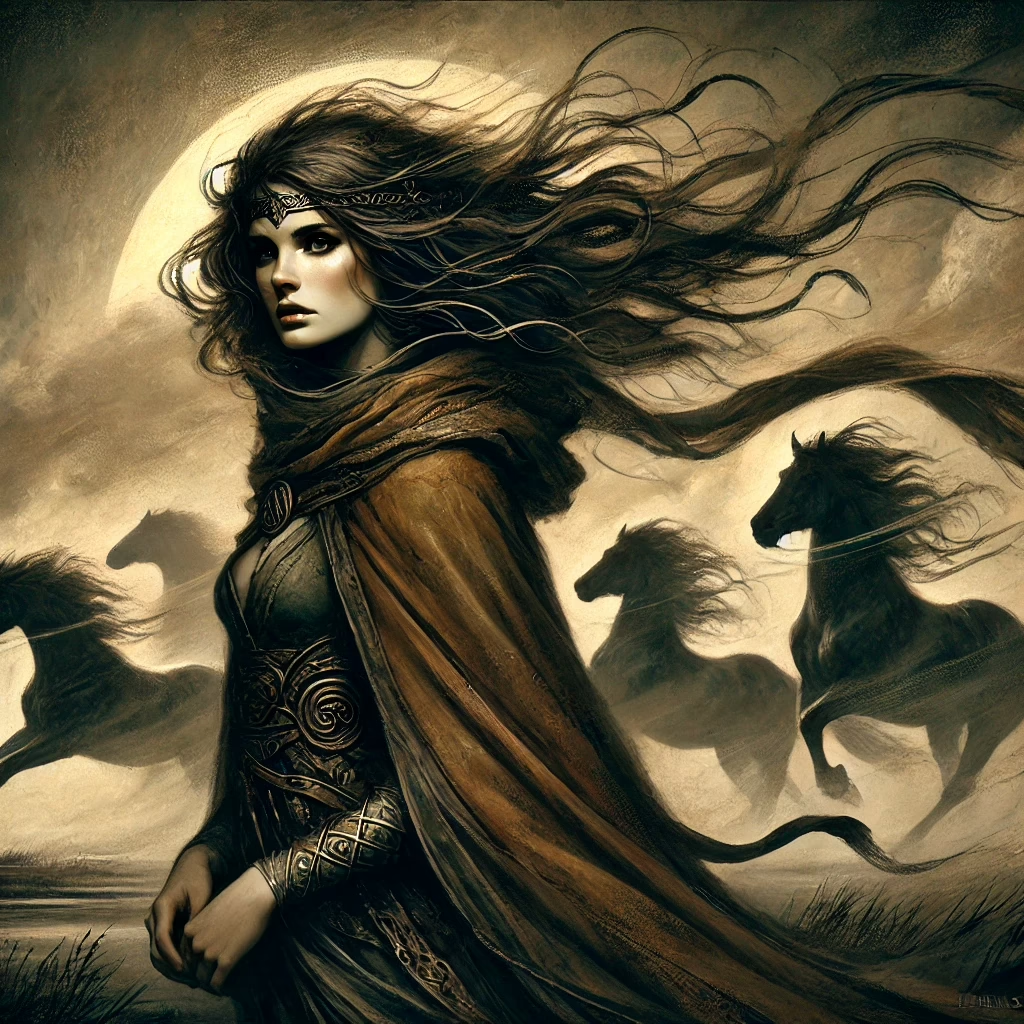
Unsurprisingly to us – the listeners – Macha wins the race. Except it comes at a great cost with her then going straight into labour and losing her twin children. Macha then curses the King and men of Ulster to endure the pain of childbirth themselves for generations thereafter. Emain Macha, or Macha’s twins, remained the name for Ulster’s capital during this Iron Age period and throughout the Ulster cycle myths.4
Irish Iron Age Chariot Racing
Besides being a wonderfully erudite fable against folly, discontent, and power of motherhood, this legend also gives us a glimpse into the ancient Irish pastime of racing. These ancients were obsessed with the speed of their chariots and skill of the charioteers. Races would have been commonplace at the major festivals of Samhain, Beltane, Lughnasa or Imbolc. Crowds would have gathered for economic, political, social, and religious reasons, with plenty to offer by way of gambling, and more again for entertainment. For instance, Lady Gregory’s retelling of the ‘Voyage of Bran’ describes a mysterious paradise where chariot-racing was clearly held up as a epitome of sport and entertainment: “Golden chariots in the Plain of the Sea, rising up to the sun with the tide; silver chariots and bronze chariots on the Plain of Sports.”5
But Macha’s skill in outrunning the King’s chariots was more than mere speed; it cast shame and dishonour on the king twice over. First in the victory. Second in the manner of the victory. For the king’s power was embodied in part by his wealth which was often represented by the horses and chariots he owned. To see these beaten in such a humiliating manner would have undermined his very authority – particularly given the public nature of the event. In this sense, Irish chariots were much more than mere weapons, more than modes of transport, more than works of art, they were physical representations of power.
Riding to War Today
Much could, and has, been written about the martial functions of Irish chariots that doesn’t need repeating here. Only to say that the chariot should not be reduced to these functions – except perhaps for those expressly built for war (and even then they were often much more than a mere tool of war). It would be like reducing the function of all boats to fishing when we all know the numerous other uses a boat may have.
Today the chariot remains an enduring image of the ancient world; an anachronism embodying Iron Age life. Hopefully this post has shown it goes beyond simply life in war, to encompass a much more holistic view of life in its entirety. Perhaps something we can apply today when we consider the simple cognitive shortcuts we apply everyday – all too often there is much more underneath if we take the time to look. But, then again, sometimes life’s just too short.
Frequently Asked Questions: Irish Iron Age Chariot
Iron-Age chariots in Ireland were likely used for elite display, ritual performance, and fast battlefield manoeuvres rather than full-scale combat. Their construction suggests symbolic or high-status functions in tribal warfare and ceremony.
No complete chariots have been found in Ireland, but fragments such as iron tyres, yoke fittings, and horse-gear have been uncovered in bogs and elite burial sites. These support the existence of chariot technology in Iron-Age society
Typically, chariots in Iron-Age Europe were pulled by two small, fast horses. This is consistent with surviving traces of yoke designs found in Britain and continental Europe, and likely also applied in Ireland.
Not in the same way. While the Romans used chariots in ceremonial parades or racing, Irish chariot use was more akin to early Celtic traditions of heroic single combat or prestige transport for warriors and chieftains.
It would have been a lightweight, two-wheeled vehicle made of wood and iron, with large spoked wheels and metal-clad hubs. The chassis would have been open at the rear, suitable for a standing warrior and a driver.
- Harbison, Peter. “The old Irish ‘chariot’.” Antiquity 45, no. 179 (1971): 171-177. ↩︎
- P.W. Joyce (1908) A smaller social history of ancient Ireland. Dodo Press., p373. ↩︎
- Joyce, p373. ↩︎
- For more on this myth see Jeffrey Gantz trans. (1981) Early Irish Myths and Sagas, Penguin Books, pp127-129. ↩︎
- Lady Gregory (1905) Gods and Fighting Men, p137. ↩︎
YOU MAY ALSO LIKE
 Who is the Irish goddess Ériu?
  Who was St Columba? Missionary, Monk, and Legend of Iona
  Iron Age Clothing in Ireland: What People Really Wore
  How old is Newgrange and who built it?
  Etymology of Irish Festivals
  Who was the Irish war goddess The Morrigan?
  Who was the Irish god Lugh of the Long Arm?
  Ancient Roads of Ireland – 5 Slíghe (Highways) Radiating from Tara