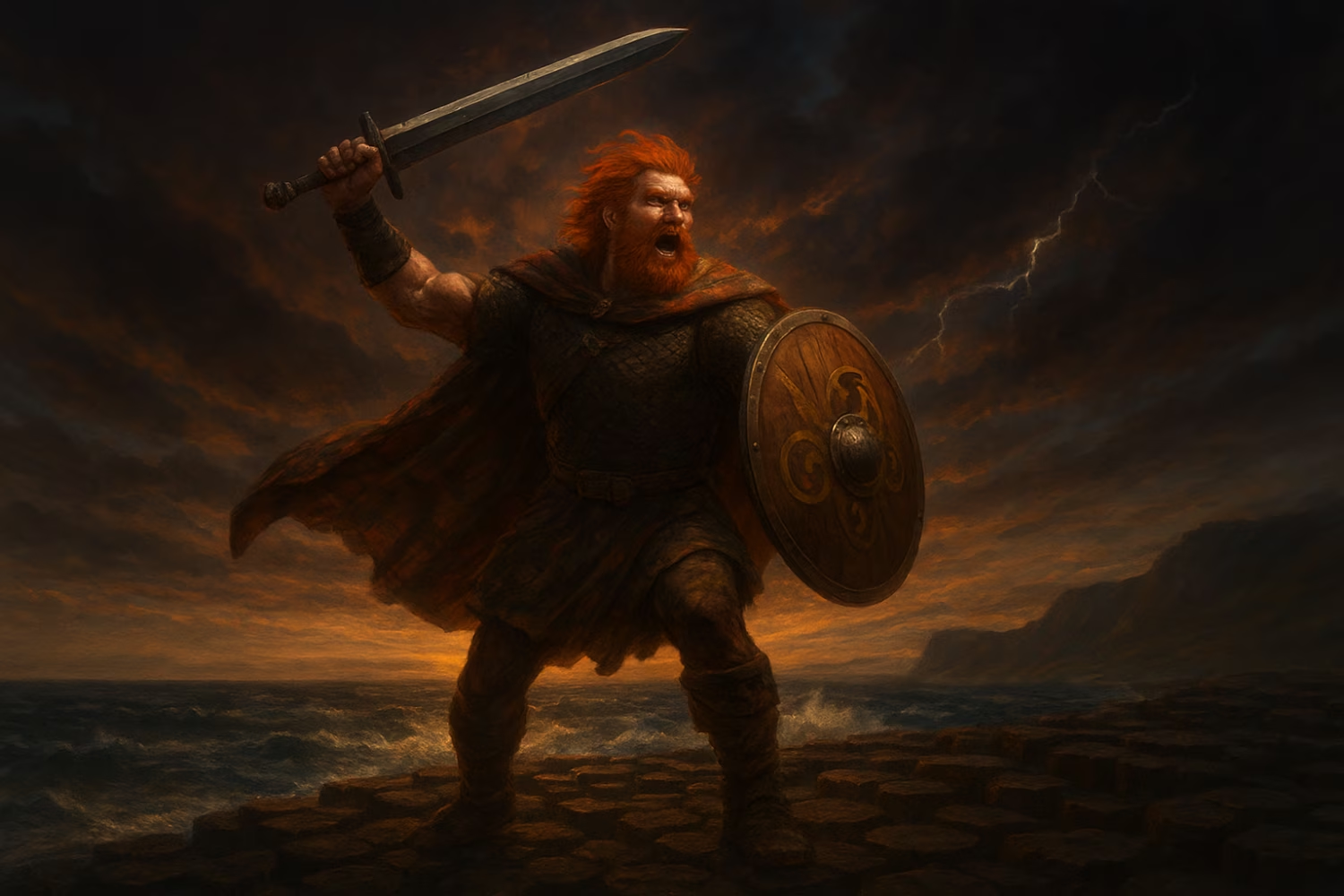
Few figures in Irish mythology are as widely recognised as Finn MacCool. Known in Irish as Fionn mac Cumhaill, he is remembered both as a heroic leader of the Fianna and as a giant whose name is forever tied to the Giant’s Causeway in County Antrim. The stories told about him bridge two worlds: one rooted in the great cycles of Irish myth, where he appears as a warrior, hunter and sage, and another found in popular folklore, where he takes on a larger-than-life form to shape the very landscape itself. This post unpacks the legend of the Giant’s Causeway, of the great rivalry between Finn and the Scottish giant Benandonner. But we won’t stop there, for Finn is not a mere comedic caricature.
Finn’s roots trace back to much older narratives associated with the Fenian Cycle and ancient Irish literature. In considering these, we will see the wonderfully complex heroic figure who blends wisdom with might, love and tragedy. A true giant in a much more profound sense.
Finn MacCool and the Legend of the Giant’s Causeway
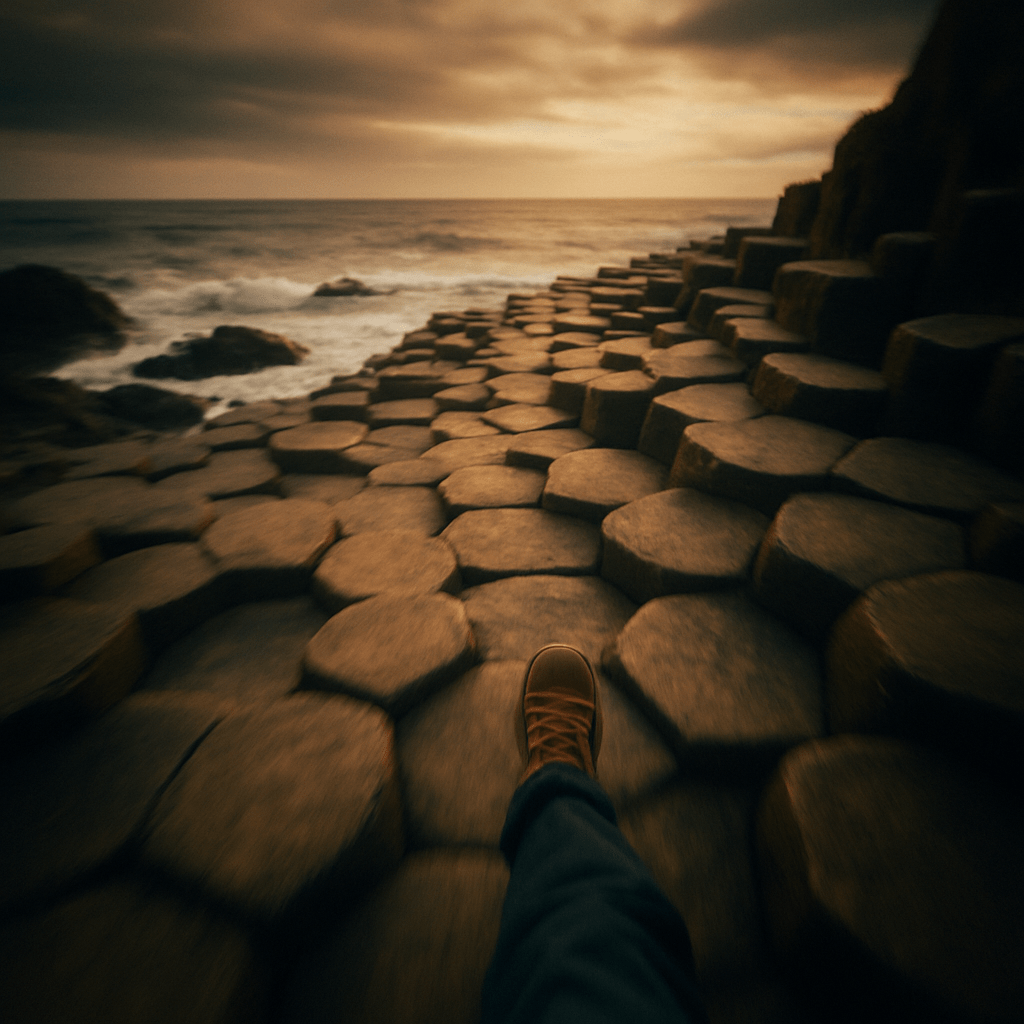
The Giant’s Causeway, with its hexagonal stone columns stretching into the sea, has long invited stories about how it came to be. But the one which has endured until today, centres around the figure of Finn MacCool. The story goes that the Irish warrior Finn and the Scottish giant Benandonner (often called the “Red Man” of the North) challenged each other to a contest of might. But there was the small matter of the Irish Sea in the way. So the industrious Finn built the Causeway as a bridge across the sea. But when Finn saw how huge his rival was, he panicked and fled home.
The furious Scottish giant then marched along the causeway to confront the Irish warrior at his house. However, Finn’s clever wife Oonagh hid him by dressing him as a baby in a cradle. When Benandonner saw baby Finn’s enormous size and strong teeth (after biting into a hard griddle-cake that cracked his own teeth), he assumed the baby’s father must be a giant beyond reckoning.
Terrified, he ran back across the causeway to Scotland, smashing it up behind him so Finn could not follow. The broken remnants of the causeway thus remained as we see them today on both sides of the North Channel.
The tale continues that Benandonner’s hasty retreat created other landmarks: the ruined Causeway piers off Staffa (where Fingal’s Cave sits) were said to be the path Finn had built into Scotland, torn away by Benandonner’s departure. Similarly, nearby rock formations on the Antrim shore got names linked to the story – the Giant’s Organ and Giant’s Harp.
But, ancient as this myth seem, it is a much more modern portrayal of a hero much more layered and interesting.
Modern Origins of an Ancient Hero
Although the Giant’s Causeway story is now the best-known episode attached to the hero Fionn mac Cumhaill (Finn MacCool), the written record shows a very different figure. The hero now marketed as a stone-hurling giant enters the historical record as something very different. The longest and earliest prose source, Acallam na Senórach (ca 1200), portrays Finn as a culture-hero who debates Saint Patrick and recounts hunts across Ireland—no basalt road, no rival giant. Most date these narratives to around the 12th century. But, as with most ancient Irish mythology, it’s impossible to know the hero’s earliest origins, only that it likely did have roots which date much further back into prehistory.
Motifs linked to the Causeway come much later, with National Trust archivists pointing to an 1830 poem by Mary Anne Browne. However, across the water the Staffa basalt columns provided Scots Gaels with a mirror-myth around Fingal (an 18th-century Anglicisation of Finn) or the giant Benandonner who owns the cave. Documentary evidence is admittedly late—the Staffa story only surfaces in written form after Sir Joseph Banks’ 1772 scientific visit—but its verbal transmission was likely older.
Whatever the case, the modern myth is just that – modern. For readers content to stop there then please do. But, if you want to know where the original Finn came from, read on. It’s definitely worth it.
Finn MacCool’s Origins and Early Life in the Fenian Cycle
Behind the folktale giant lies another Finn: the youthful hero of the Fenian Cycle. These tales, preserved in medieval manuscripts, trace his rise from a boy with little protection to the leader of the Fianna. The most complete account of his early life comes from “The Boyhood Deeds of Fionn.”
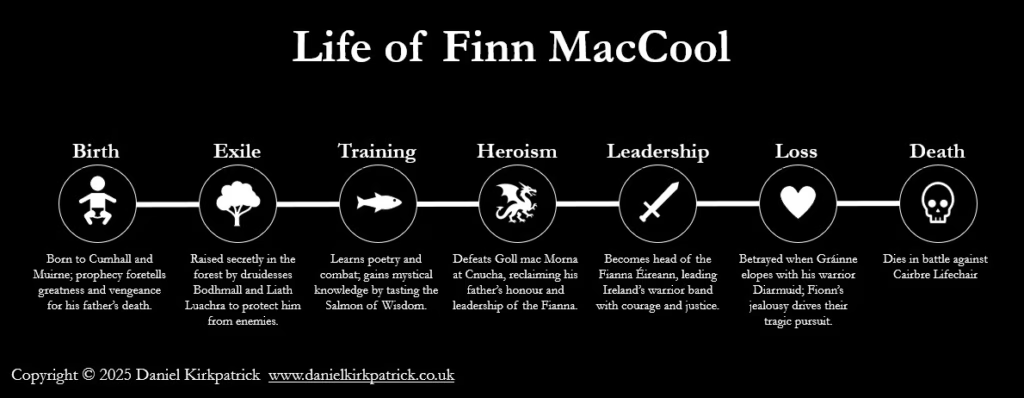
The story tells us that Finn was the son of Cumhall, leader of the Fianna, and Muirne, daughter of the druid Tadg. His father was killed before Finn’s birth, leaving the boy vulnerable. To protect him, his mother entrusted him to two wise women, Bodhmall and Liath Luachra, who raised him in secret in the wilds. There he learned hunting, poetry, and the skills that would make him both warrior and sage.
Salmon of Knowledge
Even as a boy, Finn stood out, both for his striking looks and his quick mind described as: “A shapely fair (finn) youth”. Yet the moment that truly marked his transformation into Ireland’s great hero came when he gained the wisdom of the Salmon of Knowledge.
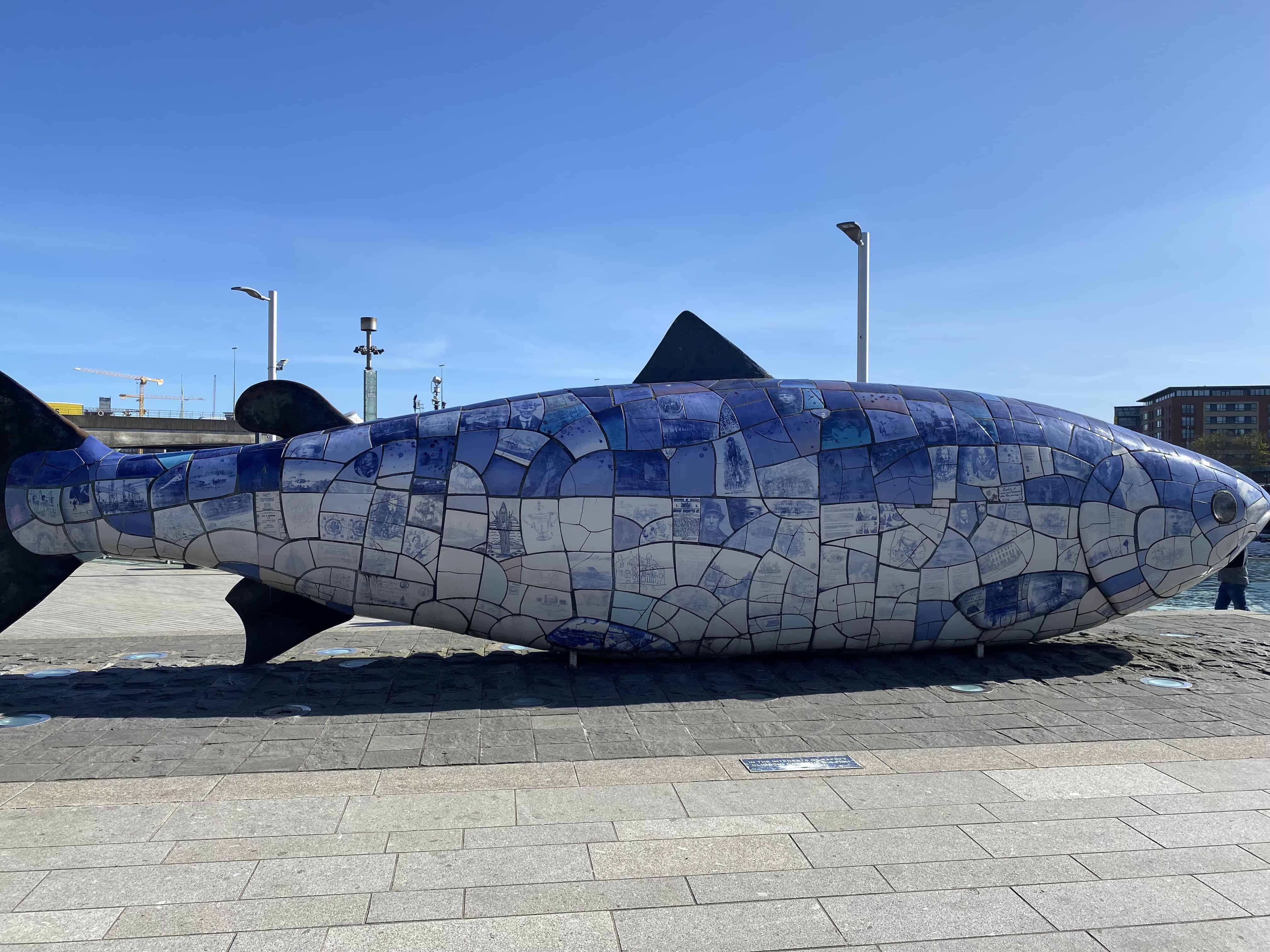
According to the tale, Finn studied under the poet Finegas, who for seven years sought the salmon prophesied to grant all wisdom. When the fish was finally caught, it was Finn who cooked it, and in tasting its juices he acquired its knowledge. From that moment, “whenever he put his thumb under his tooth, no matter what he had been asked, he had the truth of it in his heart.”
This episode not only explains Finn’s reputation for wisdom but also connects him to the wider Irish tradition, where knowledge and poetry were seen as sacred gifts. Unlike the Causeway tales, which highlight his cunning and strength, the Fenian stories present him as a figure shaped by learning, destiny, and the mysteries of the otherworld.
This becomes even clearer when we consider the tales of his adult life.
The Battle of Cnucha
The tale of The Battle of Cnucha marks the beginning of Finn MacCool’s rise to power. It opens with Ireland divided between rival warrior bands, the Clann Morna and Clann Baoiscne. Finn’s father, Cumhall, leader of the Fianna, is slain in this very battle by Goll mac Morna. His mother, Muirne, flees while pregnant, hiding the child who would one day reclaim his father’s name.
Years later, the boy Fionn — raised in secrecy by wise women in the forest — begins to wander Ireland in search of his heritage. His courage and cleverness soon attract attention, especially after he kills a magical fire-breathing creature, the Aillen mac Midhna, who had long plagued the royal stronghold at Tara each Samhain. With a harp’s music, Aillen would lull the defenders to sleep before burning the halls. Fionn, using a magical spear that wards off enchantment, stays awake and slays the creature.
When King Cormac mac Airt learns of the deed, he restores Finn to his father’s command and grants him leadership of the Fianna. Goll mac Morna, the man who once killed Cumhall, bends the knee to Fionn in a symbolic act of reconciliation.
The story of Cnucha therefore presents Fionn not merely as a warrior avenging his lineage but as a unifying force. The young boy in hiding emerges as the legendary leader.
But it’s not all great battles and renown from then on.
The Pursuit of Diarmuid and Gráinne
One of the most poignant and human stories of the Fenian Cycle is Tóraigheacht Dhiarmada agus Ghráinne — The Pursuit of Diarmuid and Gráinne. It begins at the wedding feast of the ageing hero Fionn and Gráinne, the beautiful daughter of the High King, Cormac mac Airt. During the celebration, Gráinne realises that Fionn is far older than she imagined. Her eyes instead fall upon Diarmuid Ua Duibhne, one of Fionn’s most loyal warriors, famed for his beauty and bravery, and marked by a magical ball-seirce — a “love spot” on his forehead that causes any woman who sees it to fall in love with him.
Overcome by desire, Gráinne uses a spell to compel Diarmuid to flee with her. Despite his loyalty to Fionn, Diarmuid cannot resist the geis — the binding magical command — she places upon him. The pair escape across Ireland, pursued relentlessly by Fionn and the Fianna. Their flight takes them through forests, mountains, and hidden caves, many of which are still linked to their names in Irish folklore.
Eventually, after years in hiding, Fionn is persuaded to forgive them. Yet peace is short-lived. Later, when Diarmuid is fatally gored by a wild boar, Fionn holds in his hands the power to heal him by letting him drink water from his palms. Twice he hesitates, letting the water slip through his fingers until it is too late.
The tale captures the tension between love, honour, and vengeance that runs through the Fenian Cycle — portraying Fionn as both noble leader and deeply human figure, torn by jealousy and pride. This brings us to the final chapter in Fionn’s life.
The Death of Fionn mac Cumhaill
According to tradition, Fionn meets his end during the battle of Brea, where the Fianna fight against the High King Cairbre Lifechair. Betrayal and division have weakened the once-great band, and Fionn, now old, faces enemies both mortal and political. The Acallam describes his fall not as a single tragic blow but as the closing of an era. The hero who once embodied Ireland’s courage becomes a symbol of its lost unity.
In some versions, however, Fionn does not truly die. Instead, he falls into an enchanted sleep beneath the hills, destined to awaken when Ireland is in greatest need — a theme that echoes across Celtic tradition. Much like Arthur in Britain or Barbarossa in Germany, Fionn becomes the “sleeping king,” awaiting to return.
This ambiguous ending captures the essence of Fionn’s legend. His story begins with vengeance and triumph but ends in mystery. Whether dead or merely waiting beneath the Irish earth, Fionn remains the embodiment of a heroic ideal — the warrior-poet who bridges the human and the mythic.
From Giant to Hero: The Many Faces of Finn MacCool
The figure of Finn MacCool endures in Ireland’s imagination through two very different lenses — one mythic and playful, the other heroic and profound. At the Giant’s Causeway, he stands as the whimsical giant who hurled rocks across the sea to Scotland, a tale told with warmth and humour. This version of Finn is a folk hero shaped by oral tradition — a being of immense strength but very human folly, whose quick wit outsmarts the fearsome Benandonner. It’s a story of local pride and landscape, tying the geological wonder of the Causeway to an Irish triumph over the Scots through cleverness rather than violence.
Yet behind that genial giant lies the older and deeper Finn of the Fenian Cycle — the warrior-poet, leader of the Fianna, and guardian of Ireland’s moral and cultural soul. This Fionn embodies courage, wisdom, and sacrifice. His stories wrestle with honour, betrayal, and mortality. He is a figure shaped by Celtic heroism, bound to Ireland’s mythic age much as Cú Chulainn is to Ulster’s.
YOU MAY ALSO LIKE
 Iron Age Clothing in Ireland: What People Really Wore
 Irish Festival Names Explained: The Etymology of Samhain, Imbolc, Bealtaine and Lughnasadh
 Etymology of Irish Animal Names: Myth & Language Revealed
 Iron Age Trade in Ireland: Networks, Imports, and Economic Life
 Ancient Irish Society: Language, Law & the Structures of Kinship
 Nuada of the Silver Hand: King of the Tuatha Dé Danann in Irish Mythology
 Balor of the Evil Eye: King of the Fomorians
![Dun Ailinne Excavation Photograph. Hamish Forbes. Notebook East Area 1975 Book 3 Hamish Forbes Field Notes. Text [Type]. Digital Repository of Ireland (2024) [Publisher]. https://doi.org/10.7486/DRI.ns06j259](https://www.danielkirkpatrick.co.uk/wp-content/uploads/2024/09/Dun-Ailinne-Exacation-Photograph-120x120.jpg) Dun Ailinne: Exploring Leinster’s Ancient Royal Hillfort
Dun Ailinne: Exploring Leinster’s Ancient Royal Hillfort