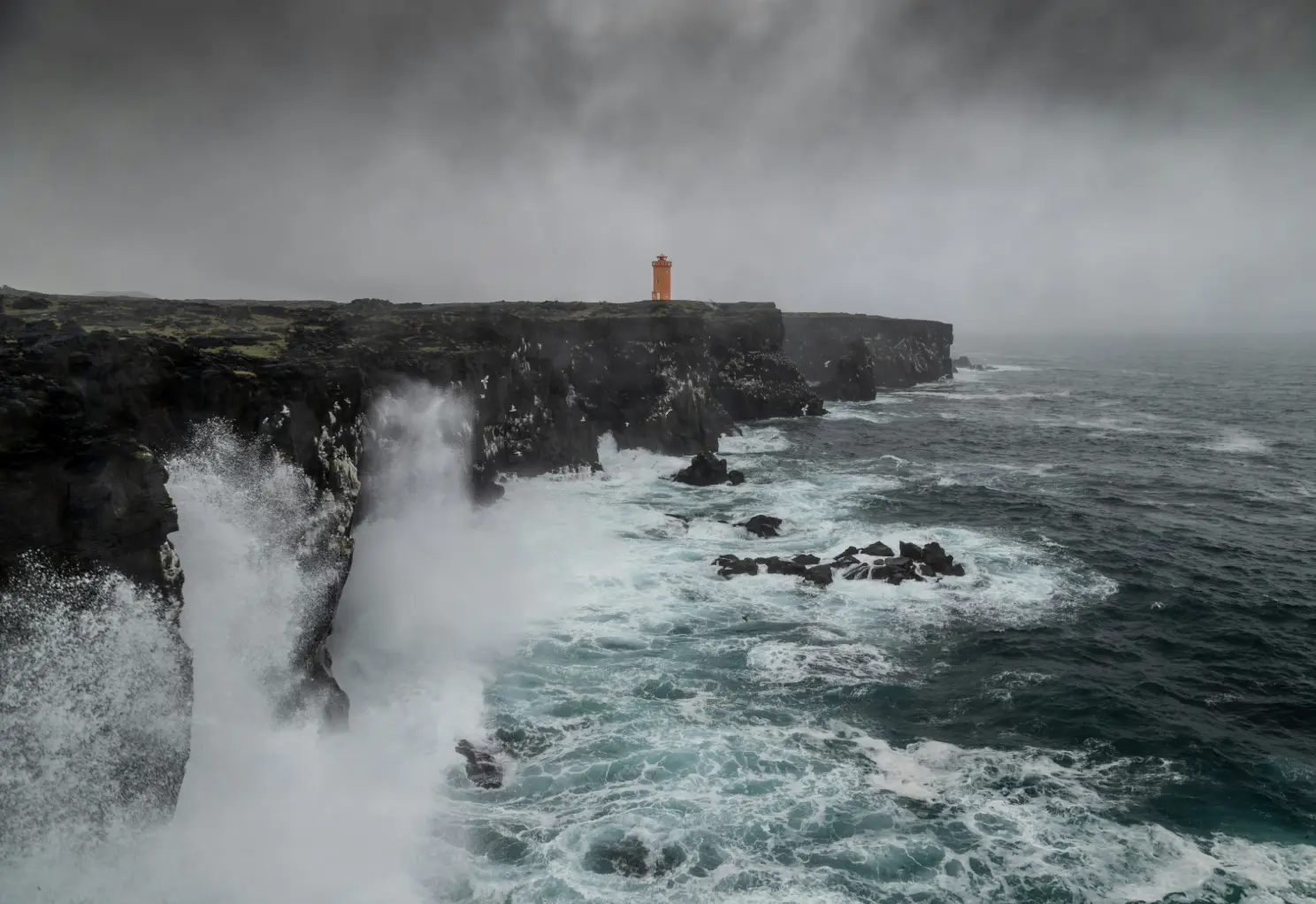
Growing up beside the sea in Ireland, I learned to appreciate the perils and joys it provided. Through surfing to cliff-jumping (very poorly I might add) I experienced far too many embraces with the Atlantic Ocean’s darker depths; the power of the mighty rollers crashing down upon you. That realisation that this might be the end and the last thing you’ll see are the waters engulfing you. The oceans and seas have a way of teaching you respect – a lesson my teenage self had to learn more than once.
But any who live by the sea learn to respect its force one way or another. So it’s little wonder that nearly every ancient religion had a god associated with this domain – a domain strongly associated with death and passage into the otherworld on the one hand, and with abundance and sustenance through its many sea treasures (fish, salt and seaweed to name but a few). But Manannan the Proud, a god of the seas he may be, is also much more.
Many Faces of Manannán in Irish Mythology
Reading the legends which surround the Irish sea god, it’s difficult not to become confused. For there is almost more which divides than unites these myths. At the most basic level, there are legends of his death – having been struck down in the Battle of Magh Cuilenn, he was buried upright only for a lake to burst upon around his body and become a red bog.1 But legends of the god’s death are fleeting, particularly when compared to those of his life and meddling in the affairs of ancient Ireland.
Manannán features in many of the most iconic of the ancient Irish legends: from training the famed warrior of ancient Ulster – Cuchulainn – gifting him with the wicked three-pronged spear that never missed (Gae Bulga); to when Conchubar the King of Ulster was faced with an unassailable enemy – in the sons of Usnach – Manannán consented to blinding them so that they struck each other down instead of the army of Ulster.2
In all of these tales, Manannan is depicted “going round Ireland, doing tricks and wonders. And no one could keep him in any place, and if he was put on a gallows itself, he would be found safe in the house after, and some other man on the gallows in his place.”3 But, even with the breadth and often contradictory tales, there are certain characteristics and traits of Manannan which appear again and again. It’s these that give us the best glimpse into the god these ancient peoples worshipped and revered.
Table of the Treasures of Manannán Mac Lir
| Treasure | Mythic Source / Tale | Special Property |
|---|---|---|
| Self-navigating boat “Wave-Sweeper” | Immram Curaig Maíle Dúin; Voyage of Bran | Needs no sail or oars, carries its master wherever he wills across sea or land. |
| Otherworldly horse Enbarr | Oidheadh Chloinne Tuireann | Gallops equally over sea and land; no rider upon her can be wounded. |
| Cloak of invisibility | Medieval Irish prose dindshenchas | When thrown over himself or allies, renders them invisible to foes. |
| Sword Fragarach (“The Answerer”) | Oidheadh Chloinne Tuireann; later Arthurian lore | Cuts any armour; compels truth—those faced by its point cannot lie. |
| Spear of Manannán | Cath Maige Tuired (Second Battle of Moytura) | Returns to owner after being thrown; never misses its mark. |
| Crane-Bag | Early Irish poems; Duanaire Finn | Leather bag made from a magical crane’s skin; at high tide holds every treasure of Ireland, at low tide appears empty. |
| Pair of Immortal Swine | Sanas Cormaic; Acallam na Senórach | Two pigs that can be killed and eaten each night but are whole again the next morning—source of endless feasting. |
| Woven Mantle of Weather-Weaving | Late folklore (Manx & Irish) | Manannán shakes the cloak to raise fog or storms, protecting his isles from invaders. |
Manannan Mac Lir’s Magical Powers
The Irish deities are interesting for many reasons and Manannan the Proud is no exception. For these gods provide a window through which we can begin to see and appreciate the ancient culture and beliefs of Ireland.4 Let’s start with music.
In the legend of the Irish Chief Aodh Dubh O’Donnell, Manannan appears as a mysterious, uninvited stranger dressed as a jester. Having ridiculed musicians playing, the god takes up a harp himself. The Chief is so astounded by his playing that he invited him to join him. But Manannan refused saying he wouldn’t be mocked or boasted of by another. O’Donnell then makes the fatal error of trying to force the stranger to remain by blocking his gate with warriors. Manannan takes up the harp once more and with his song kills them. In return for bringing them back to life, Manannan demands a herd of cows which is duly granted.
“With that he took a harp, and he made music that would put women in their pains and wounded men after a battle into a sweet sleep.”5
The legend holds layers of meaning which are worth briefly unpacking. For the ancient Irish, music “entered into their daily life, and formed part of their amusements, meetings, and celebrations of every kind.”6 It held ritual significance and festivals and key events. At gatherings, stories would have been accompanied by the playing of a harp or other instruments. Musicians’ ability to command a hall with their playing was highly sought after, with many chiefs often paying for skilled musicians to be part of their household. Indeed, they would often commission them to write songs to praise their exploits or satire their opponents. And underpinning this all was a belief that music held a mystical power itself; and Manannan’s tale is the very epitome of this, with his playing able to take life itself. Though many power over life and death did not stop here.
Manannán’s and War
Unlike many of his contemporaries (see the Table below), for Manannan there are relatively few accounts of him fighting in battle or war. Instead, he is almost portrayed as being above such events, preferring to influence them from afar. One example, is through the many magical treasures of Manannan. We have already briefly mentioned the Gae Bulga, a spear that never missed, gifted to the mighty warrior Cuchulainn. But there were many others.
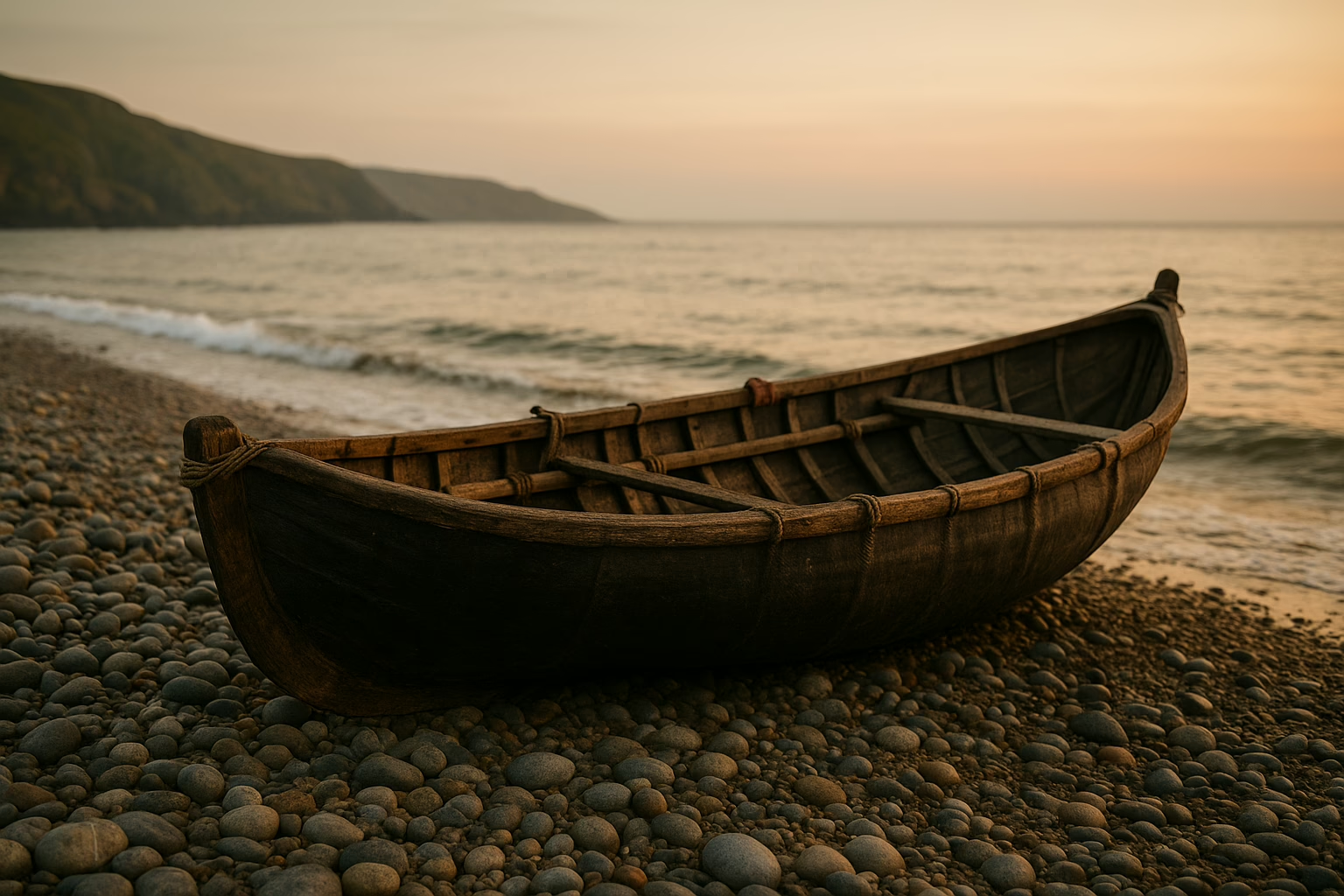
The god Lugh, for instance, is depicted in one legend donning Manannan’s breastplate and sword, while riding on his mighty horse. Consistent throughout is the theme of supernatural power over life and death – one wound would mean certain death.7 Other legends speak of Manannan great currach– an ancient type of boat – named the ‘Sweeper of Waves’.8
Manannan’s ability to combine the skill of crafting with his understanding of “all enhancements”9 meant these objects could shape fate itself. Time and again they feature as critical literary elements within the legends, tipping the scales of a battle or fate of a king.
Table Comparing the Irish Sea God to other Traditions
| Tradition / Culture | Sea Deity | Shared Motifs with Manannán |
|---|---|---|
| Irish-Celtic | Manannán mac Lir | Otherworld ruler; weather & mist control; giver of magical treasures; psychopomp (ferries souls). |
| Greek | Poseidon | Controls storms, calms seas, owns divine horses; associated with earthquakes & sea travel. |
| Roman | Neptune | Essentially same domain as Poseidon; horses, sea power, protector of mariners. |
| Norse | Njǫrðr | Sea, wind and wealth bestower; protects sailors; calm‐sea blessings akin to Manannán’s mist magic. |
| Norse (Jötunn) | Ægir | Host of feasts in an undersea hall; brewer of ale; storms the sea when angered. |
| Vedic (Early Hindu) | Varuṇa | Guardian of cosmic waters; binds oath-breakers; oversees moral order—parallels Manannán’s role as psychopomp and custodian of truth (Fragarach sword compels truth). |
| Japanese | Susanoo-no-Mikoto | Tempestuous sea-storm figure; wields divine sword; engages in trickster exploits reminiscent of Manannán’s playful deceit. |
| Polynesian (Māori) | Tangaroa | Primal ocean progenitor; father of fish and sea creatures; parallels Manannán as ancestral sea figure. |
Manannán’s Otherworldly Isles
Any discussion of Manannan must include at least some mention of the travels of Bran, son of Febal. The story begins with the Chief – Bran – waking from a dream to discover a mysterious branch by his head. Shortly after, a woman appears in his court, who tells of the wonderous island of Emhain off to the far West of Ireland. Here Manannan’s mighty horses room and joys of all descriptions are theirs’ for the taking if they but make the journey. Bran, of course, sets off with his foster-brothers and close-compatriots.
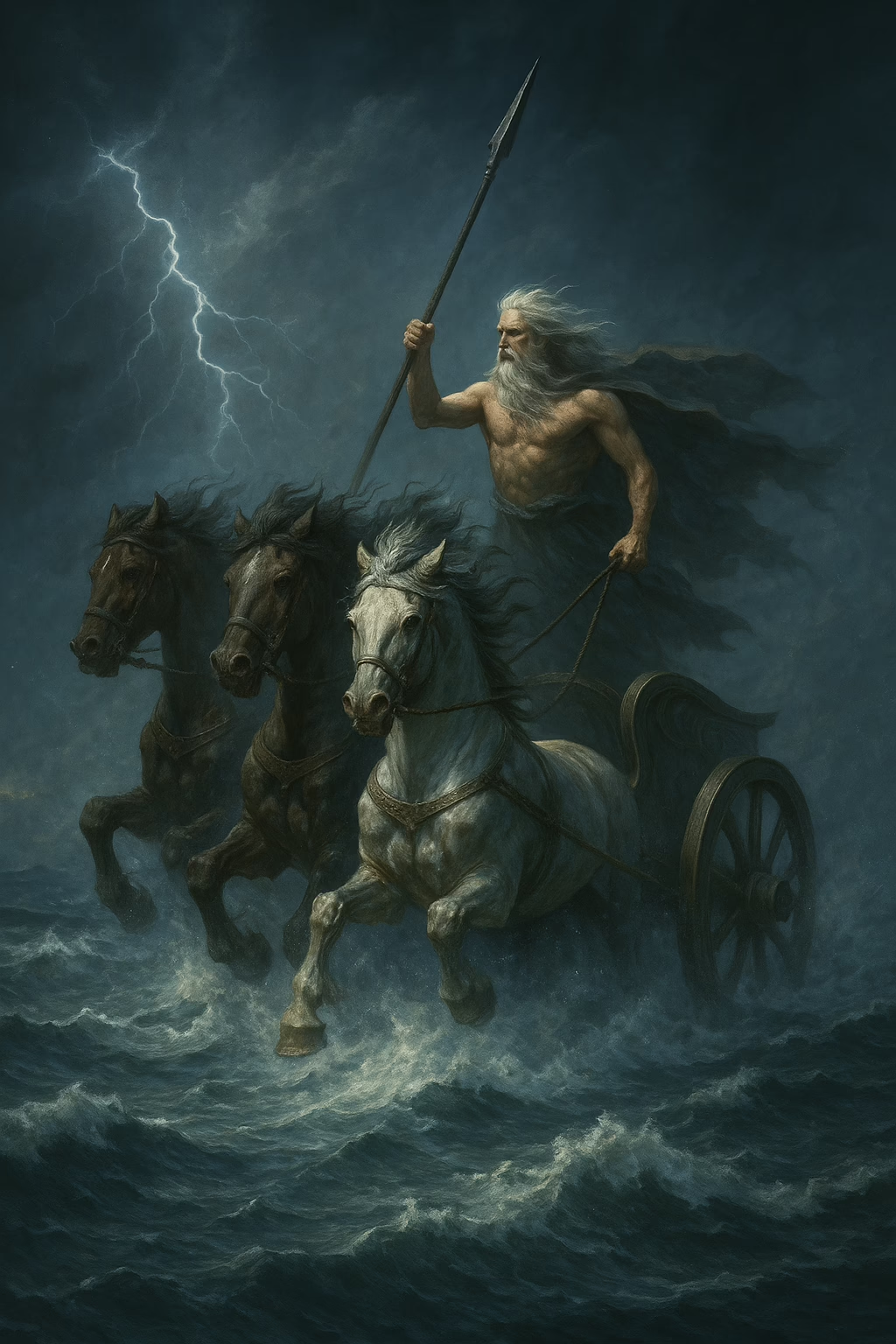
After two days of rowing their currachs, Manannan appears riding across the ocean in his sea-chariot. The god commends Bran and encourages him on to the island. Bran eventually arrives and stays on the magical island. There they enjoyed all the best hospitality could offer, from bountiful food and drink, to luxurious lodgings. But soon they yearn to return home once more. They are warned, however, not to ever set foot again in their home.
The journey back is uneventful, until they reach the shores of Ireland once more. Here they call out to several people along the shoreline to herald their return. Only these people knew nothing of a Bran, except from their ancient stories. Failing to heed the warning, one of Bran’s brothers jumps from the boat and as soon as he sets foot on land, he turns to ash. So ends the story of Bran the adventurer.
Manannan’s Legacy Today
It’s hard not to recognise the handprints of these wonderfully colourful legends in so many of the stories we know today. From C.S. Lewis’s Narnia, to the many depictions of Manannan’s sea-chariot in art and film, Manannan’s legacy is evident to those who know where to look.
Yet, what I love about these stories is their ability to give us little glimpses into the lives of ancient Ireland; to a people who embedded music in their daily lives; who recognised the significance and power of great craftsmanship and valued such objects as if they were imbued with divine power themselves; and who held a deep spirit of adventure that carry on for millennia until they could be found in almost every part of the world. That’s a worthy legacy befitting of the ancient Irish Sea god.
Frequently Asked Questions: Manannán mac Lir
Manannán (also called Manann or Manannán mac Lir, “son of the sea”) is a legendary Celtic sea god and king of the Otherworld. In Irish myth he rules the seas and helps heroes; he is often described as the Sea King of the Celtic Isles.
Manannán is famous for bestowing enchanted items. In legend he gave the warrior Cúchulainn the spears Gáe Bulg and had a great sea-chariot, self-navigating boat (“Wave-sweeper”), a magic harp, and otherworldly weapons. For example, one tale says his music could kill and revive men. Modern lore also credits him with a special horse and the famed sword Fragarach.
He is dubbed Sea King because he rules the mythical western isles and the Otherworld’s waters. Myths describe him as protector and ruler of ocean realms (for example, the isle Emhain Abhlach). His title “Sea King” reflects this authority over sea and spirit realms; Irish legends often link him with death and the afterlife through the ocean.
Tradition holds that the Isle of Man was named for him. In old stories Manannán’s name is linked to the island (Man) because he was its magical guardian. Scholars believe the island’s name derives from the Celtic word for Manannán; this underscores his importance in Manx and Irish lore.
He features in many Irish legends (training heroes like Cúchulainn, appearing in the Voyage of Bran, etc.). Today his legacy survives in modern fantasy and art – for instance, C.S. Lewis used Celtic imagery reminiscent of Manannán in Narnia, and artists/filmmakers depict his sea-chariot. The blog notes that his legacy continues to inspire new works.
- Lady Gregory (1905), p125. ↩︎
- Lady Gregory (1905), pp125-6. ↩︎
- Lady Gregory (1905), p134. ↩︎
- I fully recognise that many of the primary sources relied upon here by Lady Gregory and others are far removed from the original cultures they sought to depict. But I’d argue they give an approximation – biased and faded as it were – which still helps us see glimpses of the ancient past. ↩︎
- Lady Gregory (1905), p130. ↩︎
- P.W. Joyce (1908) A Smaller Social History of Ancient Ireland. p187. ↩︎
- Lady Gregory (1905), p46. ↩︎
- Lady Gregory (1905), p55. ↩︎
- Lady Gregory (1905), p96. ↩︎
YOU MAY ALSO LIKE
 Iron Age Clothing in Ireland: What People Really Wore
 Irish Festival Names Explained: The Etymology of Samhain, Imbolc, Bealtaine and Lughnasadh
 Iron Age Trade in Ireland: Networks, Imports, and Economic Life
 Irish Celtic Druids: Healers, Judges & Ancient Irish Wisdom
 Etymology of Irish Animal Names: Myth & Language Revealed
 Nuada of the Silver Hand: King of the Tuatha Dé Danann in Irish Mythology
 Ancient Irish Society: Language, Law & the Structures of Kinship
 Lugh Lámhfhada: Irish God of Skill, Kingship and the Festival of Lughnasadh