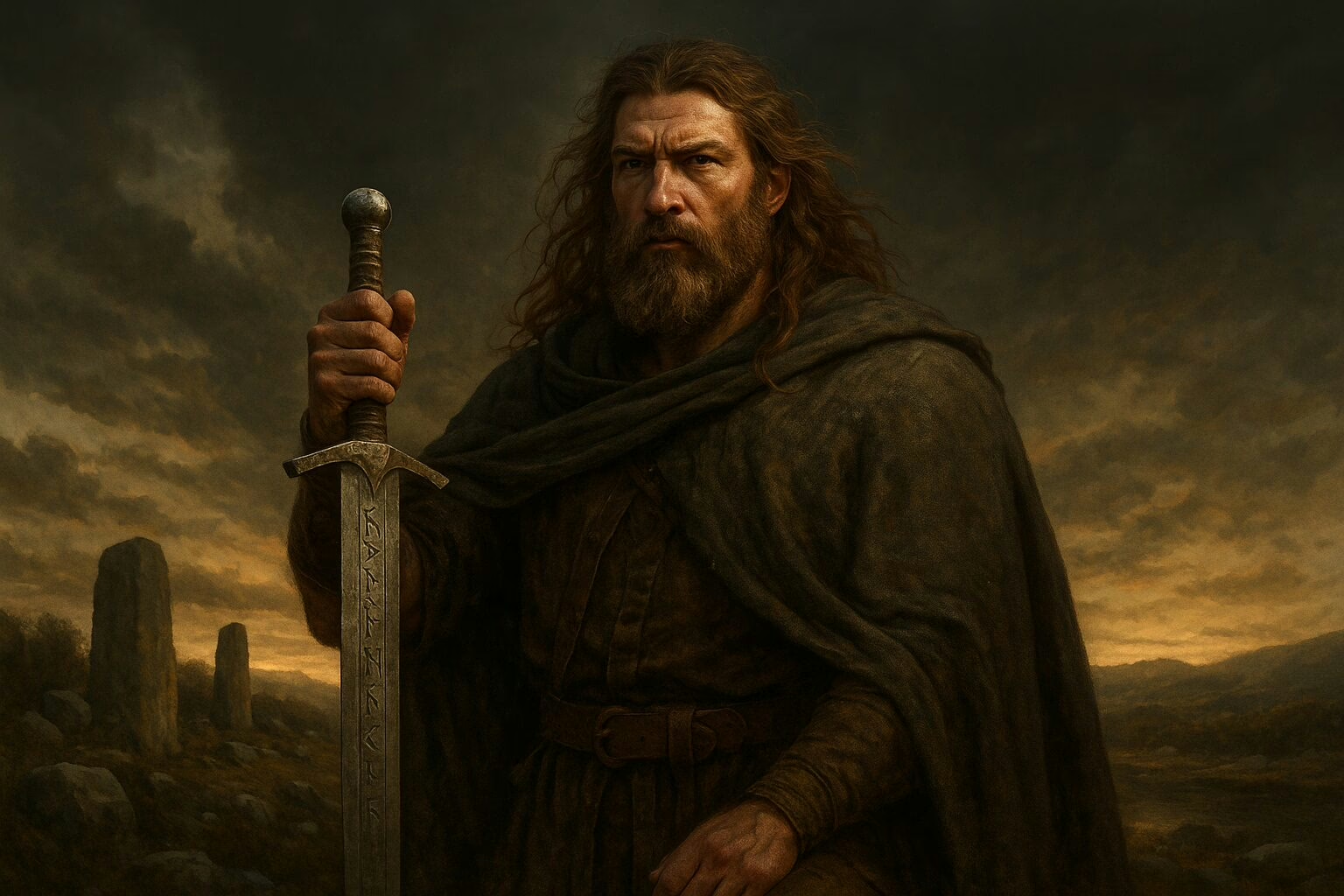
The power of the pen – or in this case the chisel – is an embedded part of Irish mythology. For few gods across all mythology embody this truism as powerfully as Ogma, Irish god of strength and language. A warrior who could fell enemies with sheer might, he was also revered for his eloquence — a rare figure whose authority came as much from his words as from his weapons. In a pantheon of kings, druids, and lovers, Ogma stands out as the champion of both physical and intellectual power.
Perhaps best known as the mythic inventor of the Ogham script, Ogma is remembered not only for what he did on the battlefield, but for how he helped define the tools of memory, poetry, and law. His name is carved into stone — quite literally — and his legacy echoes through early Irish language and tradition.
In this post I explore the layered role of Ogma in Irish mythology, from his origins as a sun-faced hero of the Tuatha Dé Danann to his enduring presence in tales of battle, invention, and identity. Through Ogma, we glimpse the importance of language and how the ancient Irish saw it as central to their way of life, much like we do today.
Ogma’s Origins, Name & Role
In the mythological cycles of early Ireland, Ogma emerges as one of the most complex figures among the Tuatha Dé Danann. He is described as a warrior, poet, and inventor, possessing both brute strength and brilliant speech. In some sources, he is said to be a brother or close relative of the Dagda, while in others he stands alongside Lugh and Nuada as one of the Tuatha’s foremost champions.
Ogma’s name is widely thought to derive from a root meaning “path” or “point,” possibly reflecting both his martial prowess and his association with written lines — an etymological hint at his later connection to the Ogham script. More likely though it is based in the etymological linkage between ‘path’ and ‘oath’ [oyto] in ancient Irish, reflecting the practice of walking between the parts of sacrificed animals as part of oath-making.
In early Irish literature, Ogma is also called Grian‑áinch, literally “sun‑faced” or “radiant countenance”. This epithet reinforces his association with light, inspiration, and the symbolic function of illuminating language and knowledge. The significance of this is most clearly seen when we consider his very namesake – the mysterious ancient script ogham (pronounced OH-um).
Ogma and the Ogham Script
Among Ogma’s many roles in Irish mythology, none is more significant — or more enduring — than his association with the invention of the Ogham script. As the story goes, it was Ogma, Irish god of speech and strength, who devised this system of writing to honour and preserve knowledge. Where other deities wielded weapons or ruled kingdoms, Ogma’s legacy would be carved into stone, etched into the trees, and left as markers for generations to come.
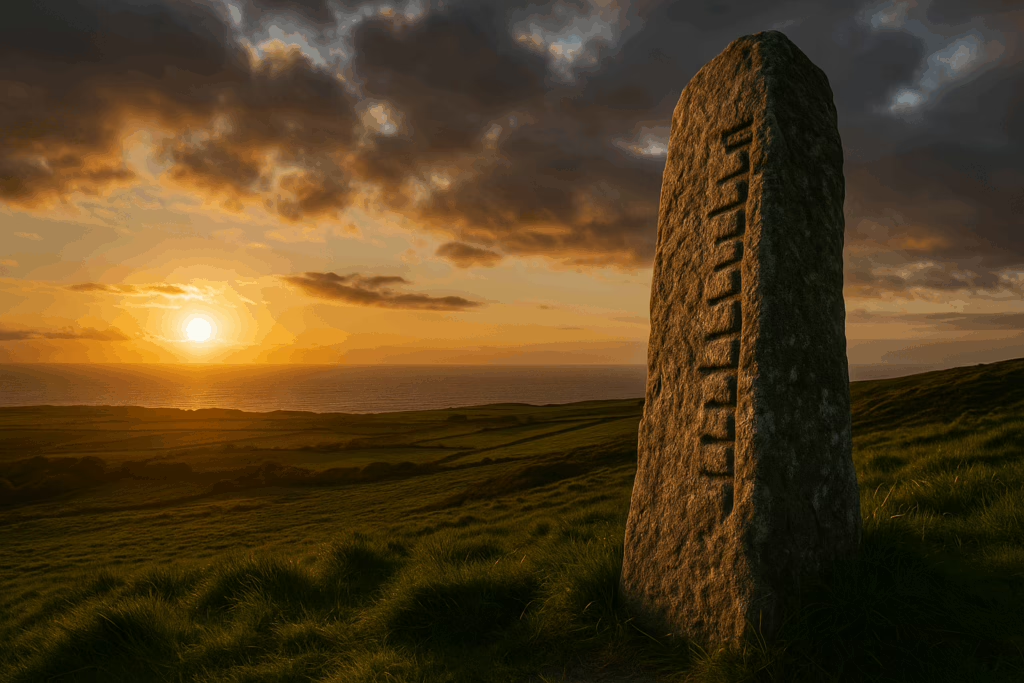
The Ogham alphabet (or Beith-luis-nin) consists of a series of vertical and diagonal lines scored along a central stemline, usually found on the edge of standing stones. Each character corresponds to a letter, and in some traditions, a sacred tree or natural element — further binding the script to the landscape of early Ireland. The earliest surviving inscriptions date from the 4th to 6th centuries CE, but myth places its origins much earlier, in the divine acts of Ogma himself.
In the Auraicept na n-Éces, a medieval tract on grammar and language, Ogma is explicitly credited with creating Ogham where it describes him as “a man very skilled in speech and in poetry.” This invention was not just practical; it was poetic and symbolic. Ogma, as the first speaker and wordsmith, gave Ireland a system through which speech could be preserved beyond breath.
But it’s important to appreciate the context, for – unlike modern writing – Ogham was much more than an alphabet. In the hands of druids, filí (poets), and brehons (judges), it served to record law, mark boundaries, and inscribe remembrance. Its meaning was power – far beyond the written word today.
Warrior and Champion of the Gods
While Ogma is often remembered for his eloquence and invention, he is no less formidable as a warrior. In Irish mythology, strength and speech are not opposites — and Ogma, Irish god of strength and speech, embodies both with equal force.
During the Second Battle of Mag Tuired, the great conflict between the Tuatha Dé Danann and the oppressive Fomorians, Ogma plays a central role. He is described repeatedly in the early texts as one of the Tuatha’s chief champions, fighting bravely alongside figures like Nuada, Lugh, and the Dagda.
One memorable episode from the tale tells of Ogma lifting and dragging the Fomorian king’s massive stone, a feat of such brute strength that it leaves a trail carved into the earth. But he doesn’t do this as a mere show of power — the stone becomes a marker of triumph, a blend of physical effort and symbolic meaning.
But there’s a particular section which I find so colourful and poetic, it’s worth quoting at length. For it brings together the magic of Ogma (‘spells’), his fighting prowess (‘the champion’), and the power of language itself (‘recount the deeds’).
“Now in that battle Ogma the champion found Orna, the sword of Tethra, king of the Fomoire. Ogma unsheathed the sword and cleaned it. Then the sword told what had been done by it, because it was the habit of swords at that time to recount the deeds that had been done by them whenever they were unsheathed. And for that reason swords are entitled to the tribute of cleaning after they have been unsheathed. Moreover spells have been kept in swords from that time on.”1
Ogma in Comparative Mythology
Though rooted in Irish tradition, Ogma’s character reflects archetypes found across the ancient world — deities who bridge the realms of intellect, language, and physical force.
In Greek mythology, the most obvious counterpart is Hermes: a god of communication, invention, and cunning. Like Ogma, Hermes is credited with creating writing (the Greek alphabet was mythically attributed to him), and he serves as a messenger between worlds. Yet Hermes is largely a trickster and traveller, whereas Ogma is grounded in strength, speech, and cultural permanence.
A closer analogue might be Odin of the Norse tradition — not in personality, but in symbolic role. Odin, like Ogma, is associated with language, poetry, and runes, which he acquires through suffering and sacrifice. Both gods embody the idea that knowledge is power, and that writing is sacred. Yet Odin is a god of prophecy and fate; Ogma is more human-facing, concerned with memory, honour, and the legacies left by voice and word.
Roman mythology offers no clear equivalent. Mercury inherits traits from Hermes, but the Roman system has no singular god who embodies both verbal skill and martial excellence. The combination of these qualities — speech that carries authority, strength that respects justice — appears to be particularly resonant within the Irish tradition, where the fili and hero were often interlinked.
What distinguishes Ogma is not just that he represents both power and intellect, but that he lives within their tension. He is not merely the god of speech or strength, but of their meeting point — a symbol of balance between action and meaning.
Table: Comparison between Ogma and other ancient gods
| Deity | Culture | Domains Shared with Ogma | Key Differences |
|---|---|---|---|
| Ogmios | Gaulish (Celtic) | Eloquence, strength, leadership | Portrayed as older and bald; associated with chains of speech leading followers |
| Hermes | Greek | Language, writing, communication | Trickster god, also guides souls to the underworld; not linked to physical strength |
| Thoth | Egyptian | Writing, knowledge, divine script | More scholarly/scribal figure; no role in combat or martial prowess |
| Apollo | Greek | Poetry, knowledge, light | Solar, musical, prophetic; not associated with invention of writing systems |
| Týr | Norse | Martial honour, sacrifice, law | Like Ogma, sacrifices his hand; more focused on justice than eloquence |
| Sarasvati | Hindu | Wisdom, eloquence, language | Feminine aspect of speech and creativity; associated with learning and the arts |
Legacy and Modern Interpretations
Though rarely featured in popular retellings of Irish mythology today, Ogma’s legacy endures quietly but profoundly. His influence is felt wherever early Irish culture placed value on language, law, honour, and symbolic meaning — which is to say, across nearly every aspect of pre-Christian society.
Perhaps his most tangible legacy is the Ogham script itself, which continues to captivate historians, linguists, and neopagans alike. Ogham stones still stand across the Irish landscape, often at boundaries, burial sites, or places of tribal memory. These inscriptions, brief and enigmatic, are lasting monuments to the culture of the spoken and inscribed word, and they remain one of the few surviving material traces of Ireland’s mythological age.
As the mythic inventor of the Ogham script, he left behind a system that would outlast kings and battles. Through those angular strokes on stone, we glimpse a culture that understood language not simply as a tool, but as a sacred force — capable of honouring the dead, marking the earth, and binding society together.
Ogma’s dual nature — warrior and scholar — offers a vision of power that is both assertive and thoughtful. In him, we find a reminder that strength is most meaningful when paired with understanding, and that speech, when shaped with care, can endure far longer than any sword stroke.
Frequently Asked Questions: Ogma, Irish god of Strength and Language
Ogma is a member of the Tuatha Dé Danann and is known as the god of strength, eloquence, and writing. He is credited with inventing the Ogham script.
Both. Ogma was a fierce warrior in the Battle of Mag Tuired and a gifted orator who symbolised the sacred power of speech.
Ogma is the Irish god of strength, speech, and knowledge. He represents the fusion of physical power and linguistic skill.
Yes. According to Irish myth, Ogma created the Ogham script to give form to language and preserve knowledge in written form.
YOU MAY ALSO LIKE
 Iron Age Clothing in Ireland: What People Really Wore
 Irish Festival Names Explained: The Etymology of Samhain, Imbolc, Bealtaine and Lughnasadh
 Dun Aengus History: Ireland’s Ancient West Maritime Hub
 Ancient Irish Proverbs and their Origins: Wisdom in a few Words
 Etymology of Irish Animal Names: Myth & Language Revealed
 Ogham Tree Alphabet: Irish Script, Meaning & Origins
 Ancient Irish Society: Language, Law & the Structures of Kinship
 Irish Placenames: Ancient History and Mythology