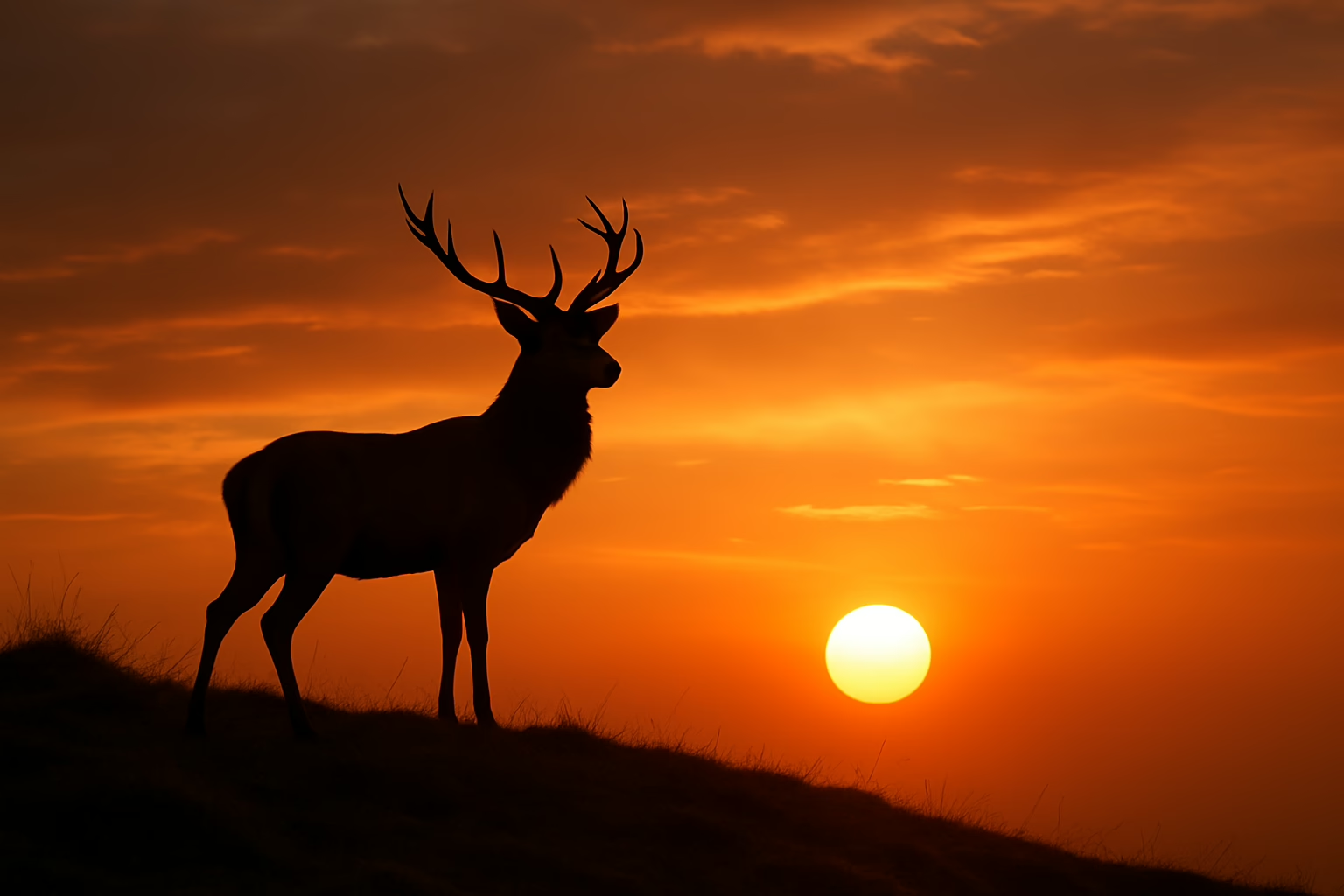
Across the ancient world, animals were much more than mere pets or food sources — they were symbols, omens, and companions. In ancient Ireland, where language and lore intertwined, the very words used for animals reflected their status in society. From the wolfish cú [hound] of mythic warriors, to the elusive fiadh [deer] of Ireland’s deep forests, these names reveal far more than the animals they describe. For by understanding the etymology of Irish animal names, we open up a wonderful window into ancient Irish history and mythology.
This post explores the etymology of animal words in the Irish language, tracing how these terms evolved from Old Irish, Proto-Celtic, and even Indo-European roots. It examines how the language surrounding animals preserves echoes of ancient Irish mythology, law, and social structure — where hounds were more than pets, deer were sacred messengers, and salmon swam in pools of knowledge. So let’s begin with where these words originated.
The Roots of Wild Speech: How Irish Animal Names Evolved
The Irish language – being one of the oldest written dialects in Europe – retains a rich seam of ancient animal terminology. Many everyday words for animals derive from Old Irish (c. 600–900 AD), themselves shaped by earlier Proto-Celtic and Proto-Indo-European (PIE) forms. By tracing these roots, we can see not just linguistic history, but the importance of these creatures in early Irish life.
These animal words were not only descriptive; they often encoded social status or symbolic meaning. The distinction between cú [hound] and madra [dog], for instance, is more than lexical. The former evokes nobility, loyalty, and martial prowess — a sacred beast bound to warriorhood — while the latter became a more mundane word for household dogs. The change in the word literally reflects the change in the animal’s role and nature.
Similarly, fiadh does not just mean “deer”; it conjures up wilderness, sovereignty, and transformation — appearing in place names (Fid nGabli, “the wood of Fionn’s spear”), poetry, and hunting laws. Even livestock like bó [cow] carried socio-economic weight: cattle were both currency and status, with many early Irish legal tracts revolving around their valuation.
As we’ll explore in the following sections, these names deepen in meaning when considered in the light of mythological narratives, early law codes, and ritual practice. Language, in this context, becomes both memory and map — guiding us through the wild past of Ireland’s animal world.
Table: Comparison between Irish animal words, their meanings, and linguistic origins
| Irish Word | Meaning | Origin | Notes |
|---|---|---|---|
| cú | hound/warrior | Old Irish cú < PIE ḱwṓn | Also used metaphorically for champions (Cú Chulainn) |
| madra | dog (general) | Modern Irish (uncertain origin) | Possibly post-Classical; supplanted cú in daily usage |
| fiadh | deer (wild) | Old Irish feda (woods) | Related to woodland or wildness; deeply mythic |
| bó | cow | Old Irish bó < PIE gʷōus | Root of terms like bóaire (cattle-lord) |
| luch | mouse | Old Irish luch < PIE mus- | Common across Indo-European languages |
| each | horse | Old Irish ech, Proto-Celtic ekwos | Appears in myth, ritual, and sovereignty symbols |
Sacred Beasts and Mythological Names: Animals in Early Irish Lore
In early Irish tradition, animals were far more than elements of the natural world — they were omens, adversaries, allies, and symbols deeply embedded in the mythic imagination. The very names used for these creatures in Irish often reflect their spiritual resonance and cultural significance, preserving echoes of pre-Christian belief systems.
These names frequently appear in the tales of the Mythological Cycle, Ulster Cycle, and Fenian Cycle, and are closely associated with deities, legendary warriors, and moments of transformation. Understanding the etymology of these animal terms can therefore help decode layers of symbolic meaning within the myths themselves.
To that end, we can consider 5 of the most prominent examples of Irish animals which can be found across the mythological tales. From hound to deer, cow to salmon and the mighty horse, each had their own symbolism and significance.
Cú – The Hound of Heroism
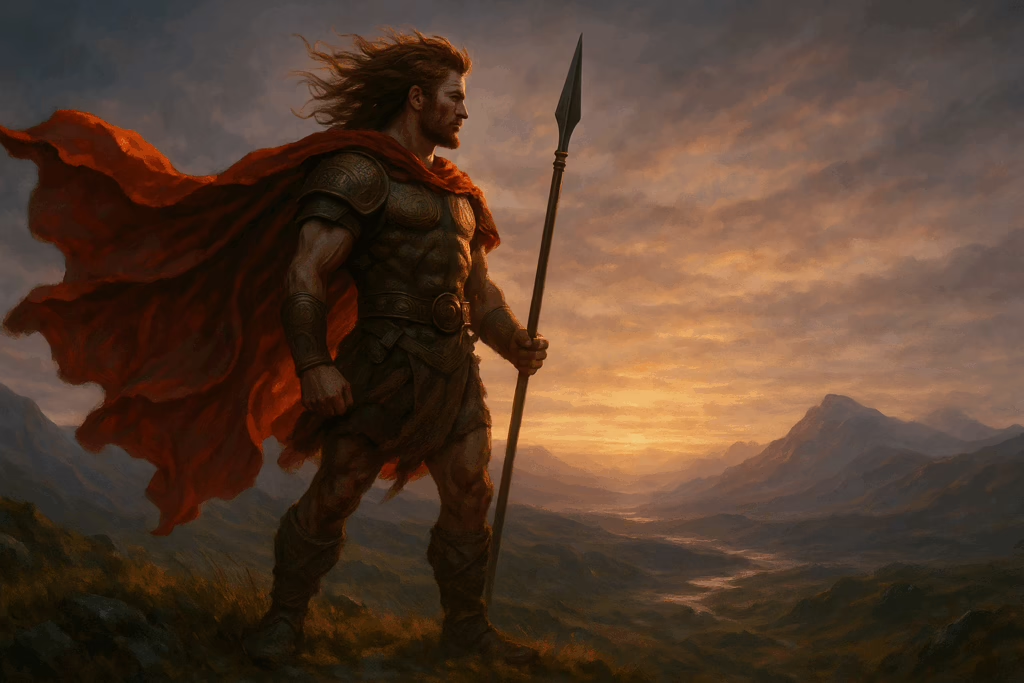
Perhaps the most powerful example of an animal name rooted in myth is cú — the Old Irish word for hound. Etymologically, it derives from Proto-Indo-European ḱwṓn, meaning “dog” (a root also seen in Greek kynos and Latin canis). Yet in early Irish society, cú carried connotations far beyond its zoological use.
The word cú was often honorific, used to describe elite warriors as “hounds” of a king or cause. This is most famously embodied in Cú Chulainn, whose name means “Hound of Culann”. In the Táin Bó Cúailnge, the hero earns this title after killing a smith’s watchdog and offering to take its place.
“From this night onwards, I shall be your hound.”
— Táin Bó Cúailnge
The term cú thus becomes a symbol of loyalty, sacrifice, and martial excellence. The word itself reflects this dual status: an animal in the wild, and a warrior in legend.
Bo – The Sacred Cow
The Old Irish word bó (cow), from Proto-Celtic bowā, appears across early Irish texts not merely as livestock, but as a measure of wealth and a symbol of sovereignty. Cattle were central to the early Irish economy and legal system; ownership, theft, and injury to cows were regulated under Brehon Law, often using cows as units of compensation.
Mythologically, cows were also linked with divine rivers and fertility goddesses. The river goddess Boann — after whom the River Boyne is named — is derived from bó find, “white cow”. In the Dindshenchas, her transformation and death give rise to the river itself, merging animal imagery with cosmological creation.
This naming not only underscores the mythic power of cattle, but shows how language bound spiritual belief and agricultural reality.
Eó / Bradán – The Salmon of Knowledge
While eó is an older term for salmon, the word bradán is more commonly used in modern Irish. Both are linguistically distinct from most Indo-European fish terms, suggesting a uniquely insular Celtic origin.
In myth, the salmon is a bearer of wisdom. In the tale of Fionn mac Cumhaill, the young warrior gains his prophetic powers by accidentally tasting the Salmon of Knowledge (bradán feasa) — a fish that had eaten the hazelnuts of wisdom from sacred trees.
This narrative highlights the belief that certain animals could absorb esoteric knowledge from the landscape. The word bradán, through its continued use and poetic association, thus carries cultural weight far beyond the species it names.
Each – The Sovereign Horse
The word each (horse), from Old Irish ech, traces back to Proto-Celtic ekwos, sharing roots with Latin equus and Greek hippos. In early Irish society, horses were primarily associated with warfare, kingship, and the divine feminine.
This connection is clearest in tales involving the goddess Macha, who is forced to race against horses while pregnant and curses the men of Ulster with her pain. Macha’s story is tied to Emain Macha (Navan Fort), the royal site whose name bears her imprint.
In these tales, horses represent more than military utility — they embody status, magical transformation, and the power of sovereignty.
Fiadh – The Wild Deer
The term fiadh, used for deer or more generally wild game, is related to fiodh (wood/forest), implying a creature of the untamed world. The deer, in Irish mythology, is a shape-shifting figure, often representing mystery, transformation, or the otherworld.
One example is Oisín, son of Fionn mac Cumhaill, whose mother Sadhbh is turned into a deer by a druid. The transformation is preserved not only in narrative but in language: fiadh implies both wildness and liminality, a boundary-crossing creature at home in both myth and glen.
Table: Animal Terms in Irish Mythology
| Irish Word | Animal | Mythic Role | Etymological Root |
|---|---|---|---|
| cú | Hound | Warriorhood, loyalty (Cú Chulainn) | PIE ḱwṓn |
| bó | Cow | Fertility, sovereignty (Boann, legal texts) | PIE gʷōus |
| bradán | Salmon | Knowledge and prophecy (Fionn mac Cumhaill) | Possibly native Celtic |
| each | Horse | Kingship, power (Macha, sovereignty) | Proto-Celtic ekwos |
| fiadh | Deer/Wild | Transformation, the Otherworld (Sadhbh) | Related to fiodh (wood/forest) |
This section establishes that Irish animal words are not only linguistically rich but symbolically loaded, forming a critical part of Ireland’s mythic vocabulary. Their continued presence in the language is evidence of how mythology and etymology reinforce one another. Next we turn to their role in ancient history.
Law, Livelihood, and Lineage: Animal Words in Early Irish Society
In early Irish culture, animals were more than figures of myth or nature — they were embedded within the legal codes, economic systems, and even the social hierarchy of society. The Irish language – shaped by these values – preserves distinctions that reflect the practical and symbolic roles animals played in everyday life.
From cattle-lords to poetic metaphors in Brehon Law, the language used for animals often carried legal, ritual, and status-based implications. Examining these terms within their socio-legal context offers insight into how the Irish viewed ownership, nobility, and the natural world.
Cattle and Class: The Significance of Bó
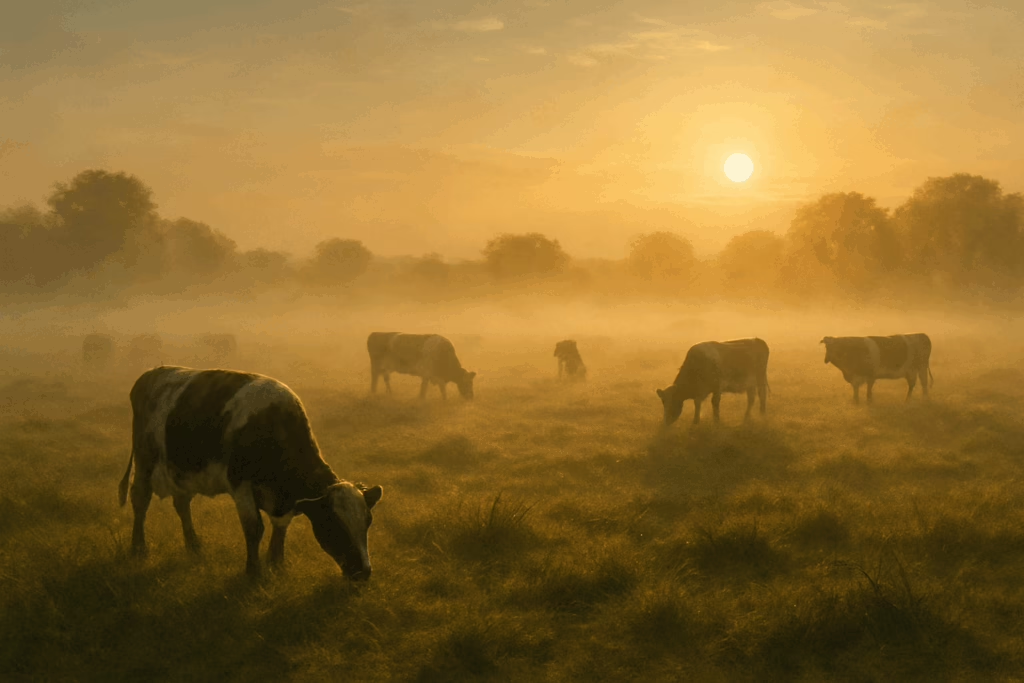
In early Irish society, cattle were currency. The word bó (cow) didn’t simply refer to livestock — it underpinned a system of wealth, rank, and obligation.
One of the clearest examples is the term bóaire, meaning “cow-lord” — a free landholder who owned his own cattle but was still subordinate to a higher-ranking chief (flaith). The number of cattle a man possessed could determine his honour-price (lóg n-enech) — a measure of his social worth under Brehon Law.
This legal codification of animal ownership is unique in its granularity. Laws detailed the value of cattle by age, condition, and even colour. Certain words arose to distinguish cattle types as shown in the table below.
| Irish Term | Meaning | Socio-Legal Context |
|---|---|---|
| bó | Cow | Standard economic unit |
| bóaire | Cow-lord | Free landholder, moderate legal standing |
| dám bó | Cattle-tribute | Form of rent or settlement |
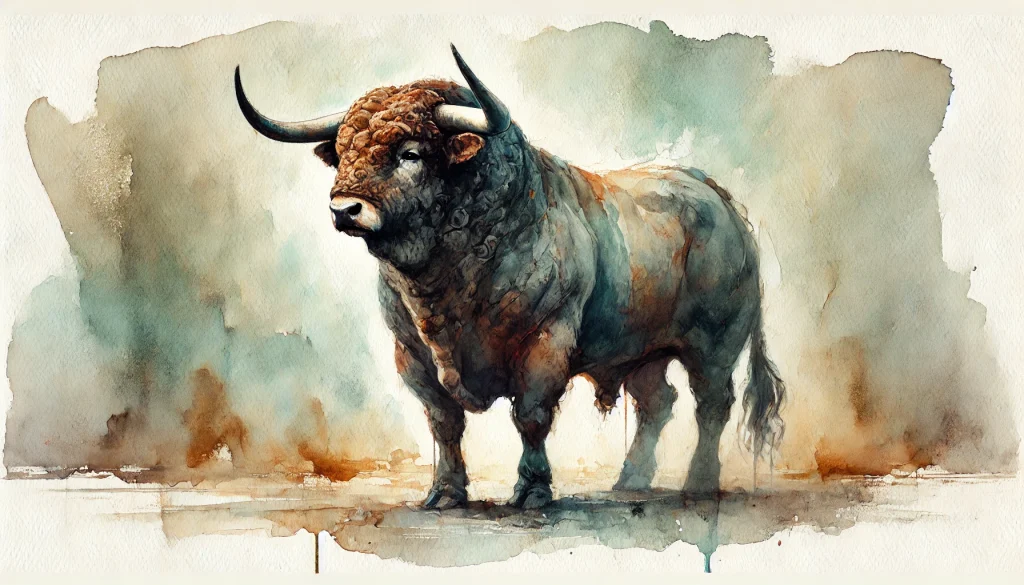
| tarb | Bull | Used in legal poetry and valuation of herds |
Cú as a Title: Dogs and Warriors in Legal Language
The hound (cú) did not only appear in heroic epics—it was also a title bestowed upon elite warriors, indicating loyalty and combat prowess. Terms such as cú ríg (“hound of the king”) or cú druí (“druid’s hound”) appear in early Irish texts, blending animal identity with martial symbolism.
In Brehon Law, dogs were categorised based on their utility and breed. For example, guard dogs had specific values, and any injury to a trained hound could incur legal penalty. This linguistic layering suggests that the value of animals was codified, both in speech and in statute — and that this value often crossed into metaphor, where warriors were spoken of in canine terms. In the table below you can see what different terms were used.
| Irish Term | Meaning | Legal or Cultural Role |
|---|---|---|
| cú | Hound | High-status warrior dog; also figurative title |
| madra cosanta | Guard dog | Could require compensation if harmed |
| gadhar | Herding dog | Used by farmers; mentioned in land disputes |
Horses, Kingship, and Ritual
The horse (each) held a sacred status in ancient Ireland. Used in battle, ceremonial rites, and kingship inaugurations, horses were associated with both prestige and prophecy.
Some kingship inauguration rituals, referenced in controversial medieval sources, even involved symbolic unions between king and mare — an act intended to bind the king to the land’s fertility and sovereignty. While the literal truth of these rites is debated, their linguistic and narrative persistence underscores the symbolic centrality of horses.
Legal tracts distinguish horses based on breed and use as shown in the table below.
| Irish Term | Meaning | Legal/Status Implication |
|---|---|---|
| each marcra | Riding horse | Associated with nobles or messengers |
| capall | Common horse | Appears later; more neutral term |
| echraidhe | Horse-breeder | Social class related to horse-owning rights |
Animals in the Laws of Property and Poets
Even poets were expected to master the legal language of animals. In the Auraicept na n-Éces (The Scholar’s Primer), an early medieval grammatical text, animal names are used in riddles, allegories, and etymological explanations — reflecting the view that a poet must know the world through its words.
Laws also protected certain wild species. Hunting regulations placed restrictions on the taking of deer (fiadh) and boar (torc), depending on the season and ownership of the land. This reflects a society where the natural world was not free-for-all, but structured within rules — and language captured this.
Table: Language as a Legal Archive
| Animal Word | Legal Role/Title | Cultural Meaning |
|---|---|---|
| bó | Economic unit, bóaire class | Wealth, fertility, honour |
| cú | Warrior’s title, compensation class | Loyalty, protection, martial valor |
| each | Ritual/kingship marker | Sovereignty, status |
| fiadh | Regulated hunting animal | Wildness, liminality |
The legal terminology around animals in early Irish sources confirms that these creatures were fundamental to the moral, social, and spiritual fabric of society. The language reflects this: nuanced, symbolic, and rich with meaning, it preserved a world where word, beast, and law coexisted.
Language as Cultural Fossil: Modern Echoes of Ancient Animal Words
Even as modern Irish has evolved, many ancient animal terms have survived remarkably intact, continuing to carry cultural and mythological resonance. These words function like linguistic fossils — preserved layers of historical meaning that still shape the way Irish speakers interact with the natural world and their cultural heritage.
Continuation of Ancient Animal names in Modern Irish
Many of the animal terms used in the medieval period — or even earlier — remain widely recognised in contemporary Irish today. This continuity is a testament to the deep historical memory embedded in the language. These animals continue to appear in folklore, proverbs, personal names, and even modern branding — reinforcing their mythic and linguistic power.
One of the more obvious areas we see these names appear, however, is in the placenames and surnames around Ireland today. These names not only reflect physical characteristics but also ancestral traits, tribal roles, or mythological associations.
Table: Ancient Irish Animal Names in Modern Placenames and Surnames
| Name/Place | Animal Word | Meaning | Cultural Note |
|---|---|---|---|
| Mac Cú Uladh | cú (hound) | “Son of the hound of Ulster” | Honorific title echoing heroic tradition |
| Bohernabreena | bóthar na bríona | “Road of the sorrowing cow” | Combines economic and emotional symbolism |
| Bradán River | bradán (salmon) | Named after the mythic salmon | Folk memory tied to wisdom |
| Eachléim | each (horse) + léim (leap) | “Horse’s leap” | Possibly ritual or mythic location |
| Gleann an Fhiadh | fiadh (wild deer) | “Valley of the deer” | Common in forested or liminal landscapes |
Language as Legacy — Animals in the Irish Imagination
From the loyal cú of warrior legends to the wise bradán in tales of prophecy, the Irish language holds within it an intricate archive of belief, economy, and identity. Each animal word in Irish is not merely a label but a lens through which we view the worldview of ancient Ireland.
These words reveal how deeply animals were woven into daily life — not just as livestock or companions, but as legal units, spiritual symbols, and mythic touchstones. Whether in the cattle-centred laws of the bóaire, the poetic metaphors of medieval storytellers, or the ritual resonance of sacred horses, animal names in Irish reflect a culture where language and land, myth and meaning, coexisted.
In learning and preserving these words, we do more than enrich our vocabulary. We tap into a continuum of cultural memory, tracing back to the roots of one of Europe’s oldest surviving dialects. In the Irish tongue, the animal world is never silent — it speaks of gods, kings, druids, and ancestors — in names we still say today.
Digital Tools and Further Resources
For those who want to explore these topics even more deeply, besides reading the other posts on my blog, you should check out these digital resources from people far more knowledgeable than myself:
- 🔗 eDIL – Electronic Dictionary of the Irish Language
A scholarly digital dictionary tracing words back through Old and Middle Irish, with examples from medieval manuscripts. - 🔗 logainm.ie – Placenames Database of Ireland
Links animal words in place names to geographic locations and their etymological roots (e.g. Bóthar meaning “cow path”). - 🔗 Foclóir Gaeilge–Béarla by Niall Ó Dónaill
Useful for checking modern meanings and nuances of inherited terms.
Frequently Asked Questions: Etymology of Irish Animals
The oldest Irish word for dog is cú, which originally meant “hound”. It was often used as an honorific for warriors, as seen in names like Cú Chulainn. The term comes from the Proto-Indo-European root ḱwṓn, also found in Latin (canis) and Greek (kynos).
Cattle (bó) were central to both the early Irish economy and mythological systems. The term bóaire (“cow-lord”) reflects how cattle ownership defined social status. Cows were also associated with fertility and divinity, as seen in figures like Boann, the goddess of the River Boyne.
The salmon (bradán) is the creature most associated with wisdom in Irish mythology. In the legend of Fionn mac Cumhaill, he gains all the world’s knowledge by tasting the Salmon of Knowledge (bradán feasa), making the salmon a symbol of insight and prophecy.
Yes — many ancient animal words are still in everyday use in modern Irish. Terms like cú (hound), bó (cow), bradán (salmon), each (horse), and fiadh (deer) appear in speech, education, place names, and even surnames, keeping alive thousands of years of cultural meaning.
How can I explore more about Irish animal words and their origins?
You can explore deeper meanings using scholarly resources like eDIL – the Electronic Dictionary of the Irish Language, logainm.ie for placenames, and Teanglann.ie for modern definitions. These tools connect words to their historical and mythological roots.
YOU MAY ALSO LIKE
 What is the Ogham Tree Alphabet?
  Ancient Irish Proverbs and their Origins: Wisdom in a few Words
  Book Review: The Celts, Barry Cunliffe
  Corrstown Bronze Age Village: Ireland’s Largest Settlement
  Roots of Language: Irish Tree Mythology, Ogham & Sacred Law
  Irish Placenames: Ancient History & Mythology
  Etymology of Irish Festivals