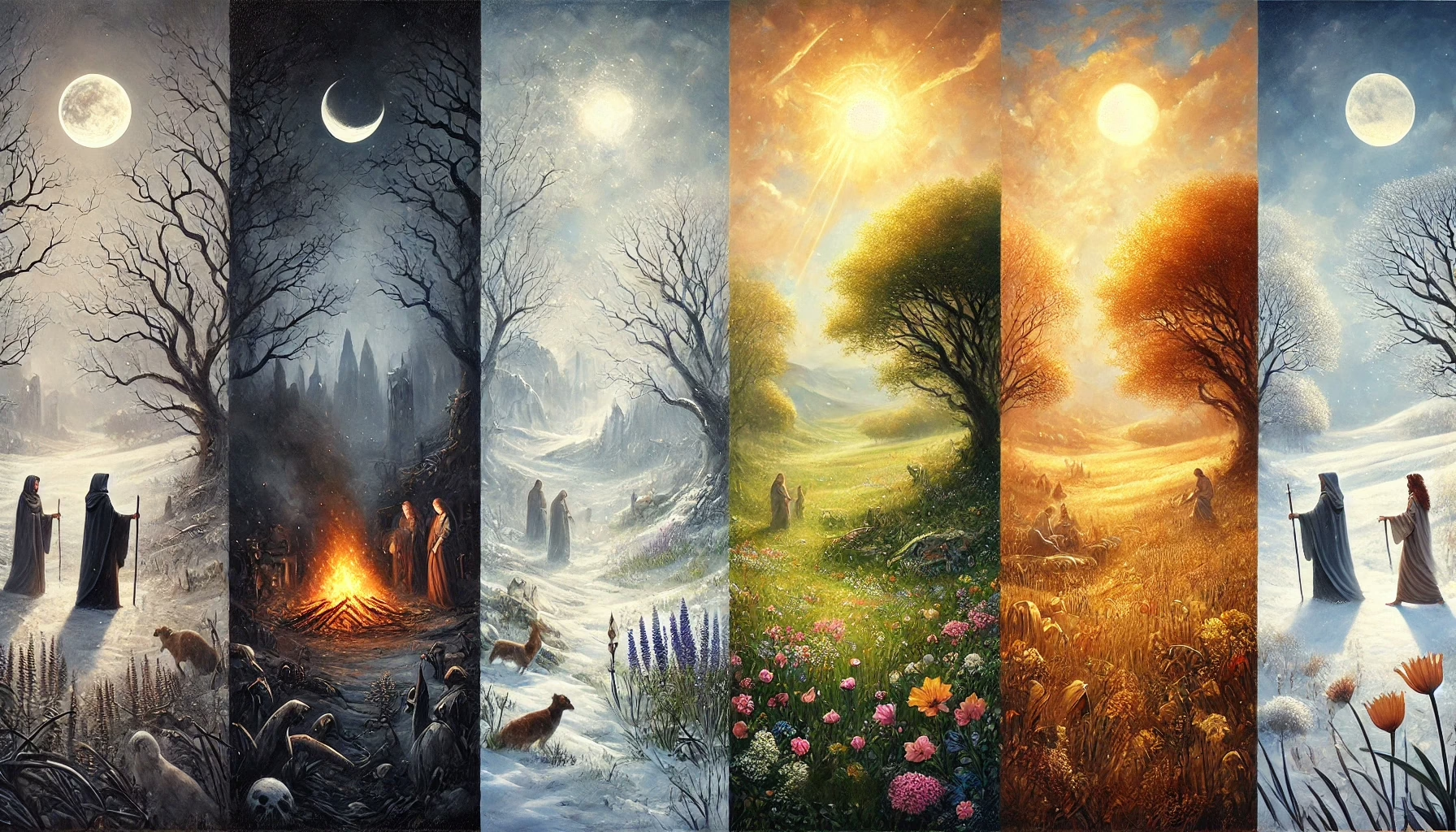
Each year when September rolls around and I see the leaves begin to fall, I feel an intense sense of beginning; a renewal akin to a fresh start. Whatever came before pauses, ends, or shifts to make way for another phase, chapter, or road (choose your metaphor). The inedible mark of the academic cycle has imprinted this association on me like a ‘Pavlovian-trained’ dog drooling at the sound of the bell. For you it might be the New Year, Christmas, Easter, Eid, or any number of recurring annual markers which sets you in a similar state of reflection. But this pattern – for it is truly a pattern – is as old as time itself, and certainly something observed by the ancient Irish.
In this post we consider the 8 key festivals and events within the ancient Celtic calendar. From solstices to harvest, we see how the Irish had a deep closeness with the natural cycles of life. Understanding what these festivals were, how they were celebrated, and what they symbolised, gives us a fresh perspective on ancient Irish society itself. Separately I’ve explored the etymology of these festivals.
Festivals of Change
The seasons of ancient Ireland were inextricably linked to the cycles of harvest. Their complete dependence on what was sown, grown, and reaped, was fundamental to not only their physical wellbeing, but all social, religious, and economic life. The Irish year was divided into seasonal festivals, solstices, and significant lunar phases, all of which played a crucial role in shaping the farming cycles and practices.
These dates were not merely points in time but moments of profound communal and cosmic significance, shaping the lives of those who observed them. Of course, this isn’t unique to Ireland nor to this period of history, but – like most things ancient Irish – they had their own twist on what these involved. This post will cover the 8 most pivotal dates they would have observed and what these would have involved, from festivals to rituals – the ancient Celtic calendar.
| Festival | Date (Gaelic Name) | Meaning/Season |
|---|---|---|
| Samhain | Oct 31–Nov 1 (Samhain) | Celtic New Year, start of winter |
| Winter Solstice | Dec 21–22 (Nollaig / Geimhreadh) | Return of the Sun; shortest day |
| Imbolc | Feb 1–2 (Imbolc) | First stirrings of spring |
| Spring Equinox | Mar 20–21 (Ostara) | Day/night balance, planting season |
| Bealtaine | May 1 (Bealtaine) | Start of summer, bright half-year |
| Summer Solstice | Jun 20–21 (Lá an Dúlra) | Longest day, peak of sun’s power |
| Lughnasadh | Aug 1 (Lughnasadh) | Beginning of harvest |
| Autumn Equinox | Sep 22–23 (Meán Fómhair) | Day/night balance, harvest culmination |
Samhain (October 31 – November 1): The Beginning of the Year
Samhain marked the beginning of the Celtic New Year, a liminal time when the veil between the worlds of the living and the dead1 was at its thinnest. It was a festival of fire, divination, and remembrance, celebrated with feasting and offerings to the Sidhe (fairy folk or spirits). Many customs associated with modern Halloween, such as dressing in disguise and lighting jack-o-lanterns, have their origins in Samhain traditions. This festival was also a crucial turning point in the agricultural calendar, marking the final harvest and the beginning of the darker half of the year.
In Irish mythology the festival is given consistent prominence, most notably in the tale ‘The Wasting Sickness of Cú Chulaind’, the legend of the famed warrior from Ulaid.
“Each year the Ulaid [Ulster] held an assembly: the three days before Samuin [Samhain] and the three days after Samuin and Samuin itself. They would gather…and during these seven days there would be nothing but meetings and games and amusements and entertainments and feasting.”2
Here the warriors of Ulster, alongside the rest of the leaders, would gather at Samhain to not only mark the ritual and religious significance of the day, but to participate in one of the most significant social events of the calendar. Having gathered in the harvest and prepared for the coming of winter, they would have feasted on the abundance while it lasted. This would have marked the high-point in the year, a point of reflection on what the year had brought while also setting the stage for the coming cycle.
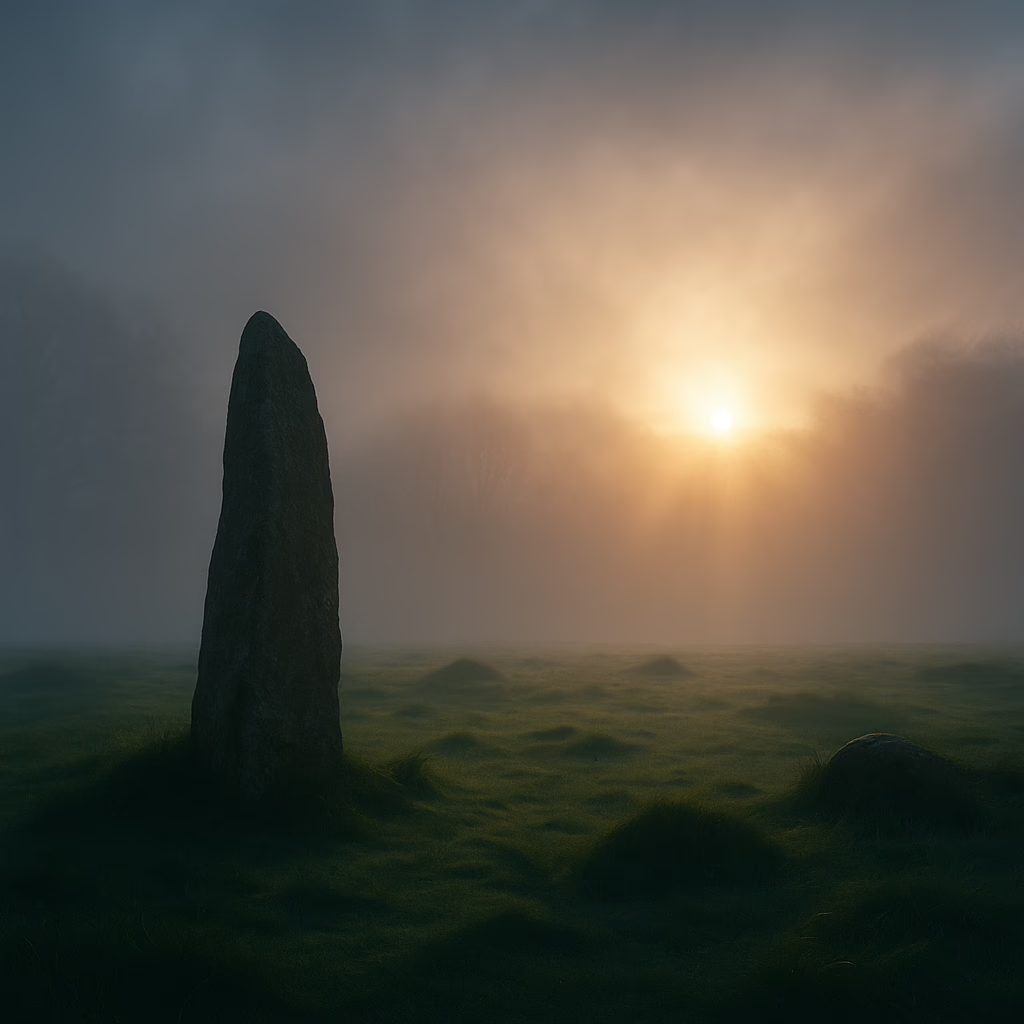
Winter Solstice (December 21-22): The Return of the Sun
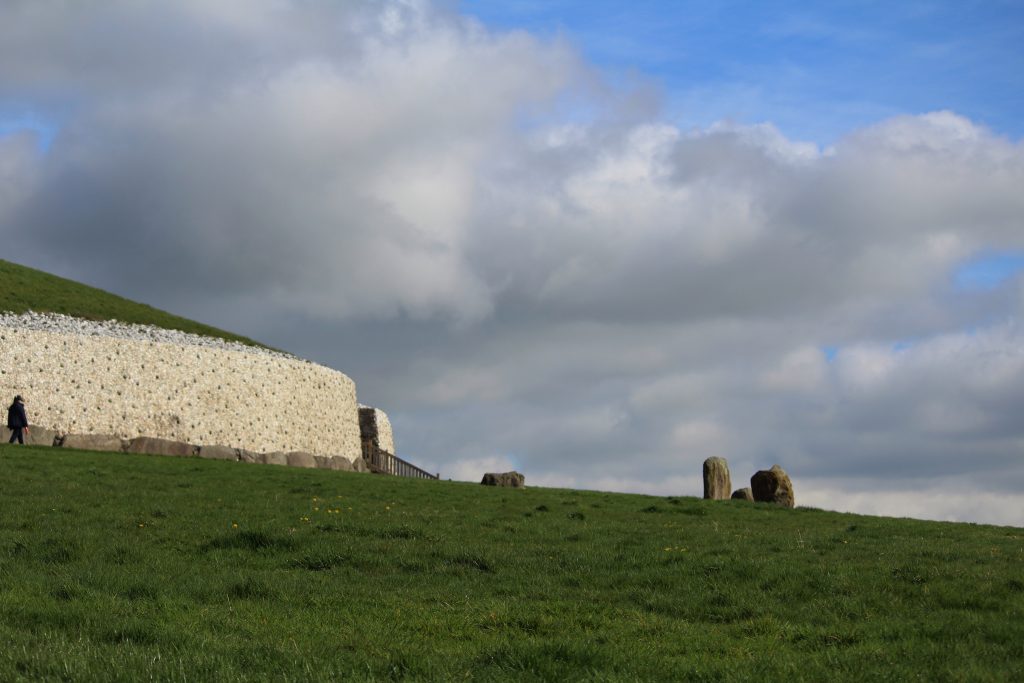
The winter solstice, the shortest day and longest night of the year, is widely recognised as a time of astronomical and spiritual significance. So too for the Irish. One of the most famous Irish ancient monuments is closely associated with the event – Newgrange – Neolithic passage tomb aligned so that the rising sun on the solstice illuminates its inner chamber. Had it been built today, this would have been a feat of remarkable engineering, but having been built over 4,000 years ago this is nothing short of awesome – awe inspiring in the full sense of the word. There’s no doubting that it would have held deep ritual significance, marking this date as a key marker. In fact, crowds continue to gather and mark this incredible experience today.
Theories abound as to the significance of the Newgrange passage tomb, and what the symbolism of the solstice might mean. But one of the foremost scholars on the topic succinctly posed a compelling theory: “Was this to enable a once-yearly visitation by the sun to the gods who dwelt at [Newgrange]?”3
There is likely no way we will ever know for certain given the age of the monument, but it’s clear that it had some sort of religious significance. It is emblematic of how, for ancient Irish societies, the solstice symbolized renewal, hope, and the return of light, likely reinforcing beliefs in cycles of death and rebirth.
Imbolc (February 1-2): The Festival of Brigid
Imbolc was a festival dedicated to Brigid, the goddess (and later saint) associated with fertility, poetry, and healing. Celebrated at the midpoint between the winter solstice and the spring equinox, Imbolc signified the early stirrings of spring, with lambs being born and the first signs of life emerging from the cold earth.
One key element of the festival is the concept of purification, of washing your whole body and that of your livestock to usher away evil – both physical and spiritual – from the winter season. The purifying symbolism of milk and its products is a consistent theme in ancient writings about the festival, whether to churn butter, or even to bath in milk itself. This ties back to St Brigid’s pagan roots as a possible ‘wolf-mother’ in Irish traditions, who suckles her children to health through what is the most desolate, dark, and barren period of the year.4
Spring Equinox (March 20-21): Balance of Light and Dark
The spring equinox marked the point when day and night were of equal length, heralding the full arrival of spring. Like the solstices, it was observed at sacred sites, such as the Loughcrew Cairn, where sunlight illuminates intricate carvings inside the tomb for a period of 3-days during the equinox. The equinox likely held significance in fertility rituals, ensuring the success of crops and livestock as the growing season began in earnest.
Bealtaine (May 1): The Fire Festival of Summer
Bealtaine was a festival of fire and fertility, welcoming the beginning of summer in the Irish calendar and acting a half-quarter day – marking halfway between the spring equinox and summer solstice.
Great bonfires were lit on hilltops across Ireland, particularly at the Hill of Uisneach, the supposed mythological and ceremonial centre of Ireland from at least the Iron Age onwards. Cattle were driven between these fires for protection, while young couples leaped through flames to ensure fertility and good fortune.
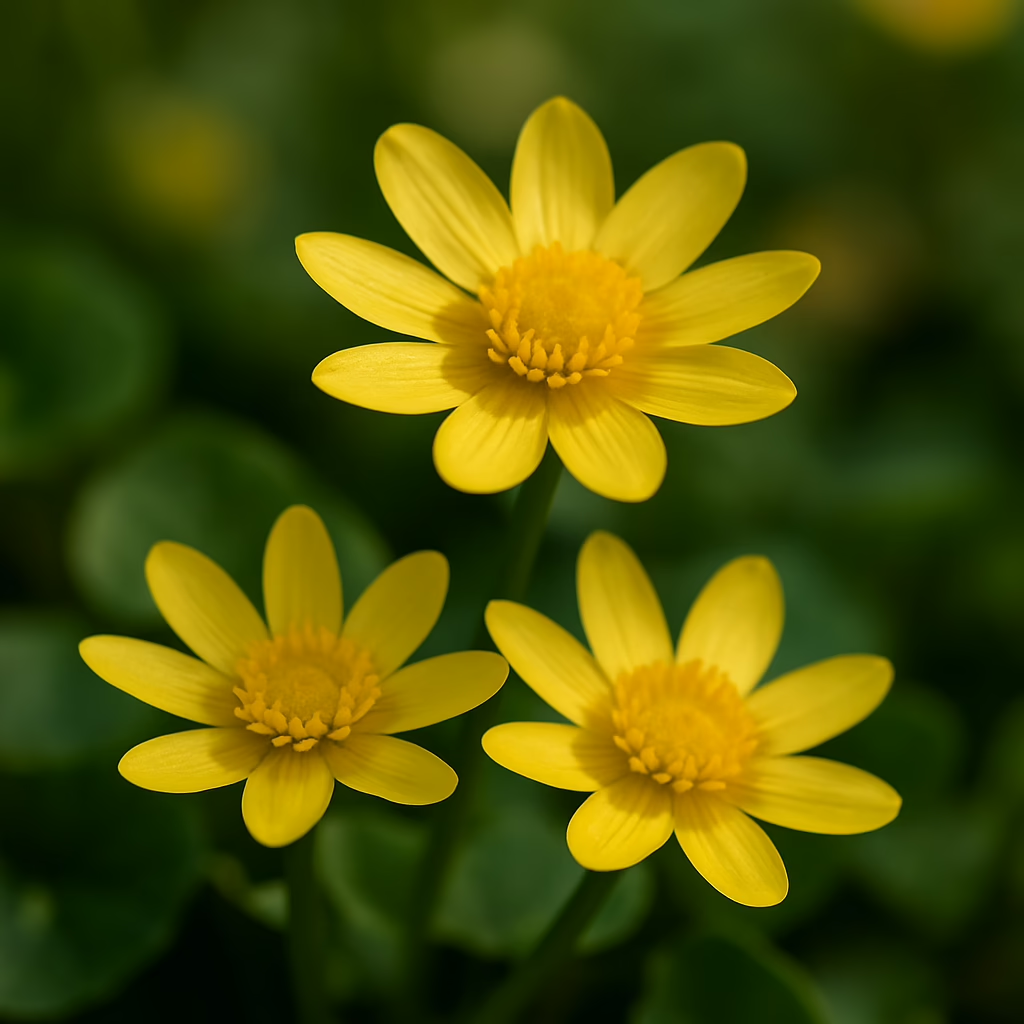
Bealtaine also had strong connections to supernatural beings, with stories warning against crossing paths with fairies on this night. Bunches of flowers were tied to horses’ bridles to ward off the evil spirits, as were posies of yellow flowers tied to the horns of cattle.5 The list of superstitions could go on, but for our purposes here it’s enough to say the festival had significant spiritual connection with the protection against possible evil.
Summer Solstice (June 20-21): The Power of the Sun
The longest day of the year, the summer solstice, was a time of heightened energy and celebration. This continues to be one of the most celebrated of the pagan festival dates, often with the lighting of bonfires or visiting neolithic sites which are aligned to the sun on this date. Ireland is no exception with numerous sites, from the passage tomb at Dowth, to the Drombeg stone circle, aligned to the sunset and sunrise each year. This was a time of great communal gathering, emphasizing strength, fertility, and the ripening of crops.
Lughnasadh (August 1): The Festival of Lugh
Lughnasadh was a festival dedicated to the god Lugh, a deity associated with kingship, skill, and the harvest. The Irish word for August – Lúnasa – is clearly derived from the ancient traditions associated with the festival. Lughnasadh marked the beginning of the grain harvest and was traditionally celebrated with athletic contests, fairs, and feasting.6 The god Lugh was himself famed with skill in nearly every exploit possible, so represents the fullness of this festival well.
The most famous Lughnasadh tradition was the Táilteann Games and fair held at Teltown, where chieftains gathered to settle disputes, arrange marriages, and honor the dead. The legend is that Lugh’s established the games to mark the death of his foster-mother, Taillte, who married into the famed tribe of the gods (aka Tuatha de Dannan). Other references to the festival credit it as the source of horse-racing in Ireland.7
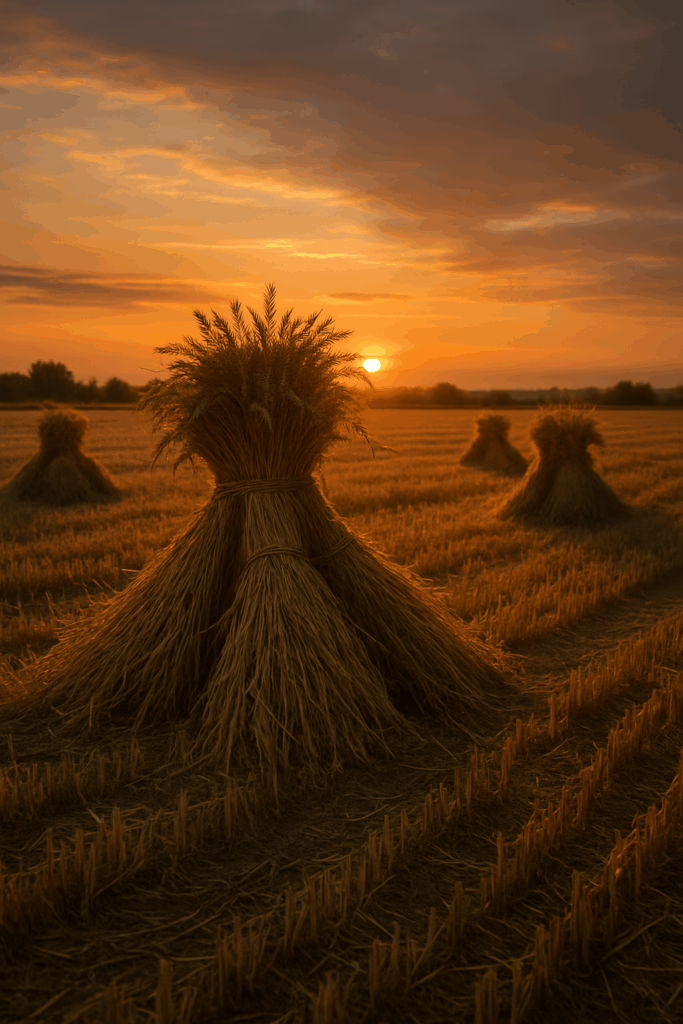
Autumn Equinox (September 22-23): The Turning of the Year
Like the spring equinox, the autumn equinox was a moment of balance before the descent into winter. It was associated with harvest celebrations and the acknowledgment of impending darkness. Sites which mark the spring equinox, likewise mark the autumn one, again reinforcing its significance as a marker in the Celtic calendar.
Echoes in Modern Irish Culture
Many of these ancient festivals persist in modern Ireland, either through direct tradition or in adapted forms. Samhain lives on in Halloween, while Imbolc inspired St. Brigid’s Day, which has now been officially recognized as a national holiday. Bealtaine fires are still lit in some communities, and the winter solstice at Newgrange continues to draw visitors and spiritual seekers alike.
As interest in Celtic heritage grows, efforts to study and celebrate these ancient traditions have gained momentum. Events like the Bealtaine Fire Festival in Uisneach and the Lughnasadh celebrations in County Meath keep these traditions alive.
The ancient Irish calendar was more than a way of marking time, it was a framework for life, interwoven with myth, agriculture, and community. These ten key dates shaped the rhythm of the year, reinforcing a deep spiritual connection to the land and the cosmos. Even today, their echoes can be felt in Irish culture, offering a timeless link to Ireland’s rich past.
Frequently Asked Questions: Ancient Celtic Festival Calendar
The Celtic calendar had 8 key festivals (four solar events and four cross-quarter days). These include Samhain (Oct 31–Nov 1), Imbolc (Feb 1–2), Bealtaine (May 1), Lughnasadh (Aug 1) and the Solstices/Equinoxes. They correspond to important seasonal transitions in Irish tradition.
Many persist in evolved forms. For example, Samhain lives on as Halloween; Imbolc is reflected in St. Brigid’s Day; Bealtaine fire festivals still occur locally; and people still gather at Newgrange on the Winter Solstice. These echoes show the enduring cultural importance of the ancient Celtic calendar.
Bealtaine (May 1) heralded summer’s start. It was a fire festival of fertility: huge bonfires were lit and cattle were driven between flames for protection. Lughnasadh (August 1) began the harvest season and honored the god Lugh. It featured fairs, athletic contests (the Tailteann Games), and grain harvest rituals. Both festivals ensured community well-being and abundance.
Imbolc (February 1–2) is a festival dedicated to the goddess (Saint) Brigid, celebrating early spring and fertility. It falls between winter and spring, marking the first stirrings of life (e.g. lambing season). Purification rituals (washing, dairy offerings) were traditional at Imbolc, symbolizing renewal. In Irish culture, Imbolc evolved into St. Brigid’s Day, still celebrated today
Samhain (October 31–November 1) marked the Celtic New Year and the onset of winter. It was a liminal festival of fire and divination, when the veil between worlds was thin. Ancient Irish legends describe assemblies of warriors and feasting at Samhain. Modern Halloween customs (e.g. jack-o’-lanterns) trace back to Samhain rituals.
- Known as the Otherworld in Irish mythology. ↩︎
- Jeffrey Gantz (trans.) (1981) Early Irish Myths and Sagas. Penguin. p155. ↩︎
- Michael O’Kelly (1982) Newgrange: Archaeology, art and legend. Thames and Hudson Ltd., p47. ↩︎
- Bernhardt-House, Phillip A. “Imbolc: A New Interpretation.” The Journal of the Traditional Cosmology Society (2005): 57. ↩︎
- Niall Mac Coitir (2015) Ireland’s Animals: Myths, Legends and Folklore. Collins Press. ↩︎
- For a creative retelling of what the festival celebrations may have looked like see: Kearney, Brian. “Feasting at Lughnasadh: A reconstruction of domestic space in early medieval Ireland.” Trowel (2007): 66. Available at: https://trowelucd.wordpress.com/wp-content/uploads/2018/01/trowel-xi.pdf#page=71 ↩︎
- Mac Coitir, pp32-33. ↩︎
YOU MAY ALSO LIKE
 Irish Placenames: Ancient History and Mythology
 Irish war chariots: Celtic war machines and symbols of power
 Iron Age Clothing in Ireland: What People Really Wore
 The Dagda: Irish All-Father God of Myth, Power & Wisdom
 Merrow – Ireland’s Dark Mermaid of Storms and Stolen Skins
 Danu (Dana): Celtic Mother of the Irish Gods
 Iron Age Trade in Ireland: Networks, Imports, and Economic Life
 Corrstown Bronze Age Village: Ireland’s Largest Settlement