Irish mythology is a vast collection of oral and literary traditions categorised into four chronological cycles: the Mythological, Ulster, Fenian, and Historical Cycles. These sagas form a continuous tapestry of Ireland’s ancient past, from the arrival of the divine Tuatha Dé Danann to the exploits of legendary warrior-hunters and the transition into recorded medieval pseudo-history.
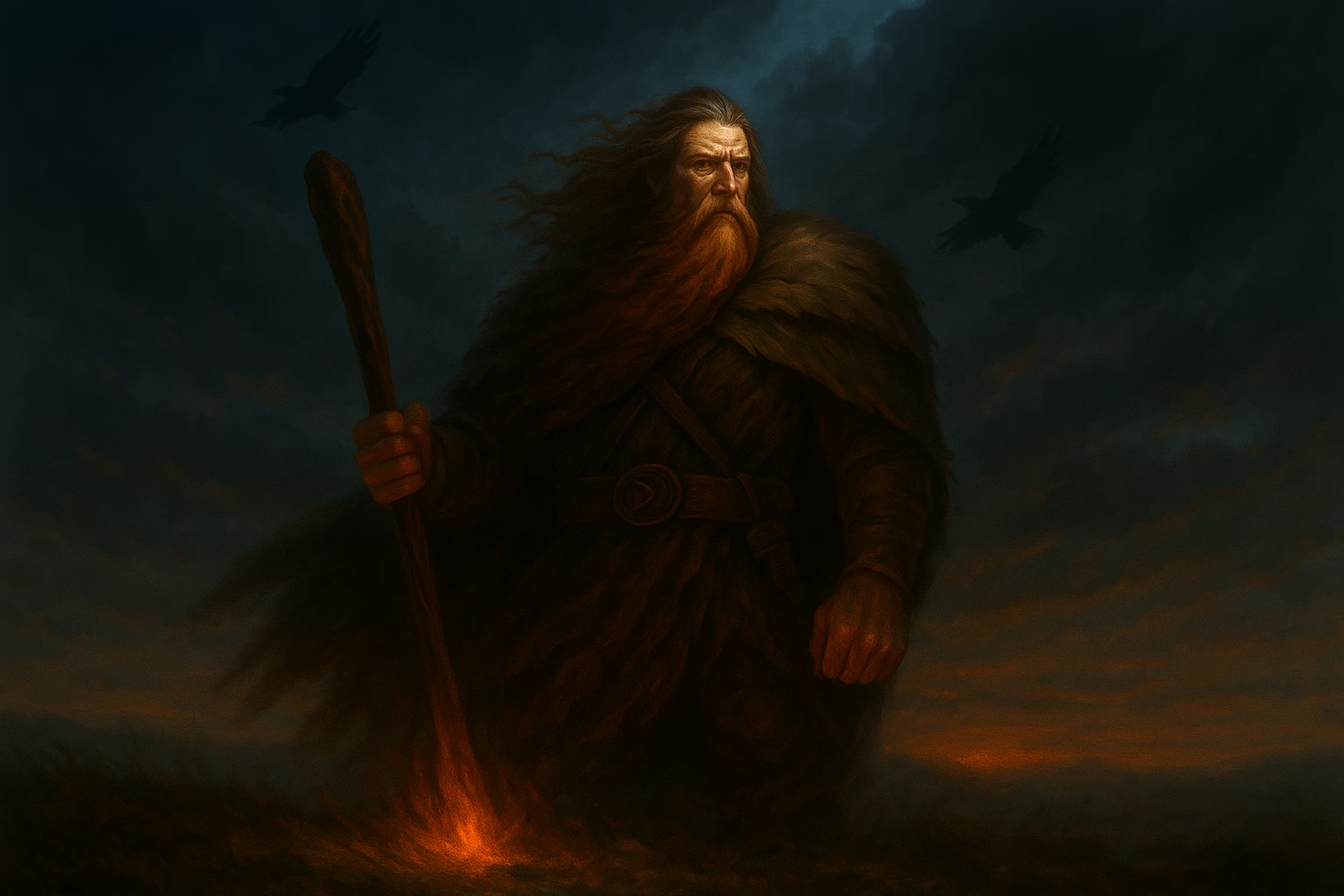
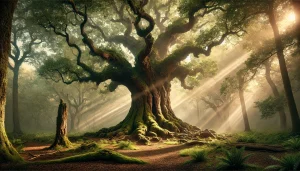
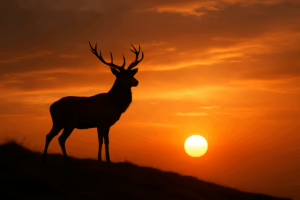
The Dagda
The All-Father & Druid-King
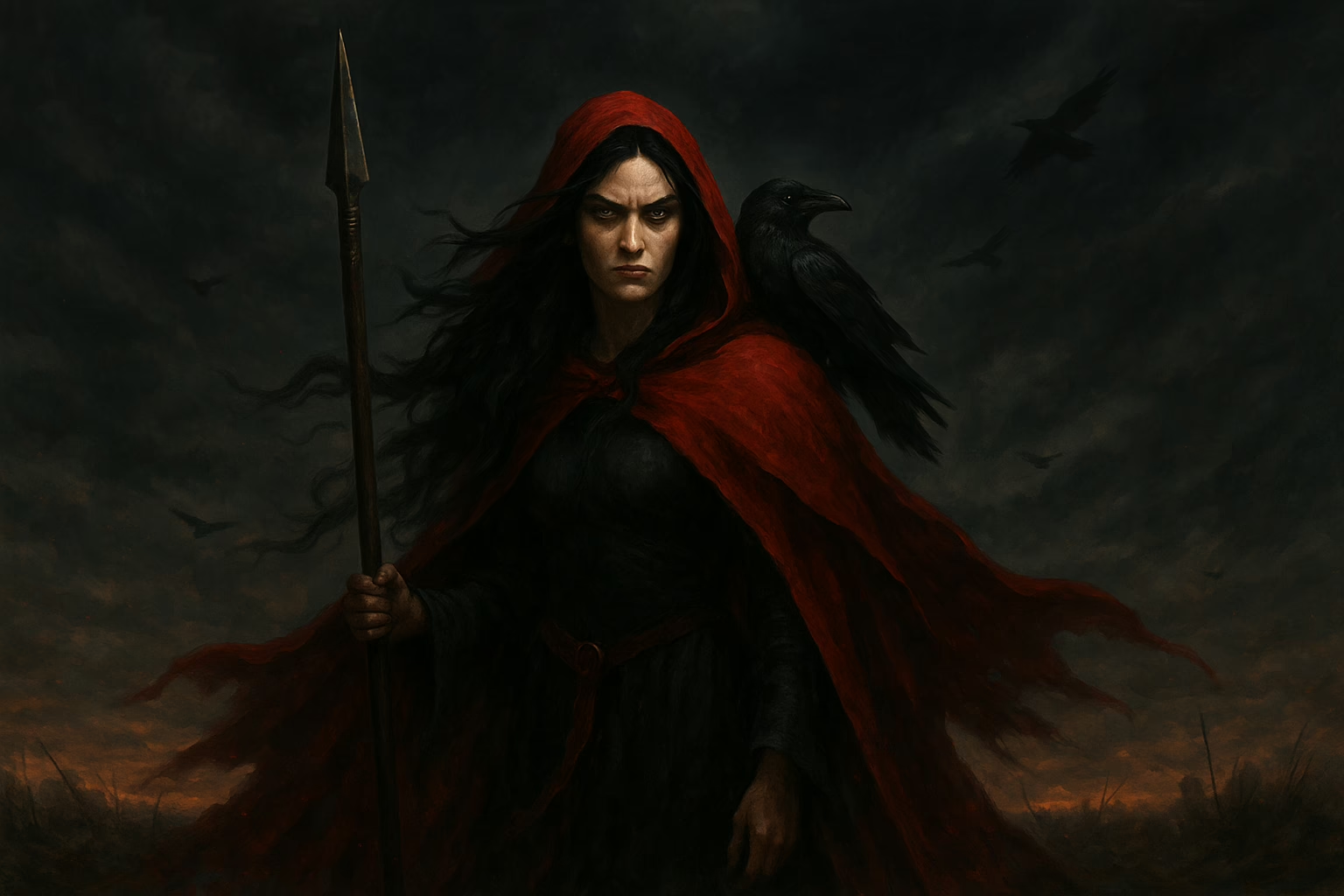
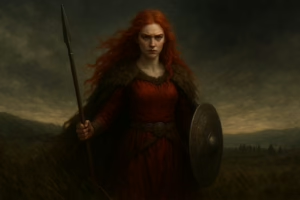
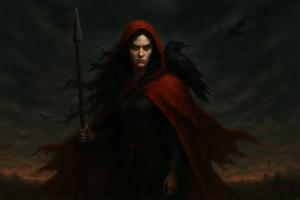
The Morrígan
Goddess of Fate & Sovereignty
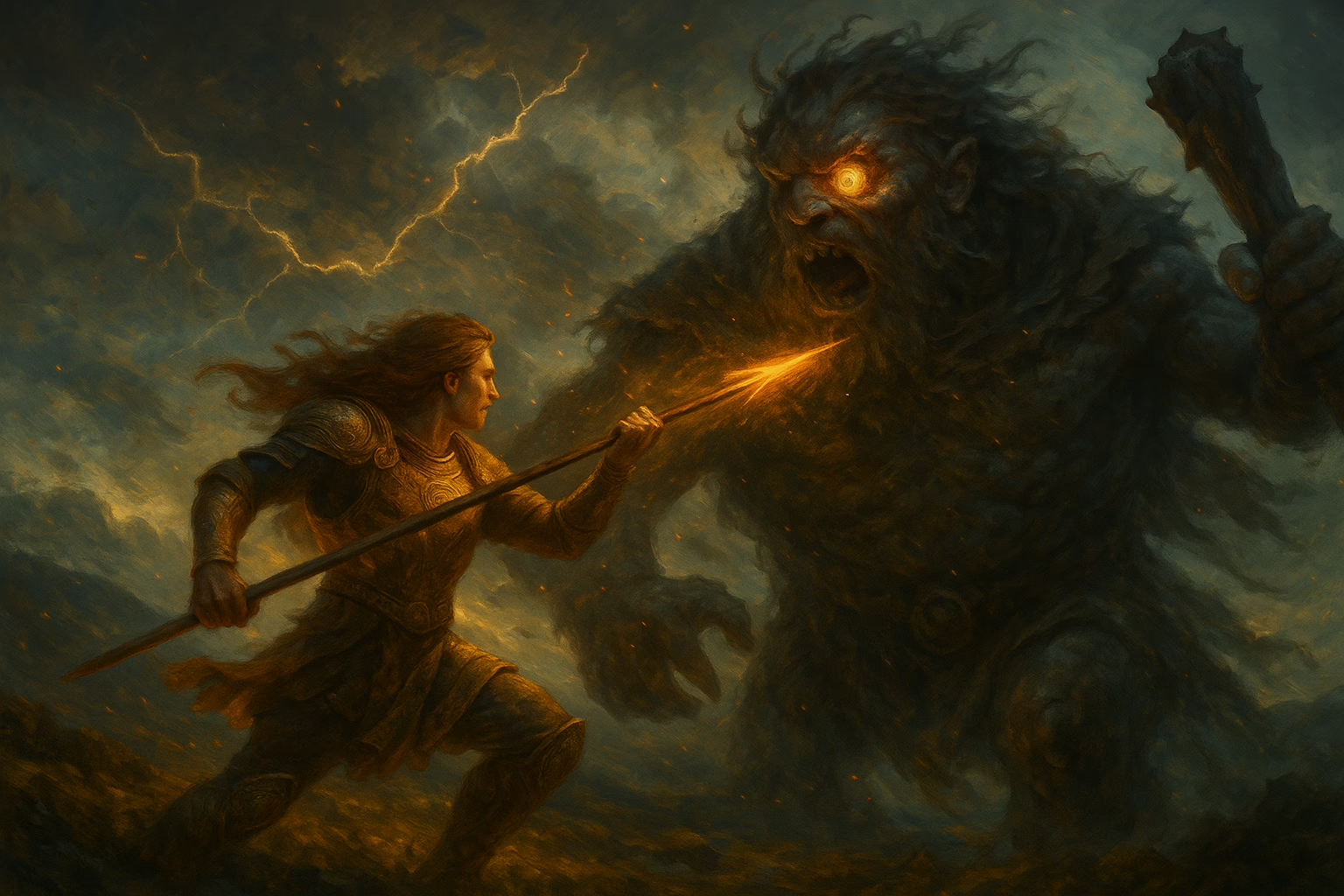
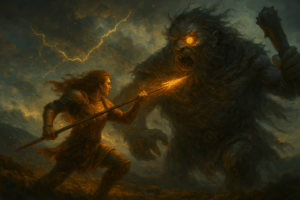
Lugh
The Sun-Champion & Master Craftsman
The Mythological Cycle
The Mythological Cycle is the earliest layer of Ireland’s surviving mythic tradition. Its stories describe a sequence of supernatural and semi-divine peoples who arrived in Ireland before the coming of the Gaels. Central among them are the Tuatha Dé Danann, figures associated with sovereignty, skill, and the Otherworld. These narratives do not function as history in a modern sense. Instead, they preserve a vision of a time when gods, landscapes, and people were inseparable, and when the boundary between the physical world and the Otherworld remained thin and unstable.
The Arrival of the Divine: Tuatha Dé Danann
The core of this cycle follows the Tuatha Dé Danann (“Tribes of the Goddess Danu”), a race of god-like beings who arrived on the island cloaked in a magical mist (féth fíada). Unlike the clinical “invaders” of later history, these figures were archetypes of sovereignty and skill. Led by their first king, Nuada of the Silver Hand, they fought two pivotal battles at Mag Tuired to establish order: first against the indigenous Fir Bolg and later against the chaotic, monstrous Fomorians led by Balor of the Evil Eye.
Other well-known members of this ‘family’ include Dagda (a mighty father-figure and druid, often called “Ireland’s All-Father”), Morrígan (a fearsome war goddess associated with fate and battle), Lugh (a master of all skills, sometimes seen as a sun god), and Manannán mac Lir (the sea god who rules the Otherworld).
Landscape as Myth: Sídhe and Sacred Sites
In this era, the landscape is not just a setting but a participant. After their eventual defeat by the mortal Milesians, the Tuatha Dé Danann did not die; they “retreated into the mounds” (sídhe), transforming into the ancestors of the (fairy folk) we find in later folklore. Sites such as Tara, Loughcrew, and the Boyne valley are not described as empty ground. They are already charged with meaning, fate, and authority, long before human history begins.
Passage tombs and ancient earthworks become entrances to the Otherworld, places where time moves differently and where supernatural power endures. This idea helps explain why monuments such as Newgrange retained sacred significance long after their original builders were forgotten. Yet over time, the Tuatha Dé Danann transform in story and memory. Godlike beings diminish into hidden kings. Divine warriors become guardians of wells, hills, and ruined forts. This process reflects a wider cultural shift, as Ireland moved from a pagan to a Christian worldview. Yet the old landscape never lost its voice. Standing stones, cairns, and burial mounds continued to attract story, ritual, and warning. The Mythological Cycle preserves this worldview, where land and story are inseparable, and where Ireland itself remains alive with presence.
The Roots of the Story
There is such a richness to the mythological cycle, which sets the scene for so much which comes after. While my novel is set later (around 98AD), the narratives of Macha, the Morrigan, and Lugh, have become embedded as beliefs and cultural practices. Although little historical evidence has survived to speak to these practices, I like to imagine that they were intertwined with the boundaries between nature and daily life.
Discover more:
-

Balor of the Evil Eye: King of the Fomorians
-
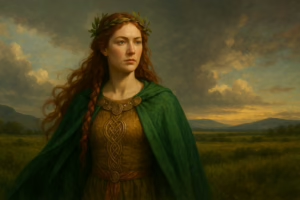
Macha: Irish Goddess of War, Horses and Fate
-
Ériu – The Goddess Who Gave Ireland Its Name
The Ulster Cycle
The Ulster Cycle (formerly called the Red Branch Cycle) is traditionally set around the 1st century AD representing a “Heroic Age” of Ireland characterised by epic cattle raids, elite warrior-knights, and intense tribal conflicts. Centered on the kingdom of Ulaid (Ulster) and its capital, Emain Macha, these sagas shift away from the primordial magic of the gods toward the tragic exploits and martial prowess of human heroes. While preserved in medieval manuscripts, the social values they describe closely resemble what archaeology suggests about Iron Age Ireland: cattle-based wealth, personal reputation, and seasonal assemblies bound to place.
At the heart of the cycle stands Cú Chulainn, the greatest hero of Ulster. Medieval tradition presents him as the son of the god Lugh, though his role functions more as an idealised warrior than a deity. His most famous tale, the Táin Bó Cúailnge, recounts the great cattle raid led by Queen Medb of Connacht and Cú Chulainn’s lone defence of Ulster while its warriors lay incapacitated. The ríastrad, or battle frenzy, is central to his legend. It transforms him from a youthful champion into a terrifying figure of violence. These episodes reflect heroic ideals rather than literal history, yet they remain grounded in recognisable Iron Age social structures.
The Ulster Cycle is unusually rooted in real landscapes. Emain Macha, now Navan Fort in County Armagh, has yielded evidence of a massive ceremonial structure dating to 95 BC, reinforcing its status as a royal centre. Rathcroghan in Connacht likewise functioned as a major ceremonial and political landscape. Roads, fords, and boundaries recur throughout the tales, echoing Ireland’s ancient routeways. This grounding in place gives the Ulster Cycle its enduring power. Myth and memory are anchored to the land itself, blurring the line between story and lived past.
Irelands Mythological History
It would be easy to dismiss much of the Ulster Cycle as mere medieval fantasy, written by monks who knew little of the context they were documenting. And there would be much truth to that. But I believe the mythology speaks to many historical practices and customs which have been supported by recent archaeological evidence. My own historical fiction uses the ‘setting’ of the Ulster Cycle to situate the narrative. The religious beliefs, social customs, geography, and economics, all speak to a vivid world. Perhaps this means I err more on the ‘fiction’ than the ‘history’, but I will let you decide.
Discover More:
-

Roots of Language: Irish Tree Mythology, Ogham & Sacred Law
-

Irish Celtic Druids: Healers, Judges & Ancient Irish Wisdom
-
Etymology of Irish Animal Names: Myth & Language Revealed
-
Irish Festival Names Explained: The Etymology of Samhain, Imbolc, Bealtaine and Lughnasadh
-
Lugh Lámhfhada: Irish God of Skill, Kingship and the Festival of Lughnasadh
-
The Morrigan: Symbolism & History of the Irish War Goddess
The Fenian Cycle (Ossianic Cycle)
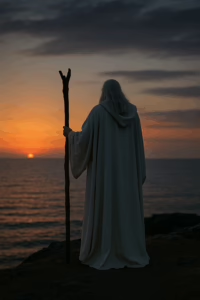
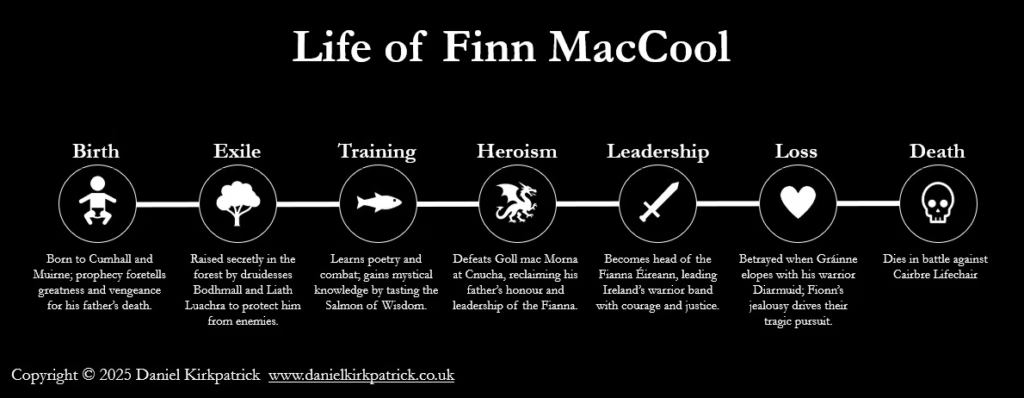
The Fenian Cycle, also known as the Ossianic Cycle, occupies a later position in Ireland’s mythological tradition and is usually placed around the third century AD. Its stories centre on Fionn mac Cumhaill and the Fianna, a mobile war-band that lived beyond the structures of kingship and settled society. Unlike the court-based conflicts of the Ulster Cycle, these tales unfold in forests, hills, and borderlands. They emphasise hunting, wisdom, loyalty, and love, presenting a world that is less concerned with dynastic power and more focused on personal honour and survival at the edge of civilisation.
Fionn mac Cumhaill stands at the heart of the cycle. Tradition credits him with gaining prophetic wisdom through the Salmon of Knowledge, an origin tale that links learning directly to the natural world. Many of the surviving narratives are voiced through his son Oisín, whose journeys to Tír na nÓg introduce a reflective and often melancholic tone. Time passes differently in these stories. Youth fades. Worlds slip away. The Fenian tradition was shared widely across Ireland and Scotland, helping to sustain a connected Gaelic storytelling culture long after political unity fractured.
Landscape plays an essential role in these tales. Natural landmarks become mythic through association. The Giant’s Causeway is woven into stories of Fionn’s rivalry with a Scottish giant, while Uisneach, long regarded as Ireland’s symbolic centre, appears as a gathering place tied to seasonal ritual. Hills, mounds, and remote valleys repeatedly serve as thresholds to the Otherworld, where the Fianna encounter supernatural forces. In the Fenian Cycle, the wild is not empty or hostile. It is alive with memory, danger, and meaning, shaping both the heroes and the stories that surround them.
Historical Cycle (Cycle of Kings)
The Historical Cycle, often called the Cycle of Kings, forms the final branch of Ireland’s mythological tradition. It blends legendary material with genealogies and early historical memory, covering a long span from the pre-Christian past into the early medieval period. These narratives were preserved by medieval scholars and poets who sought to explain and legitimise kingship. While they include supernatural elements, their focus lies firmly on rule, succession, and the moral responsibilities of power. The cycle reflects a society increasingly concerned with law, lineage, and continuity rather than heroic combat alone.
One of the most prominent figures within this tradition is Cormac mac Airt, remembered as an ideal High King whose reign embodied wisdom and justice. Stories surrounding Cormac often use symbolic devices, such as the Cup of Truth, to explore the concept of rightful rule rather than to describe literal events. Alongside him appear figures who straddle the boundary between legend and history, including Niall of the Nine Hostages, claimed ancestor of the Uí Néill dynasties, and Brian Boru, a historical king whose later portrayal absorbs mythic qualities. These narratives were not neutral accounts. They served political ends, reinforcing claims to territory and authority through ancestral precedent.
The landscapes tied to these stories remain central. Tara emerges as the symbolic seat of high kingship, a place where sovereignty, ritual, and assembly converged. Other royal centres across Ireland likewise grounded kingship in physical space, linking authority to land rather than to abstraction. This cycle also reflects Ireland’s gradual transition to a Christian worldview, as legal traditions and moral order began to replace divine intervention as the foundation of rule. The Historical Cycle does not mark the end of myth. It marks its transformation into political memory, shaping how Ireland understood its past and justified its present.
All Irish Mythology Posts
- Aengus: Irish God of Love, Youth, and DreamsAengus is the Irish god of love, youth, and poetic inspiration. This post explores his dreamlike mythology, from the legend of Caer to his ties with Newgrange, revealing how his longing and lyricism continue to echo through Irish tradition and the sacred landscape of Brú na Bóinne.
- The Púca/Pooka: Shape-Shifting Spirit of Irish MythologyThe Púca is a shape-shifting spirit from Irish folklore. Discover its myths, trickster tales, and enduring influence on Ireland’s cultural imagination.
- Ogma: Irish God of Strength, Language, and OghamOgma was a warrior-poet of the Tuatha Dé Danann, revered as the inventor of the Ogham script and a champion of strength and speech. This post explores his mythological role, legacy, and what his story tells us about power, language, and sacred knowledge in early Ireland.
- Fomorians in Irish Mythology: Giants of Chaos and the SeaThe Fomorians are monstrous beings from Irish mythology, embodying chaos and the untamed sea. Discover their myths, battles with the Tuatha Dé Danann, and enduring legacy.
- Abhartach in Irish Mythology: The Blood-Drinking Undead DwarfAbhartach, an undead dwarf from Irish folklore, rose from his grave to drink blood. Explore his chilling legend, origins, and lasting influence on vampire myths.
- Aos Sí in Irish Mythology: Origins, Folklore & LegacyThe Aos Sí are Ireland’s powerful fairy folk, dwelling in mounds and ringforts. Explore their myths, folklore, and enduring presence in Irish culture.
- Nuada of the Silver Hand: King of the Tuatha Dé Danann in Irish MythologyNuada, the first king of the Tuatha Dé Danann, is a god of justice, sacrifice, and resilience. This post explores his myth, the meaning of his silver arm, and his enduring symbolism in Irish mythology and comparative traditions.
- Balor of the Evil Eye: King of the FomoriansBalor, the fearsome Irish god of destruction, was king of the Fomorians and bearer of the Evil Eye. Feared for his monstrous power, he stood against the Tuatha Dé Danann until prophecy — and his own grandson, Lugh — brought about his fall. This post explores Balor’s myth, role, and legacy.
- Macha: Irish Goddess of War, Horses and FateMacha is a goddess of war, endurance, and sovereignty in Irish myth. From her curse on Ulster’s warriors to her link with Emain Macha, this post explores her symbolic power, her suffering, and her enduring presence in Irish cultural memory and sacred geography.
- Ériu – The Goddess Who Gave Ireland Its NameÉriu is the goddess from whom Ireland takes its name. This post explores her mythological role in Irish tradition, her link to sovereignty and land, and how her legacy endures in the very identity of the country.
- Brigid: Irish Goddess of Poetry, Healing and Sacred FireBrigid, daughter of the Dagda, is one of Ireland’s most enduring goddesses. From fire and poetry to healing and springtime ritual, this post explores her mythological origins, sacred places, and her lasting role in Irish culture and belief.
- Merrow – Ireland’s Dark Mermaid of Storms and Stolen SkinsDiscover the Merrow in Irish mythology—mysterious sea spirits said to dwell beneath the Atlantic. From red caps and enchanted marriages to storm warnings and ancient rituals, this post explores the folklore, symbolism, and enduring legacy of Ireland’s ocean-dwelling shapeshifters.
- Cailleach – Ireland’s Winter Hag and Shaper of MountainsDiscover the enduring myth of the Cailleach in Irish mythology—a powerful crone who shaped Ireland’s land, weather, and seasonal cycles. This post explores her origins, folklore, symbolism, and lasting cultural legacy.
- What Is a Selkie? Irish Selkie Meaning & Folklore ExplainedIn the mist-shrouded shores of Ireland’s western isles, the selkie emerges from the silver sea—a shape-shifting seal by day, a human by night. Drawing on mythic encounters, this post explores the selkie’s origins in Gaelic language and legend, its symbolic resonance in heart-ache, homecoming and the liminal space between land and sea, and its lasting legacy in Ireland’s storytelling tradition. Dive into enchanted coves, ancient courtships and bittersweet farewells as we unravel why the selkie still swims in the collective imagination.
- The Giant’s Causeway Legend: Myth of Finn MacCoolDiscover the legends of Finn MacCool, from the Giant’s Causeway to the Fenian Cycle. Warrior, poet, and giant—his myths shaped Ireland’s heroic past.
- Hill of Uisneach – Ireland’s Sacred Centre of Myth & HistoryThe Hill of Uisneach, Ireland’s sacred centre, is a site where ancient history, mythology, and landscape converge. From royal inaugurations to Bealtaine fire rituals, this Westmeath hill has long been a spiritual axis. Discover its role in prehistoric belief, medieval lore, and modern revival as the heart of Ireland’s mythic and ceremonial tradition.
- Ancient Celtic Festival Calendar: 8 Key DatesFrom Samhain to Lughnasadh, this post outlines the eight pivotal festivals of the ancient Celtic calendar, explaining when each occurs and its cultural significance. Learn how these seasonal rituals shaped early Irish life and still echo in Ireland today.
- Roots of Language: Irish Tree Mythology, Ogham & Sacred LawOak, hazel, yew—these Irish words unlock more than vocabulary. They point to sacred inauguration trees (bíle), early law codes and the Ogham script. Explore how language, myth and history intertwine—and pick up practical phrases along the way.
- Irish Celtic Druids: Healers, Judges & Ancient Irish WisdomIrish Celtic druids were ancient Ireland’s elite scholars: priests, judges, and healers who wielded law and lore. This article explores who they were, what roles they played, and why they matter in Irish history and mythology.
- Danu (Dana): Celtic Mother of the Irish GodsDana (also called Danu) is the Irish earth-mother goddess and matriarch of the Tuatha Dé Danann. Learn about her origins, symbols, and enduring legacy in Celtic mythology.
- Etymology of Irish Animal Names: Myth & Language RevealedExplore the etymology of Irish animal names—cú, bradán, each—and uncover their mythological, legal, and cultural roots in Celtic Ireland.
- Manannán Mac Lir: Irish God of the Sea — Myth, Power & LegacyManannán Mac Lir is one of Celtic mythology’s most enigmatic figures – a powerful sea god and king of the otherworldly Isles. Discover how the Sea King’s music, magical treasures and ancient tales have left an enduring legacy on Irish folklore.
- Lugh Lámhfhada: Irish God of Skill, Kingship and the Festival of LughnasadhLugh Lámfada (“of the Long Arm”) shines in Irish myth as the all-skilled champion of the Tuatha Dé Danann. Famous for his lightning spear, he slays Balor, fathers Cú Chulainn and lends his name to the harvest festival Lughnasadh. His stories celebrate ingenuity, lawful kingship and the bright promise of late summer.
- The Dagda: Irish All-Father God of Myth, Power & WisdomThe Dagda, “Good God” of the Tuatha Dé Danann, strides through Irish myth with an endless cauldron, a life-and-death club and a harp that orders the seasons. Fertility, abundance and raw power earn him the title All-Father—yet he is also a wry trickster, lover and skilled druid who shapes the land itself.
- The Morrigan: Symbolism & History of the Irish War GoddessThe Morrigan, Ireland’s fearsome ‘Phantom Queen’, soars over battlefields as a crow, weaving victory or doom. A triple goddess of war, fate and sovereignty, she tangles with Cú Chulainn, foresees ruin for Ulster and guards the land’s sacred power. Her dark wings still shadow modern folklore and neopagan rites.
- The Gods of Ireland: A Complete Guide to the Tuatha Dé DanannDiscover the legendary gods and goddesses of Irish mythology—from Nuada and Brigid to the Dagda and Morrígan. This in-depth guide explores their stories, symbols, and enduring place in Celtic lore.
Further Resources
The breadth and complexity of Irish mythology is worth exploring far beyond the limited confines of this blog. For those keen to read and research further, below I’ve compiled a list of 6 top resources I’d recommend:
1. Mythopedia – Celtic Mythology
Mythopedia provides an extensive guide to Celtic mythology, covering key deities, legendary tales, and the historical context of Irish myths. It’s an excellent starting point for understanding the broad framework of Ireland’s ancient narratives.
2. LC Clark College: Irish Mythology Crash Course
This crash course offers a concise yet engaging overview of Irish mythology, making it ideal for beginners who want a rapid introduction to the key figures and stories.
3. University of Pittsburgh – Ireland
This resource provides scholarly insights into Ireland’s historical and mythological landscape. It explores the connections between myth, history, and cultural identity in a clear and accessible manner.
4. UNC ILS: Irish Folklore
The UNC ILS site offers curated materials on Irish folklore and mythology, emphasizing the oral traditions and narratives that continue to influence modern interpretations.
5. Brehon Academy – Irish Mythology Course
This in-depth course examines the major cycles of Irish mythology, exploring both the historical context and the symbolic meanings behind ancient tales, making it a comprehensive learning tool.
6. Udemy – Irish Mythology Course
Udemy’s course provides a structured and accessible introduction to Irish mythology, combining video lectures, readings, and interactive exercises to bring ancient stories to life.