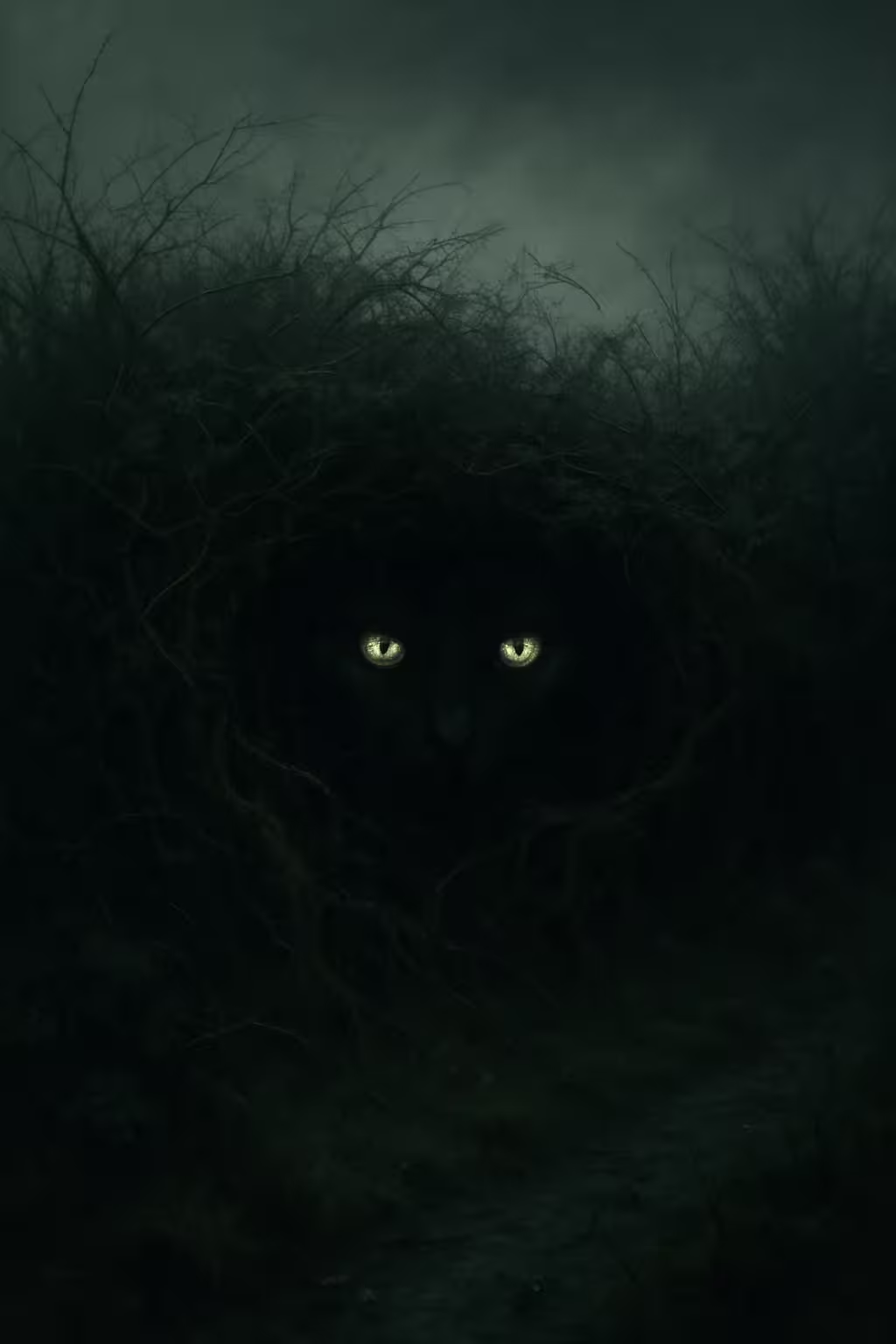
The Púca is one of Ireland’s most enigmatic mythological creatures. Known for its shape-shifting abilities, tales describe it as both mischievous and occasionally helpful, a creature that tests the boundaries between the human world and the supernatural. Unlike the gentle fairies of later folklore, the Púca carries a sense of unpredictability and power, reminding mortals that the natural world holds forces far beyond their control.
From rural villages to isolated crossroads, stories of the Púca have been told for centuries, each recounting its tricks, pranks, and occasional acts of guidance. Its presence in Irish myth reflects not only a fascination with the unknown but also a deep respect for the landscape and its hidden spirits.
Origins and Etymology
The origin of the name púca remains debated. Often translated in English as pooka, cognate forms appear across northwest Europe (Irish púca, Welsh pwca, Old English puca, Old Norse púki), and scholars disagree whether the word is originally Irish or the result of early cross-linguistic borrowing. Place-name evidence (e.g. Pollaphuca) shows the term was used in Ireland early on. Although it’s very unlikely to have originated from Old Irish according to scholars.
Understanding where the term originated matters, but only up to a point. What we can say with more certainty, is that the term púca was well established within Irish folklore by the late medieval period, likely much earlier.
Of course, its origins may extend back to pre-Christian Celtic beliefs even if not under the same ‘creature’. For instance, shapeshifting is a recurring theme in the various ancient texts. Various members of the Tuatha De Danann transformed themselves into creatures whether Morrigan or Manannán.
Mythology of the Púca
Unlike the gods of the Mythological Cycle, the Púca does not appear as a central character in early Irish sagas preserved in medieval manuscripts. Instead, it emerges most clearly in oral tradition and later folklore.
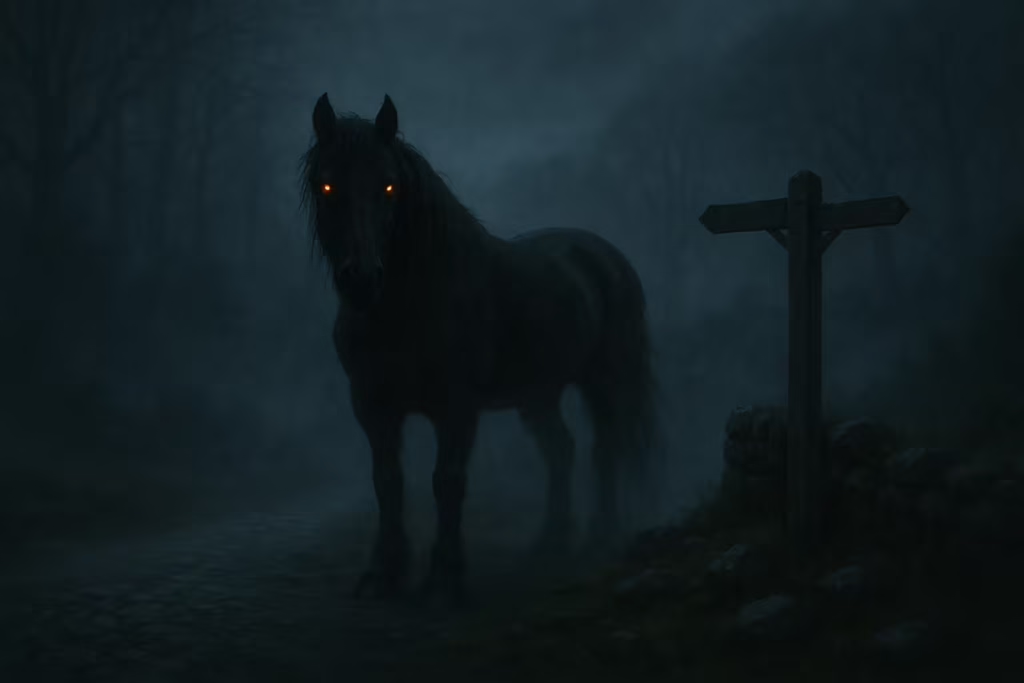
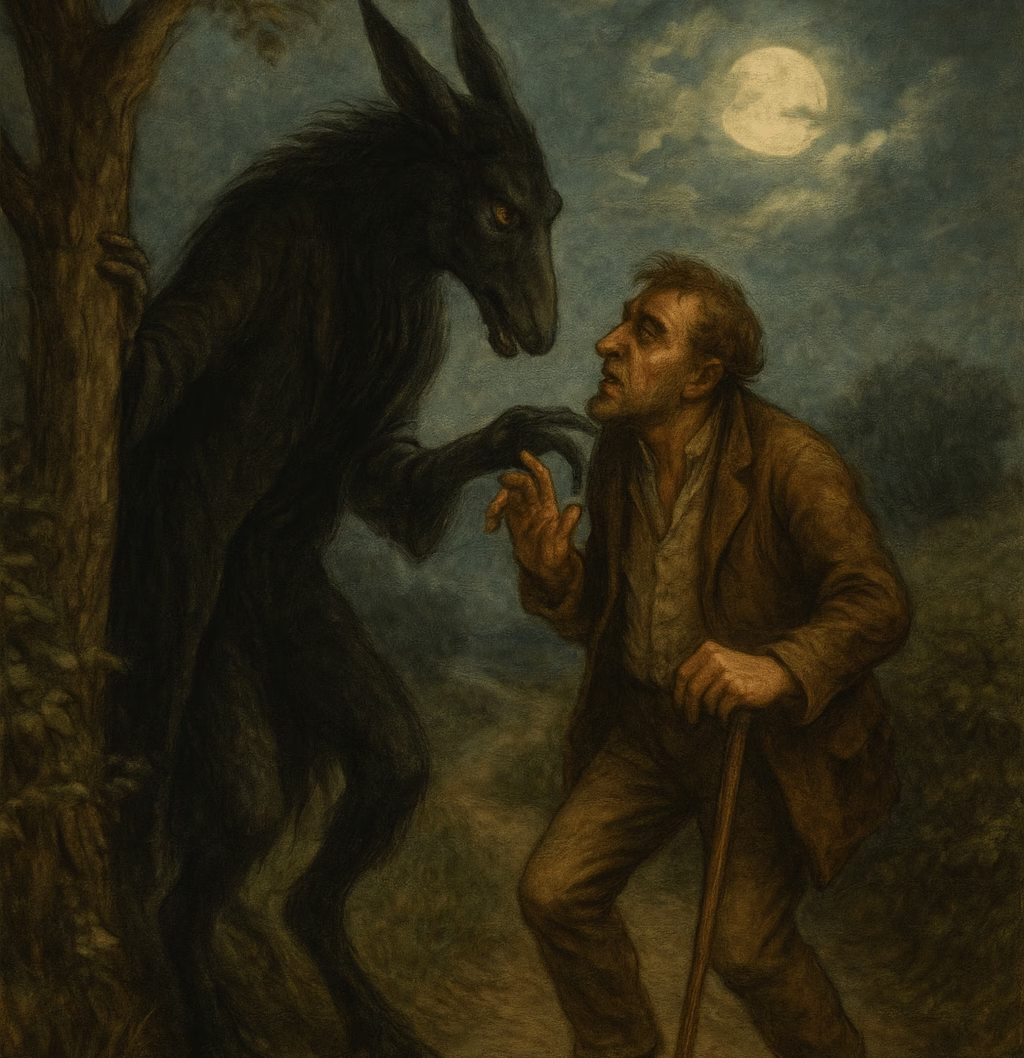
The Púca is renowned for its ability to assume various forms, often to deceive or frighten humans. In some tales, it appears as a black horse, capable of carrying riders at incredible speeds across the countryside. In other stories, it takes the form of a goat, dog, or even a human, each time with the intent to unsettle or mislead those who encounter it though with varying outcomes.
Interestingly, the Púca’s appearances and behaviors vary across different regions of Ireland, reflecting local beliefs and traditions. In County Galway, the Púca is often associated with the hills and bogs, where it is said to roam freely, testing the mettle of those who venture into its domain. In other areas, the Púca is linked to specific landmarks, such as the top of Croagh Patrick, where it is believed to gather with other supernatural beings.
However, I believe the physical characteristics are secondary to the narratives themselves. And its stories are widespread across Ireland offering intriguing insights into the nature and beliefs surrounding this creature which we’ll turn to next.
Wild Horse in the Night
One of the most enduring narratives is the Púca as a shape-shifting trickster. In countless versions recorded by the Irish Folklore Commission, the Púca takes the form of a dark horse with blazing eyes and a flowing mane. It lures unsuspecting travellers onto its back at night, carrying them on a wild, terrifying ride across fields, bogs, and rivers before finally throwing them down in the mud. These stories often function as cautionary tales, warning listeners to avoid lonely paths after dark. Here’s an extract from one such encounter which is worth quoting at length:
“Many hundreds of years ago when all animals could talk a strange animal frequented a field in Drishane called “Cumar”. The people of the locality were scared of him and he was known as “Puca”. He was as big as a horse and like a camel in every way even with the hump on his back. He used not be seen or heard by day, but by night if anyone passed through that field he would haul him on his back and begin to race all over the field with him. He used to run like the wind and if the man fell off his back he would haul him up again, before the man could have reached the ground. The field was not level but very hilly and the “puca” used to run as quickly up hill as downhill.
“One night a man passed through the field and the “puca” hauled him on his back and started to race all round the field, running into nooks and corners and out again. The man nearly died with fright and he started to roar. Once the “puca” raced faster than usual. “Oh Dia lem anam” said the man. “Ah muse” said the puca “tá baogal mór ort” [trans. You are in great danger]. The puca kept running until the man was nearly dead and after every mad fit of running the “puca” used to give a roar which could be heard all over the townland. When the man was nearly exhausted the “puca” threw him on the ground and disappeared.”1
In this case, the encounter serves as a warning. Although no real harm befalls the Púca’s victim, the story clearly holds a cautionary note, much like in other folktales. The purpose and intent was to warn. However, the Púca was also believed to reward its victims, nor merely terrify them.
Púca and Prosperity
One such story involves a piper from Dunmore, County Galway, who, while intoxicated, was approached by the Púca in the form of a large horned creature. The Púca flung the piper onto its back and carried him across hills and bogs, urging him to play music for a gathering of old women at the top of Croagh Patrick. The piper was rewarded with gold coins and a new set of pipes.
In other cases the creature is associated with prosperity more in terms of appeasement and fertility of the land. For instance, a number of traditions speak of the Púca bringing messages or warnings, and in certain harvest customs, the “Púca’s share” referred to the last of the crops left in the field, offered to appease the spirit. In this role, the Púca resembles other agrarian spirits across Europe, embodying both the dangers and the fertility of the land.
“The púca made his rounds on that night. The powder used in making the calcannon was left outside the door in a prominent place for the púca to see and eat his share, otherwise he was liable to do some terrible evil usually to crops and cattle. “
Samhain and the otherworld
Another recurring strand of folklore associates the Púca with Samhain, the Celtic festival marking the onset of winter. On this liminal night, when the veil between worlds was believed to thin, the Púca was said to roam most freely. Some accounts claimed that fruit left unharvested by Samhain was “spoiled by the Púca,” blending agricultural practice with supernatural fear.
Moreover, placenames like “Lios an Púca” (Fort of the Púca) in County Galway indicate the creature’s strong association with particular locations. These sites were often considered to be entrances to the Otherworld, and the Púca’s presence in such places underscores its role as a guardian of these liminal spaces.
Symbolism and Cultural Role
For me the Púca’s mythology is a clear example of the moral and cultural significance of mythology. For the Púca is more than a trickster or shapeshifter – it embodies the unpredictability of nature and the boundaries between the reality and the supernatural. Its ability to appear in multiple forms reflects the fluidity of these boundaries serving as a reminder that the world is never entirely under human control. By testing humans with fear, mischief, or unexpected rewards, the Púca reinforces cultural lessons about respect, humility, and awareness of the unseen forces surrounding daily life.
The Púca also plays a role in the moral imagination of rural communities. Tales of encounters often caution against arrogance, disrespect, or trespassing into sacred spaces. At the same time, these stories celebrate ingenuity, courage, and kindness: those who act wisely or respectfully in the Púca’s presence may receive aid or treasure, highlighting the duality of reward and punishment.
Regional associations of the Púca further deepen its cultural significance. In areas such as Connacht, Munster, and Ulster, the Púca was tied to specific natural features — hills, rivers, and crossroads — all sites considered liminal or sacred. By linking the creature to the physical landscape, folklore reinforced a sense of place, marking these locations as thresholds to other realms and embedding the supernatural into daily life.
Legacy and Modern Influence
The Púca continues to captivate the imagination, appearing in literature, folklore collections, and contemporary media. Writers such as W. B. Yeats and Lady Gregory documented Púca tales, preserving the stories of its shape-shifting, mischief, and moral lessons for future generations. In these accounts, the Púca embodies both the mystical heritage of Ireland and the living memory of its rural communities.
In modern culture, the Púca has influenced fantasy literature, role-playing games, and film, often depicted as a mysterious and unpredictable creature. Its appearances in stories and games draw on its traditional traits — the ability to shape-shift, to trick or aid humans, and to appear at liminal times or places — ensuring that the essence of the Púca remains intact.
Even today, tales of the Púca serve as a reminder of the unknown and the power of nature, echoing the warnings and lessons embedded in centuries-old stories. Its continued presence underscores the resilience of Irish mythology and its capacity to adapt, entertain, and educate across generations.
Frequently Asked Questions:
The Púca is a shape-shifting spirit in Irish folklore, known for appearing as a horse, goat, dog, or human. It can be both mischievous and helpful.
The word Púca comes from Old Irish, possibly related to Welsh puca, and refers to a supernatural, often mischievous, spirit.
The Púca inhabits wild or liminal spaces such as hills, riversides, forests, and crossroads. It is often associated with rural landscapes in Ireland.
Yes — medieval texts record encounters where humans are led astray, while folklore includes both prankster tales and cautionary stories of respect for nature and the Otherworld.
The Púca is particularly active during Samhain, a time when the boundary between the human world and the supernatural is thin, making encounters more likely.
YOU MAY ALSO LIKE
 Revenants in Irish Mythology: The Blood-Drinking Undead Dwarf?
 Fomorians in Irish Mythology: Giants of Chaos and the Sea
 Iron Age Clothing in Ireland: What People Really Wore
 The Morrigan: Symbolism & History of the Irish War Goddess
 Selkies: The Seal People of Irish & Scottish Folklore
 Irish Ollamhs and Herbology: Medicine, Learning and Healing in Early Ireland
 Irish Festival Names Explained: The Etymology of Samhain, Imbolc, Bealtaine and Lughnasadh
 Macha: Irish Goddess of War, Horses and Fate