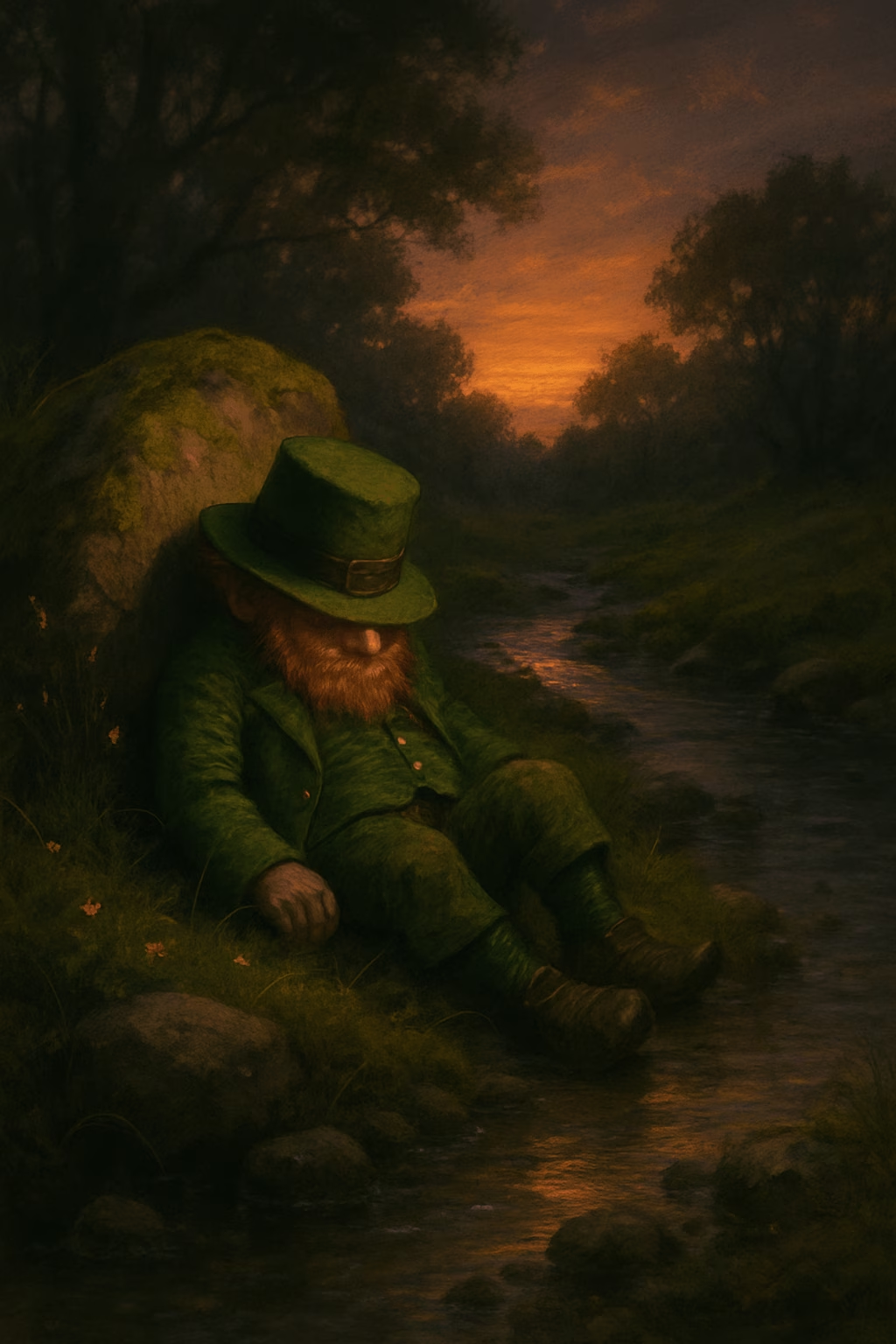
The Leprechaun is one of the most recognisable figures in Irish folklore, yet its origins are far richer than modern depictions of a small man in green guarding a pot of gold. Indeed, Leprechauns were actually considered to be fairies known for their skill in shoemaking and their cunning nature. However, unlike the broader community of the Aos Sí, Leprechauns stand apart as individual, elusive beings. They rarely seek out human company, and when encountered, their actions often leave a lasting mark on the person involved. From early mentions in medieval texts to tales collected in the Irish countryside, the Leprechaun embodies the blend of humour, caution, and mystery that defines much of Irish mythology.
In this post we will consider these early sources and folkloric retellings to understand the origins of the Leprechaun, what they looked like, how they behaved, and what some of the main stories associated with them are. We will see how the origin tales evolved into our modern versions. Hopefully this will help you see beyond the green man with a pot of gold stereotype, to understand the richness of Irish culture which sits behind it.
Origins and Etymology
The word leprechaun likely comes from the Irish leipreachán or lupracán, terms used to describe small supernatural beings. Scholars trace its roots to the Old Irish luchorpán, meaning “small body.” This suggests that belief in these figures goes back over a thousand years, with the Leprechaun already established in the imagination of early storytellers.
For instance, the earliest known reference I can find to a creature resembling the leprechaun appears in the 8th-century tale Echtra Fergus mac Léti (“The Adventure of Fergus mac Léti”). In this Ulster cycle narrative, King Fergus is dragged into the sea by three lúchorpáin — literally “small bodies” in Old Irish. These tiny water-sprites live beneath the waves and are captured by Fergus, who releases them only after they grant him three wishes. One of his wishes was the power to breathe underwater anywhere in Ireland — except in Loch Rudraige, a place the spirits warn him against.
This is the first textual evidence of small supernatural beings associated with Ireland, with the word lúchorpán likely being the linguistic ancestor of the modern leprechaun. It shows several traits later associated with Leprechauns including their diminutive stature, capture by humans, and the granting of wishes. So while these medieval spirits are not yet the shoemakers of later folklore, the continuity of narrative suggests that the Leprechaun tradition may have developed from these older supernatural beings.
Evolution of Leprechaun Folklore
By the later Middle Ages, references to these beings became more varied. They appear not as sea-sprites but as solitary fairies, distinguished from the larger, more defined Aos Sí – such as the banshee. The leprechaun’s association with shoemaking likely developed during this period.
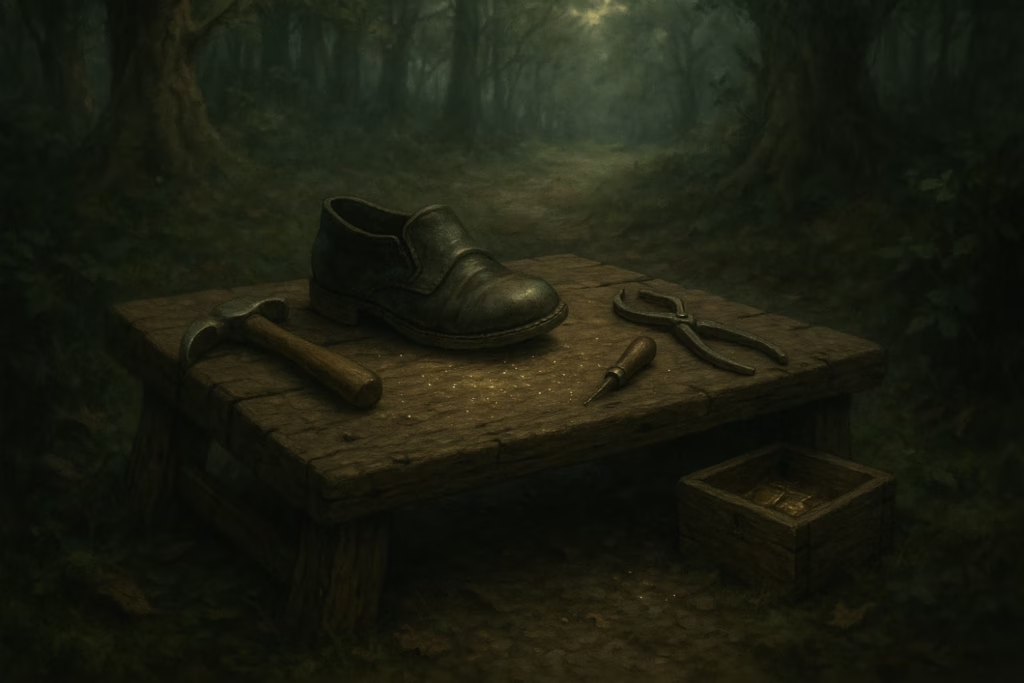
In Irish folklore, cobblers were figures of craft and secrecy, often working alone at night — qualities that resonated with the fairy’s elusive, hidden nature. The steady tapping of a cobbler’s hammer became, in folklore, a tell-tale sound betraying a leprechaun’s presence, guiding the listener toward (or away from) fairy gold.
Writers of the early modern period helped to cement the figure’s reputation. The leprechaun is mentioned by the 17th-century scholar Thomas Crofton Croker in Fairy Legends and Traditions of the South of Ireland (1825), who describes him as a merry little cobbler dressed in red.
So while the enduring idea of the leprechaun as a guardian of hidden treasure may stem from older Celtic beliefs about spirits protecting burial mounds or hoards, it was much later that the shoemaker narrative and colour was added.
The Leprechaun in Modern Folklore
Now that we have a general sense of how the leprechaun’s mythology originates, it’s worth turning to more modern portrayals. As with my posts on other mythological creatures from Ireland, I’ve relied heavily on the fantastic folklore archive of duchas.ie. Here we can see some of the most prevalent tales retold by Irish traditions themselves.
There are many examples, but I’ve chosen those which are most representative and reflect the various themes within modern Irish folkloric traditions.
What does the Leprechaun look like?
The leprechaun was said to be small in stature – “about a foot in height” – and “dressed in a green coat, a pointed hat, a knee britches and a pair of boots with turned up toes.” In another account the creature is described as: ” a little man in a red jacket sitting under an old bush hammering a shoe”. A final account again shows another slight variation describing him as a “little man who had a neat red coat with gold buttons up the middle and a green cap with a robin’s feather stuck in it. He had small shoes with silver buckles and the toes were turned up and ties to the Lepracaun’s knees with a red sting.”
Therefore, the green colouring we see in modern depictions is a more modern ‘branding’ of the creature, as is the top hat. This came with associations with St. Patrick’s Day and global celebrations linked to Irish diasporas across the world.
What do Leprechauns do?
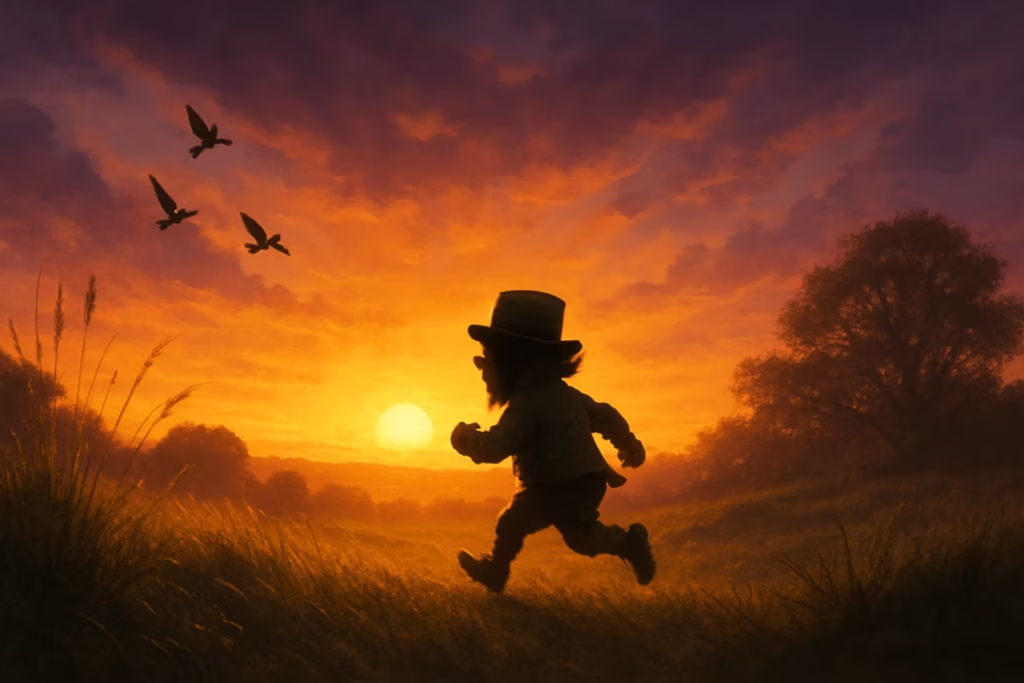
Continuing with the solitary, lonesome framing of a cobbler, the leprechaun was nearly always depicted alone sleeping or resting in some fashion, or else working at his shoemaking. This is then followed by a doomed account of attempt at catching the creature. For instance, one account explains with an example of failed chase:
“He is usually seen sitting under a ditch or in the shade of a tree. He is nearly always making boots and the sound of his hammer is heard through the whole wood. One night my grandfather was coming from Collinstown he is said to have a leprechaun and here is the story.
“When he was passing Ráe an Dún he heard the sound of a hammer and he wondered who it was. He looked out across the ditch and there he saw a leprechaun repairing his boots. He jumped out across the ditch and made an effort to catch the leprechaun and failed.
“He tried a second time to catch him but in vain and my grandfather’s third attempt the leprechan seeing the danger he was in fled and my grandfather after him. The harder my grandfather ran the leprachan ran harder. At last the leprechan reached Teerevagh Coreen and turned up it quickly. My grandfather who was on his heels turned quickly and fell. The leprechan let a roar of a laugh and disappeared leaving my grandfather alone little the better of his adventure. When my grandfather came home he went to bed and was not able to get up the next day.”
Then there are examples of trickery were a leprechaun is caught, but then tricks their captor:
“Long ago there lived an old woman and her daughter Jean. they were as poor as church mice. One evening Jean was going for a bundle of sticks. Soon she heard a noise like the sound of a hammer behind a tree stump. She went over to the stump and what did she see but a leprechaun mending his boots.
“She grabbed him by the throat saying, “Shoe me your gold”, ” It is under that castle over there” said the leprechaun, “come along then” said the girl. Then they journeyed on towards the castle and when they got to the top of the hill near the castle, all of a sudden the leprechaun said, “O the castle is on fire”. The girl looked but when she looked the leprechaun was gone. She never saw him again.”
Of course, though, there are examples too were the gold is claimed. Though in this case, it’s a rather dark and violent tale:
“There was once an old woman who was very poor and who wished to get rich without earning it.
“One morning while milking her only cow she saw a little man in a red jacket sitting under an old bush hammering a shoe. She knew that this was the leprecaun and she said to herself she would try and catch him and make him tell her where he kept the little crock of gold which she was told he always kept hidden under some tree or bush. She stole up to him and grasped him tightly ordering him to tell her where he kept the gold. He said a poor man like him who spent his life mending shoes could have no gold. She resolved not to let him go until he told her and taking him home roughly she imprisoned him in a big chest which she locked.
“He remained there for two days still protesting that he had no gold but the old woman firmly believed that he had. At last getting tired of listening to his pitiful cries to be released she resolved to force him to tell her his secret. She boiled a pot of water and taking the leprecaun out of the chest she put him into a small box and then threatened to put him into the boiling water.
“At last he told her that the gold was hidden under an old bush not far away from which a wisp of hay hung She went to get it but found many bushes with hay hanging from them and again she threatened to put him into the boiling water if he didn’t point out the right bush for her. She took him out with her and this time he had to tell her the exact bush. She found the gold and released her poor leprecaun who was very sorry for the gold he had spent his life gathering.”
Leprechaun Poem
In my research, I came across a poem quoted here which I wanted to cite at length. It is a wonderful example of how folklore and art are interwoven within Irish culture. It also provides a concise summary of the many motifs noted above in the other stories.
“In a shady nook of a moonlight night
A Leipreachan I spied,
With a scarlet cap, and coat of green.
With a “Cruiscin” by his side
He hammered and sang, with a weeny voice,
And drank his mountain dew
Oh I’d laugh to think he was caught at last,
But the fairy was laughing too.
As quick as thought I seized the elf
“Your fairy purse” I cried
“The purse he said, its on her hand,
That lady by your side”
I turned to look the elf was gone
What more had I to do
Oh I’d laugh to think what a fool I was
But the fairy was laughing too.
Legacy and Modern Influence
The leprechaun has undergone one of the most remarkable transformations of any figure in Irish folklore. Once a mischievous solitary fairy tied to specific tales of trickery and shoemaking, he has become a global symbol of Irish identity and charm.
By the twentieth century, the leprechaun had become a marketing emblem. From postcards and tourism posters to cereal mascots, his image shifted towards a playful, green-clad sprite associated with rainbows, shamrocks, and pots of gold. This popularisation diluted some of the darker and more cunning aspects of his folklore, but it ensured his survival as a recognisable cultural icon.
Today, the leprechaun remains a fixture in Irish tourism and global St Patrick’s Day celebrations. Folklore festivals, street performances, and storytelling events still evoke his traditional traits, while fantasy literature and role-playing games adapt him into new imaginative contexts.
Despite the commercialisation, many still recognise the leprechaun as part of Ireland’s living folklore. His stories continue to teach lessons about greed, cleverness, and the unpredictability of luck — themes that are as relevant today as they were in the past.
Frequently Asked Questions: Leprechaun
A Leprechaun is a small, mischievous fairy, often depicted as a shoemaker who guards hidden treasure.
The Irish word leipreachán refers to a fairy or sprite, likely derived from Old Irish sources describing solitary magical beings.
Leprechauns are part of the Aos Sí tradition and share traits with other solitary fairies like the Púca, though they are more focused on trickery and craft.
Folklore tells that Leprechauns hide pots of gold at the end of rainbows or in secluded areas, symbolising wealth, luck, and cleverness.
The leprechaun originates from medieval Irish literature, first appearing as a water-dwelling sprite in tales like Echtra Fergus mac Léti. Over time, he became associated with shoemaking, trickery, and hidden treasure.
YOU MAY ALSO LIKE
 Fomorians in Irish Mythology: Giants of Chaos and the Sea
 Iron Age Clothing in Ireland: What People Really Wore
 Selkies: The Seal People of Irish & Scottish Folklore
 Revenants in Irish Mythology: The Blood-Drinking Undead Dwarf?
 The Púca/Pooka: Shape-Shifting Spirit of Irish Mythology
 The Morrigan: Symbolism & History of the Irish War Goddess
 Aos Sí: Ireland’s Fairy Folk & The Otherworld Beneath the Hills
 Ogma: Irish God of Strength, Language, and Ogham