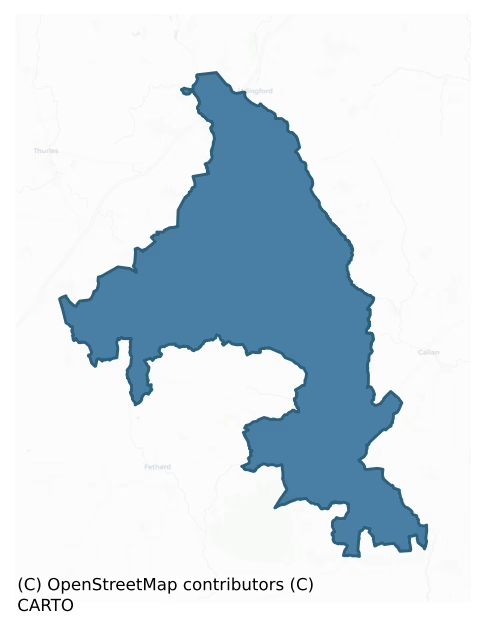
Slievardagh is a barony of County Tipperary, in the historical province of Munster (Irish: Sliabh Ardach), covering 367 km² of land. The barony records 617 NMS archaeological sites and 115 NIAH listed buildings, placing it at around the 42nd percentile among 280 ROI baronies for sites per km². This means it is in the lower half of all baronies for sites per km². Dated archaeological evidence runs from the Neolithic through to the Modern, spanning 8 of 9 archaeological periods, placing the barony in the 58th percentile among 280 ROI baronies for chronological depth. This means it is in the upper half of all baronies for chronological depth. The largest dated subset of recorded sites dates to the Iron Age. Logainm flags 40 placenames in the barony as carrying a recognised heritage root; the largest share — around 62% — are names associated with early Christian church and monastic foundations.
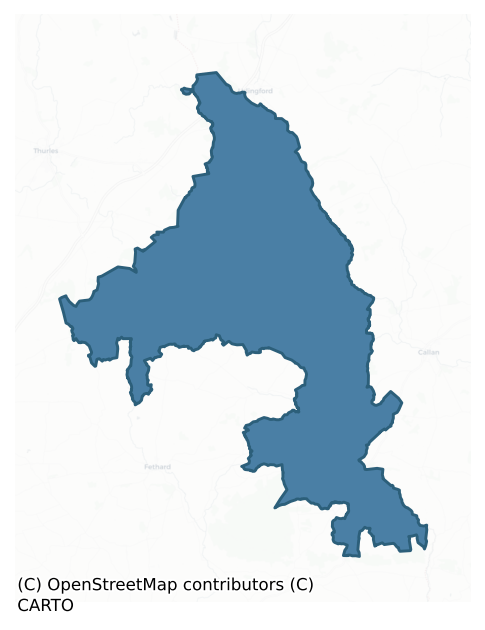

Heritage at a glance
Percentile rankings throughout this profile compare each barony only against the other 279 Republic of Ireland baronies.
The recorded heritage of Slievardagh
The National Monuments Service Sites and Monuments Record (SMR) is the statutory inventory of archaeological sites for the Republic of Ireland, maintained by the Department of Tourism, Culture, Arts, Gaeltacht, Sport and Media. Sites recorded here include earthworks, ringforts, megalithic tombs, ecclesiastical remains, and post-medieval features; not every record is legally protected, but each is registered as a monument of archaeological interest.
The National Monuments Service records 617 archaeological sites in Slievardagh, putting it at the 42nd percentile among 280 ROI baronies for sites per km². This means it is in the lower half of all baronies for sites per km². Protection coverage is near-universal — 609 sites (99%) fall within a recorded monument protection zone, indicating an extensively surveyed landscape. The dominant category is defensive sites — ringforts, enclosures, hillforts, and stone forts (327 sites, 53% of the record). The most diagnostically specific type is Ringfort – rath (98 records, 16% of the barony's NMS total) — compared to an ROI average of 20% across all baronies where this type occurs. Ringfort – rath is an earthen ringfort enclosed by a bank and external ditch — the most common Early Medieval farmstead, broadly dated 500–1000 AD. The broader 'Enclosure' classification — which catches unclassified ringforts and field enclosures — accounts for a further 146 records (24%) and reflects the difficulty of sub-classifying degraded earthworks from surface evidence alone. Across the barony's 367 km², this gives a recorded density of 1.68 sites per km².
Most common monument types
Hover or tap a monument type to see its definition.
| Type | Count |
|---|---|
| Enclosure a banked or ditched feature of uncertain type, used as a catch-all where the original function cannot be determined from surface evidence | 146 |
| Ringfort – rath an earthen ringfort enclosed by a bank and external ditch — the most common Early Medieval farmstead, broadly dated 500–1000 AD | 98 |
| Moated site | 40 |
| Church a building used for public Christian worship, of any date from c. 500 AD onwards | 29 |
| Graveyard a burial area associated with a church, in use from the medieval period onwards | 23 |
| Fulacht fia a horseshoe-shaped Bronze Age burnt mound built around a sunken trough beside a water source, traditionally interpreted as a cooking site | 20 |
| Graveslab a recumbent grave-marking slab, dated 1200–1700 AD | 15 |
| Structure – peatland a construction of unknown function, either extant or implied by archaeological evidence, of any date | 15 |
Chronological distribution
The dated archaeological record for Slievardagh spans from the Neolithic through to the Modern, with activity attested across 8 of 9 archaeological periods. Every period from earliest to latest is represented in the record — an unbroken sequence of dated activity across the full chronological span. Activity concentrates most heavily in the Iron Age (193 sites, 37% of dated material), with the Early Medieval forming a secondary peak (117 sites, 23%). A further 101 recorded sites (16% of the overall NMS register for the barony) carry no period attribution — appearing as 'Unknown' in the bar chart below. This typically reflects either records that pre-date the standardised period vocabulary or sites awaiting specialist dating review, rather than a genuine absence of chronological evidence.
Sample of recorded monuments
Show 25 sample monuments (of 617 total)
A representative sample of 25 recorded monuments drawn from the barony’s 617 total NMS entries. Sites within a recorded monument protection zone and rarer site types are prioritised so the list shows a meaningful cross-section rather than only the most common type. Each entry shows the official Sites and Monuments Record reference number and the description published by the National Monuments Service.
Platform
In pasture on top of a low hillock in undulating countryside with good views in all directions. A poorly preserved raised irregular-shaped platform (dims. 34m N-S; 36m E-W) defined by a scarp (H 1.2m-0.6m). A modern…
In pasture on top of a low hillock in undulating countryside with good views in all directions. A poorly preserved raised irregular-shaped platform (dims. 34m N-S; 36m E-W) defined by a scarp (H 1.2m-0.6m). A modern milking shed (Wth 18m x L 10m) and a sileage pit occupies nearly half of the earthwork in the NW quadrant. There is a quarry along the E face.
Compiled by: Jean Farrelly
Date of upload: 26 August 2011
Barrow – stepped barrow
In pasture, on top of a low rise of ground or hillock in undulating countryside with good views in all directions. The field to the N has been reclaimed and re-seeded in grass while the perimeter of the barrow is…
In pasture, on top of a low rise of ground or hillock in undulating countryside with good views in all directions. The field to the N has been reclaimed and re-seeded in grass while the perimeter of the barrow is overgrown and covered in thorn bushes. The adjoining fields to the SE and SW are under tillage. This possible stepped barrow (overall diam. 52m E-W) consists of a circular mound (H 0.5-0.8m; top diam 20m; base diam. 24m) enclosed by an inner fosse (top Wth 6.3m; base Wth 3.5m; ext. D 0.5m), berm (Wth 5m; H 0.5m), earthen bank and outer berm (Wth 10m). As the monument is heavily overgrown detailed examination was impossible. The interior has been used as a rubbish dump. A field bank runs across the centre of the barrow on a NW-SE axis. There is a quarry (D 1.5m; dims 6m x 7m) in the SE sector of the interior between the inner face of the bank and the mound, the inner fosse has been quarried away in the N quadrant. An entrance causeway gap (Wth 3m) at S, appears to have been augmented by nearby quarrying activities.
Compiled by: Jean Farrelly
Date of upload: 26 August 2011
Religious house – Cistercian monks
In low-lying flat terrain in the grounds of Kilcooly Abbey demesne, surrounded by grassland. A stream runs NW-SE 70m W of the abbey. There is a dovecote (TS043-034004-) 70m to the NE and a fishpond (TS043-034014-) 100m…
In low-lying flat terrain in the grounds of Kilcooly Abbey demesne, surrounded by grassland. A stream runs NW-SE 70m W of the abbey. There is a dovecote (TS043-034004-) 70m to the NE and a fishpond (TS043-034014-) 100m to the S, aligned roughly parallel to the stream. In the foundation charter, dated c. 1182, Donal Mor O’Brien (Dómhnall Mór Ua Briain) grants the lands for this abbey dedicated to the Blessed Virgin and St Benedict to the ‘comharb of Magh Airbh’, the monastic establishment of Daire Mór, which has been variously identified as being located at Longfordpass North (TN042-025—-) in North Tipperary (Manning 1997) or at Derryvella (TS048-035001-) (Ó Conbhuidhe 1999, 280) which are 5.7km NW and 8.8km SW of Kilcooly respectively. Ó Conbhuidhe suggests that the monastic community at Daire Mór may have become Benedictine by the 12th century and that they may have relocated to Kilcooly as a result of this grant. Shortly afterwards, c. 1184, Kilcooly became a daughter foundation of the Cistercian monastery of Jerpoint, Co. Kilkenny, named the ‘monasterium de Arvi Campo’ or monastery of the arable plain and dedicated to the Blessed Virgin. The abbey was burnt in 1418 and again in 1445 when it was almost completely destroyed by armed men. The abbot at this time, Philip O’Mulwanayn, appears to be responsible for rebuilding the abbey. His graveslab (TS043-034011-), dated 1463, now located on the N side of the presbytery. He was succeeded by his son William, and members of…
Dovecote
In gently undulating, though relatively flat, terrain. Kilcooley Abbey (TS043-034001-) is located 70m to the SW. The SE portion of the dovecote is built into a low slope, at which point the external ground level is c.…
In gently undulating, though relatively flat, terrain. Kilcooley Abbey (TS043-034001-) is located 70m to the SW. The SE portion of the dovecote is built into a low slope, at which point the external ground level is c. 0.65m higher than the internal. This circular structure (diam. 4.2m) is constructed of limestone rubble, roughly coursed (wall T 0.75m; ext. H to base of roof 3m) with a steep stone corbelled roof (H c. 3m) which has a central circular opening. The doorway (H 2m; Wth 0.47m) in the NW facing wall is a crude rebuild. There appear to have been 12 courses of nesting boxes, made up of horizontal and vertical slabs, most of which have not survived.
See attached photographs:
TS043-034004-_01 External view
TS043-034004-_02 External view with Kilcooley abbey (TS043-034001-) in the background
TS043-034004-_03 Internal view of walling with remains of nest boxes and corbelled roof
TS043-034004-_04 Opening at apex of corbelled roof
Compiled by: Jean Farrelly
Date of upload: 26 August 2011
This monument is subject to a preservation order made under the National Monuments Acts 1930 to 2014 (PO no. 3/2010).
Designed landscape – formal garden
On level ground under grass c. 100m W of Kilcooly Abbey (TS943-034001-). A large oval earthwork (diam. from outer bank 58m N-S; 74m E-W) has been identified on several aerial photographs (CUCAP APD 58/59 July 1966; D.…
On level ground under grass c. 100m W of Kilcooly Abbey (TS943-034001-). A large oval earthwork (diam. from outer bank 58m N-S; 74m E-W) has been identified on several aerial photographs (CUCAP APD 58/59 July 1966; D. Pochin Mould 6 May 1974; L. Swan no date; G. Barrett GB91.EH.34 17 July 1991) and has been interpreted as an enclosure, rath or ringwork (Stalley 1987, 39; Barrett 2010 unpublished report). It is clearly visible on the ground as an undulating raised oval area (H 0.47m) defined by scarp (H 0.2m) enclosed by a fosse (Wth 8m; D 0.2m), broad, flat outer bank (Wth crest 7.5m; Wth at base 11.5m; ext. H 0.28m) and outer fosse (Wth 4.8m; D 0.28m). A causeway feature (Wth 9.2m N-S; L 8.6m E-W) extends westward from the oval and terminates in a roughly circular raised area (dims. 17.5m N-S; 15m E-W). An estate map of 1749 shows a large oval garden with projections from both the E and W quadrants at this location (Neely 1983, 2005 Reprint, 50) and it would appear that this earthwork is in fact a slightly raised and rather elaborate formal garden. Kilcooly Abbey had been converted into a house in the late 17th/early 18th century and continued to be occupied until the present Kilcooly House was built c. 1760 (ibid.). The eastern projection is not visible and was probably levelled when a ha-ha, which runs NW-SE 16m E of the oval enclosure, was built in association with the later house.
Compiled by: Jean Farrelly
Date of upload: 26 August 2011
This monument is subj…
Post row – peatland
Within Littleton Bog, the site (L 120m; Wth 0.9m) is orientated NNE-SSW and composed of a double and triple row of aligned stakes. Discovered by the Irish Archaeological Wetland Unit (UCD) in 1995 during a pilot survey…
Within Littleton Bog, the site (L 120m; Wth 0.9m) is orientated NNE-SSW and composed of a double and triple row of aligned stakes. Discovered by the Irish Archaeological Wetland Unit (UCD) in 1995 during a pilot survey of Littleton Works.
Compiled by: Jean Farrelly
Date of upload: 26 August 2011
Castle – Anglo-Norman masonry castle
On flat, level terrain with very good views to the N and W. The view S and E is dominated by the Slieveardagh hills. The castle is believed to have been built c. 1306 by John Butler, son of Edmond Butler, the first Earl…
On flat, level terrain with very good views to the N and W. The view S and E is dominated by the Slieveardagh hills. The castle is believed to have been built c. 1306 by John Butler, son of Edmond Butler, the first Earl of Carrick. The Civil Survey (1654-6) lists ‘Pierce Lord Viscount Ikeryn Irish Papist’ as the proprietor of ‘Clonomilcon’ in 1640 and ‘Upon this land stands a good castle, a slate house with a large bawne’ (Simington 1931, vol. 1, 128). A late 13th/early 14th-century Anglo-Norman masonry castle built of limestone rubble, roughly coursed with rather crude quoins. The castle includes a keep which is located roughly midway along the NW curtain wall; though the latter abuts the W angle of the keep it is not keyed into it. The almost square curtain (ext. dims. 45.8m NE-SW; 42m NW-SE; wall T 1.5m; max. H 4.4m; base-batter H 1.45m; Wth 0.7m) has two three-storey angle towers, one circular (ext. dims. c. 6m NW-SE; c. 5.5m NE-SE) at the S angle, the other D-shaped (int. dims. 2.6m E-W; 3m N-S; wall T 1.3m) at the E angle. The angle towers were modified in the 16th /early 17th century with the insertion of windows, one with a hood-moulding, and a quatrefoil gun-loop at second-floor level in the E tower. The curtain wall is well preserved along the SE and SW side, though the latter has suffered in recent years due to fire damage. The E end of the NE side survives for 11.2m from the E tower, but the remaining length as well as the N angle and the N end of the NW wall a…
Children's burial ground
On the N edge of a low NW-SE ridge in flat grassland, in upland area with good views in all directions. Overlooks nearby Munster river to the N and NE of the burial ground. Marked as a sub-rectangular area and depicted…
On the N edge of a low NW-SE ridge in flat grassland, in upland area with good views in all directions. Overlooks nearby Munster river to the N and NE of the burial ground. Marked as a sub-rectangular area and depicted as a 'Grave Yard' on the 1st (1840) ed. OS 6-inch map, by the 1903 ed. the graveyard had become redundant. Monument consists of a low irregular-shaped platform (dims 65m N-S; 28m E-W; H 0.15m) defined by an earthen bank mainly reduced to a scarp and faint traces of a filled in outer fosse (Wth 1.5m) now visible as a cropmark. No grave markers visible, two piles of lose stone along N and NE quadrant of graveyard which may be remains of grave markers that have been moved and piled up into a little pile on the edge of the ridge. According to a local farmer there is a belief in the area that this was a place used for burying children.
Compiled by: Jean Farrelly
Date of revised upload: 27 May 2015
Stone circle
In grassland on high ground with panoramic views in all directions, nearby ringfort (TS054-012001-) 45m to the E. Stone circle on top of Quinlan's Hill which was recorded in 1938 and has subsequently been levelled.…
In grassland on high ground with panoramic views in all directions, nearby ringfort (TS054-012001-) 45m to the E. Stone circle on top of Quinlan's Hill which was recorded in 1938 and has subsequently been levelled. Monument in grassland with so evidence of stone circle or associated enclosure or platform (TS054-011002-) visible. Monument described in 1938 as a stone circle consisting of seven upright stones enclosing a circular area (int. diam. 10m N-S; 27m E-W) with an upright stone (diam. 6ft [1.8m]) in the centre of the circle. Not visible at ground level.
Compiled by: Jean Farrelly
Date of upload: 26 August 2011
Historic town
Present town of Killenaule built on site of medieval town on high ground overlooking stream to E and motte and bailey (TS054-050003-) 173m to NE. The main street runs N-S through the centre of Killenaule with houses on…
Present town of Killenaule built on site of medieval town on high ground overlooking stream to E and motte and bailey (TS054-050003-) 173m to NE. The main street runs N-S through the centre of Killenaule with houses on the E and W sides of the main street. The rear boundary plots all share a common boundary indicating that these may be the original burgage plots of the medieval settlement. Killenaule is derived from the Irish Cill Náile meaning church of St. Náile. In c. 1359 the Reeve and community of Killenaule were fined 20d for the assize of bread and ale (Calender Ormond Deeds, 1350-1413, 38). In 1417 Thomas Butler, Prior of Kilmainham granted Killenaule to his son Edmund fitz Thomas Butler (ibid, 1413-1509, 16-17). The Reeve and community of Kilsheelan were summoned to the Seneschal's Court in Clonmel in 1432 (ibid., 95). Killenaule castle was held in 1441 by the first Lord of Knight, Stanon and the following year Walter de Burgo was held in the Earl of Ormond's prison "in the Castle of the town of Killenayl" (Hassett 1990, 26-7). In 1534 Richard Cantwell granted all his messuages and lands in Killenaule to Piers, Earl of Ossory and four years later Henry VIII granted Piers and James Butler the town of Killenaule, among others, in consideration of their faithful service during the Geraldine Rebellion (op. cit., 1509-1547, 64, 178). In 1540 an indenture between Margaret, Countess dowager of Ormond and her son James Butler granted Margaret, among others, the castle, to…
Designed landscape – tree-ring
In grassland on an E-facing slope of rising reclaimed ground in upland region with good views in all directions. Possible vegetation mark (Wth 3m) of levelled enclosure (diam. 62m N-S; 60m E-W) visible from W through N…
In grassland on an E-facing slope of rising reclaimed ground in upland region with good views in all directions. Possible vegetation mark (Wth 3m) of levelled enclosure (diam. 62m N-S; 60m E-W) visible from W through N top NE only, no other features visible, road intersected monument at E on a N-S axis, road not indicated on 1843 ed. OS 6-inch map. Monument depicted as a tree plantation on 1843 ed. OS 6-inch map and as a tree-ring on the latest ed. OS 6-inch map. Originally it consisted of a tree plantation located on wet marshy land which has been subsequently reclaimed and tree-ring was probably levelled when land was being reclaimed. This was classified in the SMR (1992) and the RMP (1997) as an 'Enclosure possible'. Following field inspection this was found to be a tree-ring of post-1700 date. It has been classified as a 'Tree-ring' but is not included in the current remit of the ASI.
Compiled by: Jean Farrelly
Date of upload: 26 August 2011
Road – hollow-way
In grassland on W facing slope of rising ground overlooking valley to W, higher ground to E, in upland area with ringfort (TS055-032001-) 50m to NW. Hollow-way consists of a linear sunken depression (L 70m; top Wth 10m;…
In grassland on W facing slope of rising ground overlooking valley to W, higher ground to E, in upland area with ringfort (TS055-032001-) 50m to NW. Hollow-way consists of a linear sunken depression (L 70m; top Wth 10m; base Wth 4m; D 1.7m) running NE-SW and terminated at NE and SW by field boundaries. Not indicated on 1843 ed. OS 6-inch map and may represent the remains of a trackway of 19th-century date running NE-SW. Onb first ed. OS 6-inch map there is small farm building indicated in S corner of field containing ringfort, trackway may have given access from building to main road to NE.
Compiled by: Jean Farrelly
Date of upload: 26 August 2011
Ritual site – holy tree/bush
On generally level, modern roadside margin (Wth c. 8.5m) adjacent to NW of tertiary road. Named 'Crannlaght Tree' on 1st (1840) ed. OS 6-inch map. Modeshill settlement cluster (TS063-023—-) including a church…
On generally level, modern roadside margin (Wth c. 8.5m) adjacent to NW of tertiary road. Named 'Crannlaght Tree' on 1st (1840) ed. OS 6-inch map. Modeshill settlement cluster (TS063-023—-) including a church (TS063-023001-) and graveyard (TS063-023002-) are c. 500m along this tertiary road to the NE. It is not visible at ground level.
Compiled by: Jean Farrelly
Date of upload: 26 August 2011
Chapel
On the E side of Carrick Street, c. 45m behind the street front on a slight rise in an area of rough ground which is bounded by a concrete wall to the W, the tumbled remains of an old wall to the N and by conifers along…
On the E side of Carrick Street, c. 45m behind the street front on a slight rise in an area of rough ground which is bounded by a concrete wall to the W, the tumbled remains of an old wall to the N and by conifers along the N, E and S boundary. The ground slopes to the W. The area is overgrown and has been used as a dumping ground. A chain-link fence has been built inside the line of the N wall. There is a hall-house (TS063-071001-) c. 30m to the NW. The chapel is indicated as an L-shaped building on the 1st (1840) ed. OS 6-inch map, with the main portion running E-W and a return running N-S from the N face at the E end. By the 2nd (1904) ed. OS 6-inch map it is indicated as 'Chapel (Site of)'. There is no visible trace of the chapel above ground. There may have been a graveyard (TS063-071005-) associated with this chapel.
Compiled by: Jean Farrelly
Date of revised upload: 6 October 2014
Kiln
In lush pasture, on a gentle S-facing slope. Waste material from a clay pipe kiln identified during excavations on the Cork-Dublin gas pipeline (Sleeman and Lane 1987, 157-8). The material indicates a late 17th/early…
In lush pasture, on a gentle S-facing slope. Waste material from a clay pipe kiln identified during excavations on the Cork-Dublin gas pipeline (Sleeman and Lane 1987, 157-8). The material indicates a late 17th/early 18th-century date for the kiln. No visible surface trace. Not shown on 1st (1840) ed. OS 6-inch map. Field boundaries removed to N.
Compiled by: Jean Farrelly
Date of revised upload: 29 September 2014
Cist
In undulating pasture. In 1975 a cist grave was uncovered during bulldozing activity (Twohig 1976, 61-9). The rectangular cist (dims. 0.7m N-S; 1.1m E-W), aligned NE-SW, was stone lined with two compartments, separated…
In undulating pasture. In 1975 a cist grave was uncovered during bulldozing activity (Twohig 1976, 61-9). The rectangular cist (dims. 0.7m N-S; 1.1m E-W), aligned NE-SW, was stone lined with two compartments, separated by a stone slab and the cist was covered by capstone (dims. 1.05m x 0.6m x 0.15m T). Each compartment had a single floor slab, upon which rested an inverted cinerary urn, both with cremated human bones, though the urn at the E end, which was broken by the bulldozer, also contained a small miniature vessel. The NE urn contained the remains of an individual aged c. 15-16 years and the W urn held the remains of an adult male. The cist was assigned an Early Bronze Age date, c. 1700-1400 BC. Another grave (TS078-013002-), badly disturbed by the bulldozer, was found 12m to W.
Compiled by: Jean Farrelly
Date of upload: 26 August 2011
Pit-burial
In undulating pasture. During bulldozing activilty in 1975 a pit grave was badly disturbed (Twohig 1976, 61, 68). It is located c. 12m E of a double cist burial (TS078-013001-). The pit appeared to be circular (diam.…
In undulating pasture. During bulldozing activilty in 1975 a pit grave was badly disturbed (Twohig 1976, 61, 68). It is located c. 12m E of a double cist burial (TS078-013001-). The pit appeared to be circular (diam. 0.75m) and was partially or wholly lined with small slabs and/or dry stone walling. It contained the cremated remains of one adult. Based on its association with the nearby cist it is probably Bronze Age in date.
Compiled by: Jean Farrelly
Date of upload: 26 August 2011
Concentric enclosure
On break of a S-facing slope in undulating hilly terrain. Field under tillage. No visible trace of enclosure at ground level, though there are a lot of small stone visible in the immediate area. Monument appears to be…
On break of a S-facing slope in undulating hilly terrain. Field under tillage. No visible trace of enclosure at ground level, though there are a lot of small stone visible in the immediate area. Monument appears to be depicted as an irregular depression or quarry on 1st (1840) ed. OS 6-inch map but as a circular enclosure on the 2nd (1901-05) ed. OS 6-inch map (diam. 32m on 25-inch OS map) and on aerial photograph(Air Corps V.312/3079/8). Historical information about a possible souterrain (TS078-019002-) in a 'fort' in Heathview may be referring to this enclosure (Keatinge 1958-9, 12). A field bank (Wth c. 2.5m; H 1.18m), heavily overgrown with brambles, runs roughly E-W c. 20m N of the monument, curving around the former enclosure and is possibly an outer bank. This bank may have been augmented with material from the destroyed enclosure. The Air Corps aerial photograph indicates this curve continuing W of the enclosure as a cropmark.
Compiled by: Jean Farrelly
Date of revised upload: 7 January 2015
House – 19th century
This is a 19th-century house associated with the 1848 rebellion. Here the Young Ireland insurgents under the leadership of the Protestant aristocrat, William Smith O’Brien, M.P., besieged 47 police who had barricaded…
This is a 19th-century house associated with the 1848 rebellion. Here the Young Ireland insurgents under the leadership of the Protestant aristocrat, William Smith O’Brien, M.P., besieged 47 police who had barricaded themselves into the McCormack farmhouse taking five children hostage. After a siege lasting many hours which resulted in a number of deaths among the insurgents, police reinforcements arrived and the attacking force retreated. In consequence of this action the house became known locally as the ‘Warhouse’. The house is a National Monument in State care and contains exhibits on the history of the Famine and mass emigration, the rebellion, high treason trials and penal exile of the Young Ireland leaders in Australia and their escapes to the USA.
Compiled by: Jean Farrelly
Date of upload: 19 September 2012
Castle – ringwork and bailey
On the N summit of a N-S ridge which is the highest point for some distance with very good views in all directions. The manor of Buolick was held by Mannaseur Arsic in 1200 and in 1307 by John Assyk. The ringwork…
On the N summit of a N-S ridge which is the highest point for some distance with very good views in all directions. The manor of Buolick was held by Mannaseur Arsic in 1200 and in 1307 by John Assyk. The ringwork consists of a high central mound enclosed by a bank (Wth 6.5m; int. H 1.68m; ext. H 5.5m), with a deep fosse (Wth 4m; D 10m) and a high round-topped outer bank (Wth crest 4.8m; Wth base 16m; ext. H 1.85m) of stoney gravel on the S side. The outer bank is at its highest on the S side where it slopes with the natural fall of the ridge. There is a slight depression at the apex of the bank in the S (Wth 3m). There are sloe bushes encroaching in the SW sector and the fosse is heavily overgrown with sloes and blackthorn bushes in the SW and SE quadrants. There is some cattle erosion on the slopes of the outer bank and on the side of the ringwork. In the SW quadrant the fosse is shallow (Wth 2.75m; D 0.41m) and the bank peters out and is only evident as a broad, low rise (Wth crest 1.5m; Wth base 10m; ext. H 1.26m and ground continues to slope naturally). In the E quadrant there appears to be an outer ledge c. 1m below the crest of the inner bank. The interior is heavily overgrown with sloes, blackthorn, elder etc, though the floor of the interior is relatively free from undergrowth, though there is a lot of moss. The interior is fairly level though there are a number of badger sets with mounds of upcast. In the NE quadrant there is a lower level area (9.7m x 2.5m) and i…
Inscribed stone
Recovered from a hilltop enclosure (TS054-044—-) situated in grassland on high ground with good panoramic views in all directions in upland region. An inscribed slab was uncovered during drainage works in a section of…
Recovered from a hilltop enclosure (TS054-044—-) situated in grassland on high ground with good panoramic views in all directions in upland region. An inscribed slab was uncovered during drainage works in a section of the inner fosse (Scott-O'Connell 1938, 125-6). The slab has since been destroyed but is described as being a 'roughly rectangular slab (type of stone unknown) divided into four sections by crossed lines and each section being engraved with figures and lines' (ibid.).
Compiled by: Jean Farrelly
Date of upload: 26 August 2011
Font
Placed up against the S wall of the SE chapel of the N transept of Kilcooly Abbey (TS043-034001-). This square limestone font (0.56m x 0.52m; H 0.29m) has a straight-sided, flat-bottomed, circular base (diam. 0.46m; D…
Placed up against the S wall of the SE chapel of the N transept of Kilcooly Abbey (TS043-034001-). This square limestone font (0.56m x 0.52m; H 0.29m) has a straight-sided, flat-bottomed, circular base (diam. 0.46m; D 0.2m) with a central drainage hole (diam. 0.04m). The visible external faces of the font are decorated in relief consisting of eight round-headed flutes on the E face, Gothic tracery of ribbed vault patterns with three round-headed flutes and a twisted column on the N face and Gothic tracery of ribbed vault patterns on the W face. The pedestal on which the font stands is reconstructed and consists of a chamfered double-column base with broach stops from the cloister arcade (0.37m x 0.28m; H 0.19m) resting on a tapering limestone column (H 0.56m; diam. at top 0.14m; diam. at base 0.2m). (Pike 1989, 578-9).
Compiled by: Jean Farrelly
Date of upload: 26 August 2011
This monument is subject to a preservation order made under the National Monuments Acts 1930 to 2014 (PO no. 3/2010).
Wall monument
Within Kilvemnon graveyard (TS063-063003-) S of the church (TS063-063001-). This much worn contoured limestone plaque (L 0.69m; Wth 0.57m; D 0.15m) bears a coat of arms in raised relief within a framed border. The…
Within Kilvemnon graveyard (TS063-063003-) S of the church (TS063-063001-). This much worn contoured limestone plaque (L 0.69m; Wth 0.57m; D 0.15m) bears a coat of arms in raised relief within a framed border. The rectangular plaque is round headed with a single scallop to each side and is surmounted by a small rectangular projection (H 0.06m; Wth 0.12) which supported a pillar or obelisk. The shield (H 0.28m; Wth 0.22m) is surmounted by a closed helmet in profile which emits plumes on either side. This plaque formed part of a 17th-century wall monument within the church.
Compiled by: Jean Farrelly
Date of upload: 26 August 2011
Platform – peatland
In Derryvella bog, this possible platform (Wth 0.44m; D 0.04m; L 2.41m) was visible in the centre of the field on its surface. It was composed of a number of brushwood and roundwood elements (diam. 0.01-0.09m; L…
In Derryvella bog, this possible platform (Wth 0.44m; D 0.04m; L 2.41m) was visible in the centre of the field on its surface. It was composed of a number of brushwood and roundwood elements (diam. 0.01-0.09m; L 0.09-0.5m) that were quite densely packed. The majority of the elements were orientated N-S, while those at the northern end were orientated NW-SE. The structure was moderately preserved but had been machine damaged on its upper side. The underlying peat was composed of moderately humified sphagnum peat with moderate eriophorum inclusions. A single piece of wood was identified as hazel. A single squared oak peg, worked to a wedge point, was located to the NW.
Compiled by: Jean Farrelly, based on the original survey description compiled by Jane Whitaker of Archaeological Development Services Ltd.
Date of upload: 07 November 2012
Enclosure
In a tillage field on top of a ridge of high ground with good views in all directions. This was depicted as a circular enclosure (diam. c. 41m) on the 1st (1840) ed. OS 6-inch map. The enclosure is not depicted on the…
In a tillage field on top of a ridge of high ground with good views in all directions. This was depicted as a circular enclosure (diam. c. 41m) on the 1st (1840) ed. OS 6-inch map. The enclosure is not depicted on the 2nd (1903) ed. OS 6-inch map and the adjacent field boundaries depicted on this edition have all been removed. It is not visible at ground level, however, it is visible on the OS ortho as a circular enclosure (diam. c. 50m), with a field boundary running NW-SE through the eastern sector.
Compiled by: Jean Farrelly
Date of revised upload: 23 March 2015
Listed buildings
The National Inventory of Architectural Heritage (NIAH) is a state survey appraising buildings of architectural, historical, archaeological, artistic, cultural, scientific, social, or technical interest. Each surveyed structure receives a rating from International (the highest, for buildings of European importance) through National, Regional, Local, and Record-Only.
The NIAH records 115 listed buildings in Slievardagh (57th percentile across ROI baronies). All recorded buildings carry Regional or lower grading; the barony does not contain any structures appraised as being of National or International architectural importance. Construction dates concentrate most heavily in the Victorian (1830-1900) period. The most-recorded building type is house (49 examples, 43% of the listed stock).
Terrain and environment
Mean elevation across the barony is 148m — the 84th percentile among 280 ROI baronies for elevation. This means it is in the top fifth of all baronies for elevation. This is a relatively elevated landscape by ROI standards. Elevation matters for heritage because higher-altitude baronies typically favour defensive monuments — ringforts and hilltop forts placed on prominent ground — while lowland baronies are more likely to carry the dense settlement and church networks of intensive agricultural landscapes. The barony reaches 502m at its highest point — a vertical span of more than 353m within its boundary, indicating significant topographic diversity. Mean slope is 3.5° — the 47th percentile among 280 ROI baronies for slope. This means it is in the lower half of all baronies for slope. Slope is a key control on both land use and archaeological preservation: steep ground resists ploughing and tends to preserve earthworks intact, while gentle slopes favour intensive cultivation that damages or destroys surface archaeology over time. The Topographic Wetness Index averages 10.9, the 51st percentile among 280 ROI baronies for wetness. This means it is in the upper half of all baronies for wetness. Drainage matters for heritage because poorly-drained ground preserves organic archaeology (wooden trackways, leather, textiles, and on rare occasions human remains) far better than free-draining soil; well-drained ground favours arable use but destroys organic material rapidly. The land cover is dominated by improved grassland (79%) and woodland (16%). In overall character, this is elevated but relatively gentle terrain — typical of plateau country, with land use dominated by improved grassland.
Terrain measurements
Where this barony sits in the Republic of Ireland
Geology and preservation
Bedrock geology shapes the landscape long before any settlement begins — controlling soil drainage, agricultural potential, the survival of upstanding monuments, and the preservation of buried archaeology. The figures below come from the Geological Survey Ireland 1:100,000 bedrock map.
The bedrock underlying Slievardagh is predominantly limestone (38% of the barony by area), laid down during the Carboniferous period (89% by area, around 359 to 299 million years ago). Limestone is the most heritage-rich bedrock in Ireland. It supports fertile, well-drained soils that favoured dense Early Medieval settlement and Norman manorial agriculture, and it weathers into karst features — sinkholes, caves, swallow holes, and souterrains — that frequently carry archaeology. Where peat overlies limestone, organic preservation can be exceptional. A substantial secondary geology of sandstone (16%) and siltstone (14%) adds further variety to the underlying landscape. With 7 distinct rock types mapped, the barony sits in the top third of ROI baronies for geological diversity (70th percentile) — typically a sign of complex tectonic history or coastal mosaics of differing rock units.
Rock type composition
Largest mapped unit: Killeshin Siltstone Formation (14% of the barony)
Placename evidence
Logainm records 40 heritage-diagnostic placenames for Slievardagh, drawn from townland and civil-parish names across the barony. The dominant stratum is Early Christian ecclesiastical — cill-, teampall-, and domhnach-prefixed names that record the dense network of early church foundations established between the fifth and tenth centuries. The leading diagnostic roots are cill- (15 — church), ráth- (6 — earthen ringfort), and gráinseach- (5 — grange). This is above the ROI average of 30.7 heritage placenames per barony. The presence of multiple heritage strata side by side indicates layered occupation of the landscape across successive prehistoric and historic periods. Logainm records 249 placenames for Slievardagh (predominantly townland names). Of these, 40 (16%) carry one of the diagnostic Gaelic roots tracked above; the remainder draw on more generic landscape vocabulary that does not encode a heritage period.
Pre-Christian / Early Medieval Defensive
| Root | Count | Meaning |
|---|---|---|
| ráth- | 6 | earthen ringfort |
| lios- | 4 | ringfort or enclosure |
| dún- | 1 | hilltop or promontory fort |
Early Christian Ecclesiastical
| Root | Count | Meaning |
|---|---|---|
| cill- | 15 | church (early) |
| gráinseach- | 5 | monastic farm / grange |
| teampall- | 3 | church (later medieval) |
| díseart- | 1 | hermitage |
| cillín- | 1 | unconsecrated burial ground |
Burial, Ritual, and Norse-Contact
| Root | Count | Meaning |
|---|---|---|
| uaimh- | 4 | cave / souterrain |
| gall- | 1 | foreigner — Norse settlement marker |
Other baronies in Tipperary
- Kilnamanagh Upper
- Iffa And Offa East
- Owney And Arra
- Clanwilliam
- Kilnamanagh Lower
- Glenahiry
- Ormond Lower
- Glenahiry — Waterford
- Kinatalloon — Cork
- Tulla Upper — Clare
See all 280 baronies in the Republic of Ireland Heritage Tool.

Explore further
Grounding History: 10 Maps of Northern Ireland’s Past
If you’re interested in Irish heritage more widely, the companion report for Northern Ireland brings together the analysis of all 462 NI wards into one place through 10 high-quality maps — covering monument density, archaeological periods, placename heritage, terrain, wetland, and the historic landscape at first survey. Take a look.
About this profile
Click any section below to expand.
What is a barony?
A barony is a historic administrative unit in Ireland, broadly equivalent to an English hundred. The 280 baronies used here are from the OSi 2019 National Statutory Boundaries (generalised 20m), covering the 26 counties of the Republic of Ireland. Baronies derive from the Norman period, were formalised in the 17th century, and have not been redrawn for statistical purposes. They vary enormously in area, from compact urban baronies in Dublin to vast upland baronies in Connacht, and should not be compared by raw site count without accounting for area differences.
What counts as a site?
This profile combines three distinct heritage registers, each with its own definition of what constitutes a recordable site:
- Archaeological sites (NMS). The National Monuments Service Sites and Monuments Record (SMR) catalogues every known archaeological monument or site of archaeological interest in the Republic, from prehistoric burial mounds and ringforts to medieval churches and post-medieval defensive works. Inclusion does not require legal protection — only that the site has been identified, surveyed, and assessed as having archaeological value. A separate subset of these sites lies within a recorded protection zone, which gives them statutory protection under the National Monuments Acts.
- Listed buildings (NIAH). The National Inventory of Architectural Heritage records buildings of architectural, historical, archaeological, artistic, cultural, scientific, social, or technical interest. Each surveyed structure is appraised on a five-tier scale: International, National, Regional, Local, and Record-Only. The NIAH appraisal is informational rather than strictly statutory, but it underpins local-authority Record of Protected Structures (RPS) listings.
- Heritage placenames (Logainm). Logainm is the authoritative database of Irish placenames maintained by the Placenames Branch. This profile applies a heritage-diagnostic classifier to the Irish-language form of each townland name, flagging roots that signal defensive sites (ráth-, lios-, dún-, caiseal-, cathair-), ecclesiastical foundations (cill-, teampall-, domhnach-, mainistir-), prehistoric burial-ritual features (tuaim-, carn-, leaba-), or Norse-contact settlement (gall-). Townlands without one of these diagnostic roots are not flagged here — they may still carry historical significance, but that significance is not encoded in the name itself.
Editorial principles
The narrative sections of this profile follow several explicit principles:
- Evidential. Every claim about this barony’s heritage character is anchored in the underlying register data. Where a site count, a placename count, or a percentile rank is cited, it is computed from the source datasets at export time, not estimated.
- Comparative. Counts and metrics are reported alongside their percentile rank against the other 279 ROI baronies. A barony with 50 ringforts in absolute terms could be unusually high or unusually low depending on its size and regional context; percentile ranking removes that ambiguity.
- Transparent on limits. Where a register has known coverage gaps, survey biases, or data-quality issues that affect this barony’s figures, the profile flags them rather than presenting the numbers as definitive.
- No interpretation beyond what the data supports. The narrative does not speculate about historical events, social dynamics, or cultural meaning beyond what the recorded heritage and placename evidence directly attests.
Data caveats and limits
- NMS Sites and Monuments Record is the product of survey campaigns conducted at different intensities across different counties and decades. Some baronies have been surveyed more thoroughly than others, and absolute counts should be read in that light. Sites destroyed by development before survey are typically not represented; sites in heavily forested or upland terrain are sometimes under-recorded.
- NIAH coverage is broadly complete for the Republic of Ireland but the survey was conducted on a rolling county-by-county basis, and the most recent appraisal date varies. Buildings demolished or substantially altered after their original survey may still appear in the register; conversely, recent buildings of merit may not yet have been appraised.
- Logainm classification applies a deliberately conservative pattern-matching approach to the Irish-language townland forms. The classifier prioritises true positives over recall: a townland may carry a heritage signal that the classifier doesn’t recognise, particularly where the diagnostic root has been heavily anglicised or where the townland name draws on a less common term. The 60,000+ townland records and ~9,800 classified placenames give a substantial signal at barony scale, but individual townland names should be checked against Logainm directly for definitive interpretation.
- Period attribution. The chronological distribution reflects only those NMS sites that carry a recognised period attribution in the source data. Sites listed as “Unknown” period are excluded from the dated subset.
- Boundary changes. Some baronies have undergone minor boundary adjustments since their 19th-century definition; the OSi 2019 generalised boundaries used here are the current statutory definition and may differ slightly from historical maps in border areas.
- Bedrock geology is mapped at 1:100,000 scale, which means local variation within a barony — small pockets of different rock type, mineral veins, alluvium overlying bedrock — is generalised. The dominant-system and rocktype figures are area-weighted, so a barony reading “70% Carboniferous limestone” may still contain small but archaeologically important pockets of older or younger rock. Around 3% of GSI polygons do not match the lexicon and contribute no rocktype or system attribution.
Data sources
- National Monuments Service — Sites and Monuments Record (SMR) https://data.gov.ie/dataset/national-monuments-service-archaeological-survey-of-ireland
- National Inventory of Architectural Heritage (NIAH) https://data.gov.ie/dataset/national-inventory-of-architectural-heritage-niah-national-dataset
- Logainm — Placenames Database of Ireland https://www.logainm.ie/
- Ordnance Survey Ireland — National Statutory Barony Boundaries 2019 https://data-osi.opendata.arcgis.com/
- EURODEM — European Digital Elevation Model https://www.mapsforeurope.org/datasets/euro-dem
- ESA WorldCover https://esa-worldcover.org/en
- Geological Survey Ireland — 1:100,000 Bedrock Geology https://www.gsi.ie/en-ie/data-and-maps/Pages/Bedrock.aspx
Explore more: Search any of the 280 ROI baronies, browse by historical province, or read the methodology and data sources for the full Republic of Ireland Heritage Tool.